ACC News Brief
Clean Energy Oregon, United States
PEER-REVIEWED ACCEPTED EARLY VERSION - proposed wind areas, two species, and short-term fishery effects; final Version of Record pending
Model projects minimal short-term fishery-yield changes for two groundfish species under proposed Oregon wind-area closures
What happened
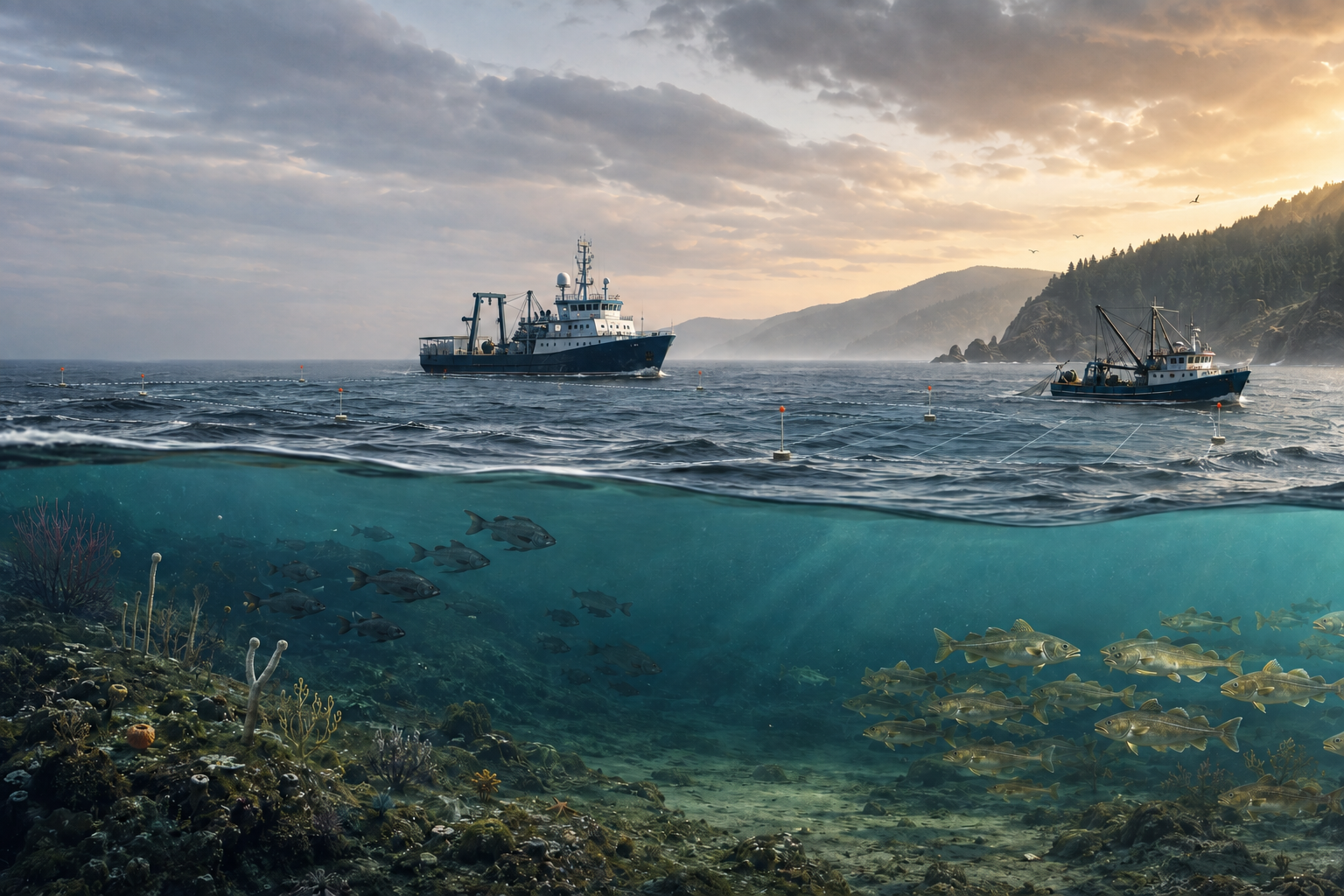
A peer-reviewed spatial population model used fishery-independent surveys and logbook records to test proposed floating offshore-wind exclusion areas off Oregon. For two trawl-caught groundfish stocks, the modeled closures produced minimal changes in fishing yield under either constant-effort or constant-yield assumptions. The paper also found that biomass building inside closed areas did not produce a substantial short-term increase in landings.
ACC context
The result is limited to modeled spatial closures for two groundfish stocks. It does not show that all fisheries, construction, habitat, cable, or ecosystem effects would be minimal.
Why it matters
The study offers a bounded way to examine one fisheries tradeoff before offshore-wind decisions are made, but it does not establish the full ecological, economic, or community impact of a built wind project.
What to watch
- Results for additional species, fishing fleets, longer time horizons, and alternative closure designs.
- Construction noise, cables, habitat effects, vessel displacement, and ecosystem interactions not modeled here.
- How regulators and fishing communities use updated lease-area and survey data in real siting decisions.
Sources & evidence
- Spatial population dynamics models estimate minimal effects on groundfish biomass and fishery landings from proposed offshore wind farm development off Oregon, USAPeer-reviewed, citable Scientific Reports accepted article published as an early version on September 7, 2026, modeling two groundfish stocks and proposed offshore-wind closures; it is awaiting the final Version of Record.
Continue learning with ACC
Explore renewable power, grid planning, and responsible siting