ACC News Brief
Climate and Society Global
VERIFIED ASSOCIATION - observational study; net migration is not a count of individual displacement and does not prove causation
Climate extremes reshape net migration differently across hazards, incomes, and time

What happened
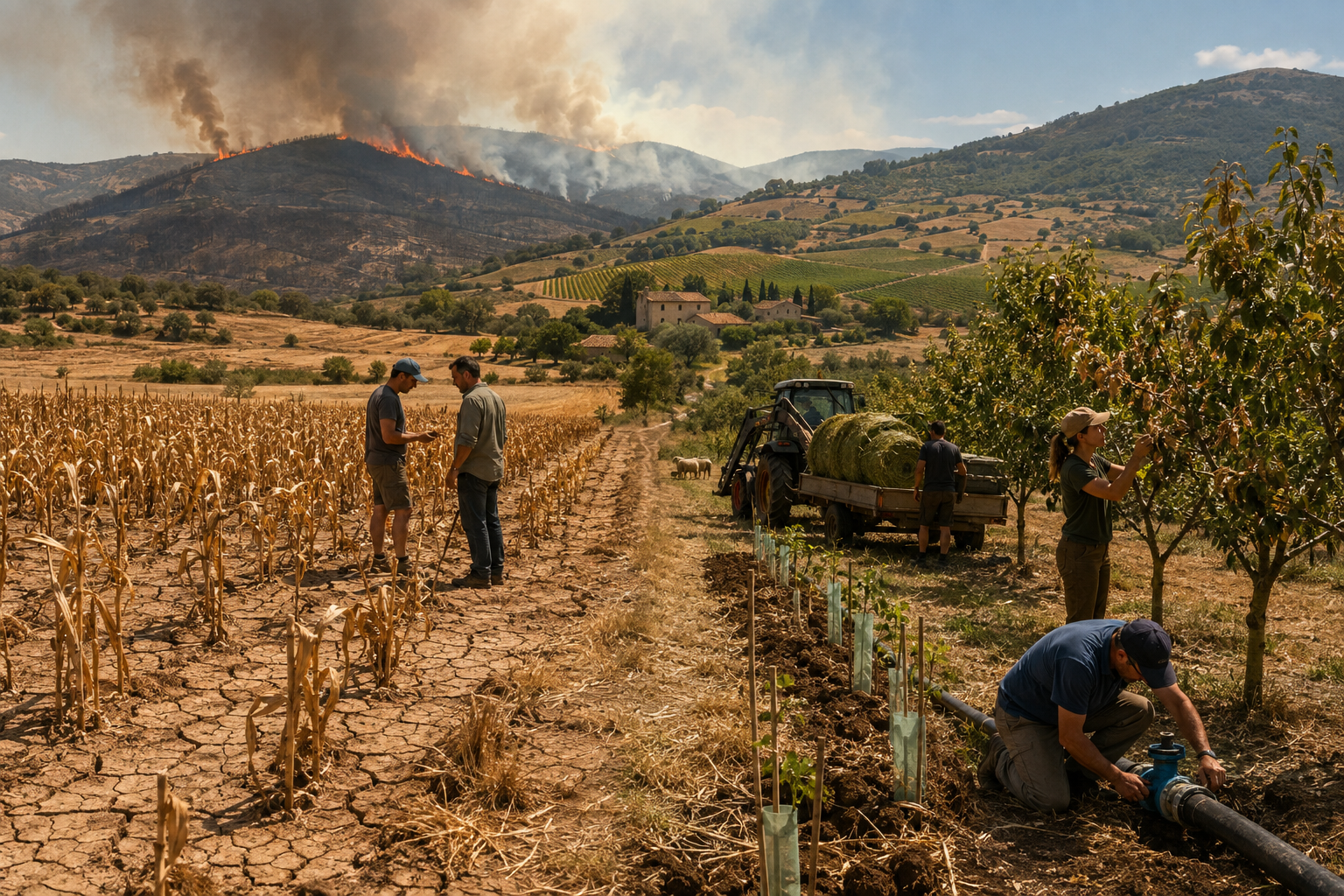
A Nature Climate Change study combined subnational hazard exposure with annual net-migration estimates for 216 countries and territories from 2000-2019. Associations varied by hazard, lag, income, and whether an area usually gained or lost population. Floods were linked to multi-year declines in net migration, while repeated drought showed the clearest compound pattern, with prolonged exposure linked to reduced inflows in population-attracting areas.
ACC context
Net migration is the balance of inflows and outflows, not a direct count of who moved or why. Estimates rely partly on downscaled and interpolated population data, with greater uncertainty where census coverage is sparse.
Why it matters
There is no single climate-migration response. Hazards can prompt movement, delay it, constrain it, or change a place's ability to attract people, so adaptation and humanitarian planning need to account for local resources, timing, and prior migration patterns.
What to watch
- Newer mobility datasets that distinguish individual moves and displacement from aggregate net change.
- Causal studies testing the mechanisms behind the observed lags and income differences.
- Planning that supports both people who move and people who cannot or choose not to move.
Sources & evidence
- Compound and heterogeneous relationships between climate extremes and global net migrationNature Climate Change Version of Record published September 11, 2026; hazard and Admin-2 net-migration analysis covers 2000-2019, with crop-failure data through 2016.
Continue learning with ACC
Learn why climate associations, estimates, and causal claims must be kept distinct