ACC News Brief
Clean Industry Global
Recycled process gas lets one reactor make hydrogen and carbon nanotubes
What happened
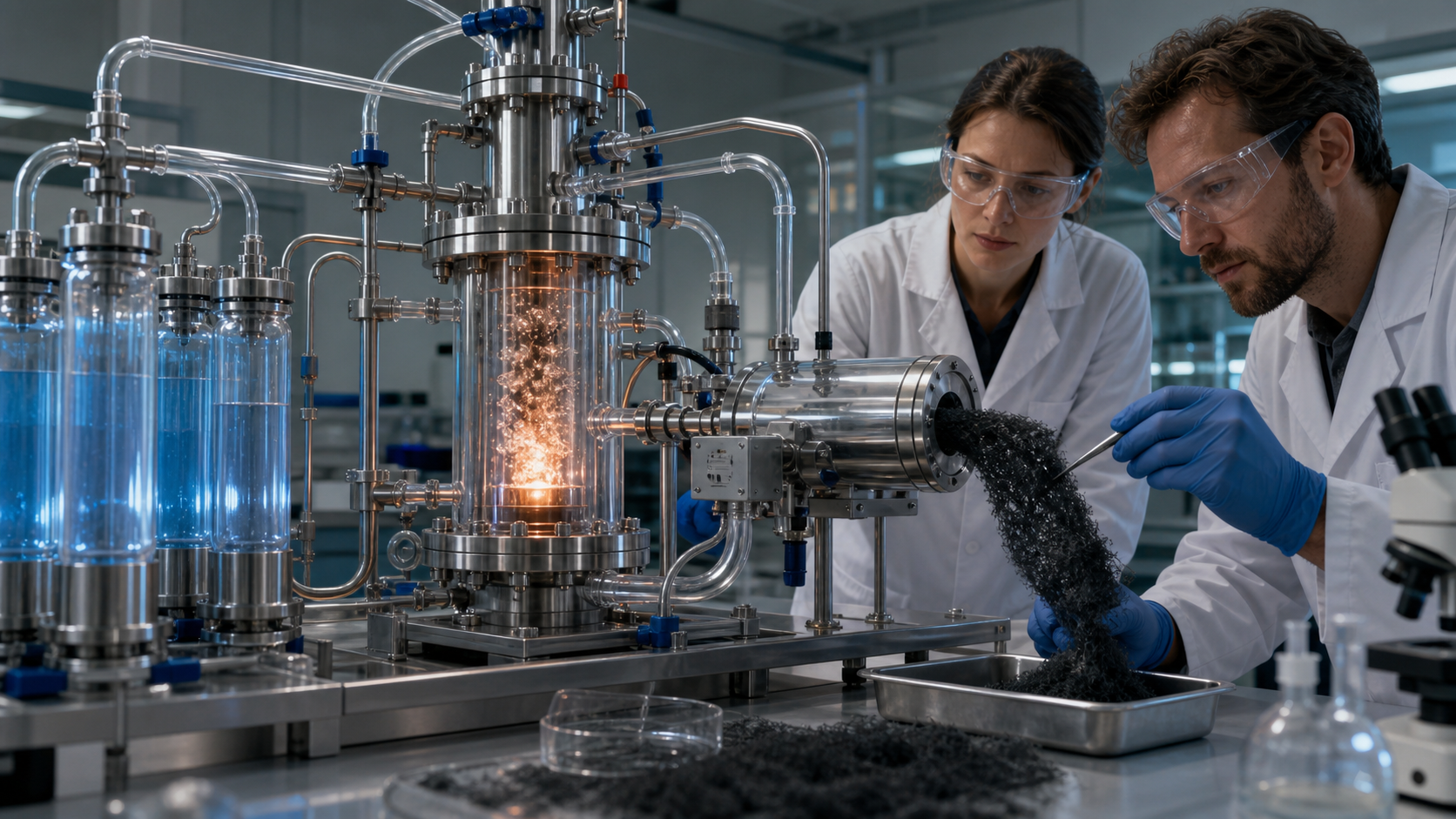
A peer-reviewed Nature Energy study reports a lab-scale, multi-pass reactor that recycled process gas while converting methane into hydrogen and carbon-nanotube aerogel. In its tested configuration, the reactor produced an effluent containing about 85 percent hydrogen and achieved 446 times the overall molar process efficiency of the paper's lab-scale single-pass comparison. The researchers also ran the system with a methane mixture containing 33 percent carbon dioxide to simulate unrefined biogas, but the paper's multi-pass pilot-scale results are modeled extrapolations rather than an operating pilot.
Why it matters
Making a useful solid-carbon material alongside hydrogen could improve the economics and carbon balance of methane pyrolysis. The climate result is conditional, however: it depends on the methane source, upstream leakage, process energy, durable use of the carbon, and whether the products actually displace higher-emitting alternatives.
What to watch
- Whether an independently measured multi-pass pilot reproduces the lab efficiency and product quality at larger scale.
- Full lifecycle results for fossil methane, biomethane, process heat, methane leakage, and the eventual fate of the carbon material.
- Whether carbon-nanotube demand can absorb meaningful output without turning a valuable coproduct into a scale constraint.
Sources & evidence
- Production of hydrogen and carbon nanotubes from methane using a multi-pass floating catalyst chemical vapour deposition reactor with process gas recyclingPeer-reviewed, open-access Nature Energy article published December 1, 2025. DOI: 10.1038/s41560-025-01925-3. The demonstrated reactor is lab scale; the multi-pass pilot case is extrapolated from commercial-facility data.
- Persistent DOI record for the Nature Energy studyStable DOI record for the University of Cambridge, Q-Flo, and Stanford-affiliated research. The paper discloses prior employment and consulting relationships involving Q-Flo.
Continue learning with ACC
Compare hydrogen pathways and the conditions that determine their climate value