ACC News Brief
Resilience & Adaptation United States / Global forecasting
NOAA puts three AI weather models into operational service
What happened
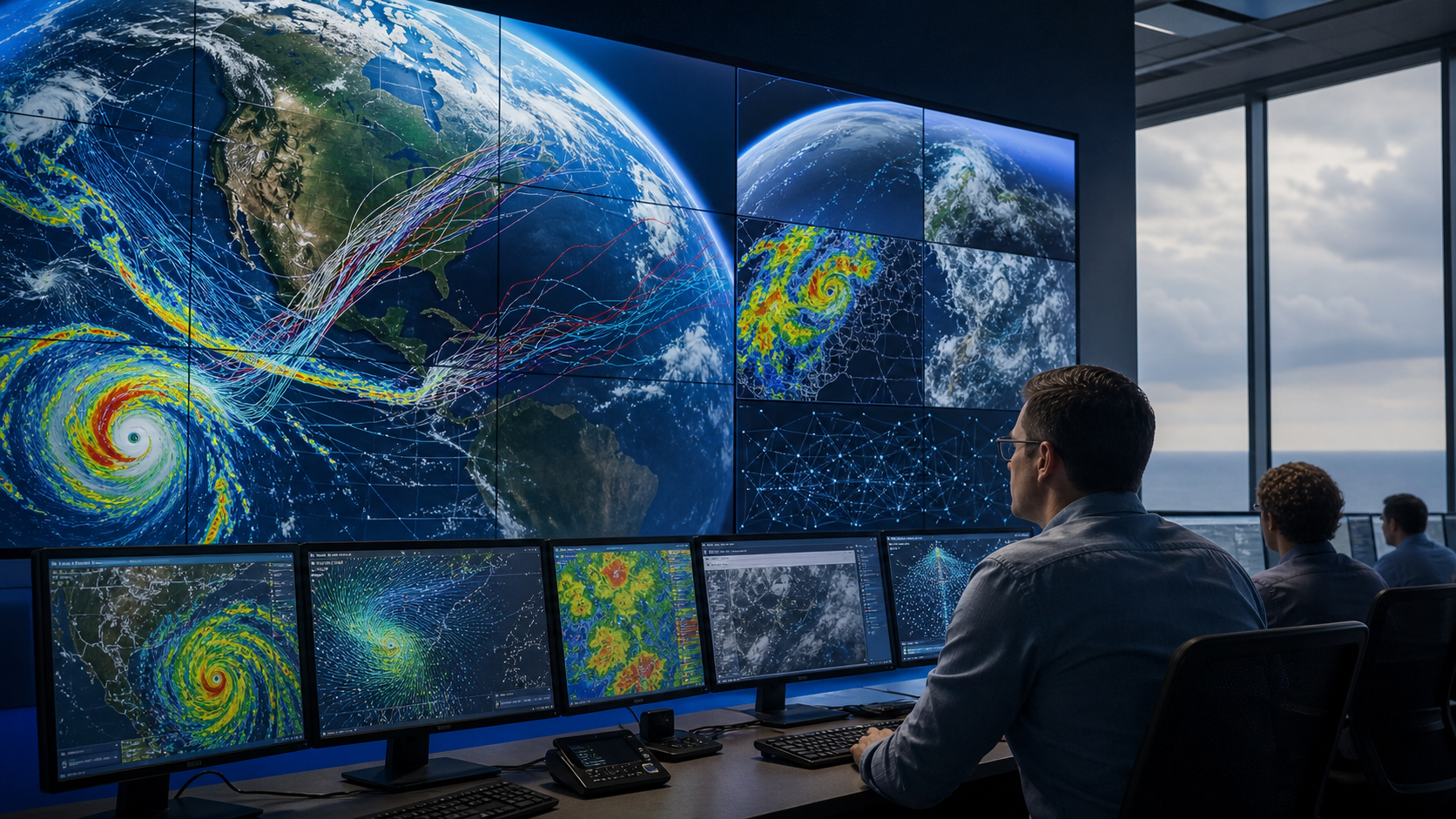
NOAA implemented three artificial-intelligence-based global weather systems: AIGFS, AIGEFS, and a hybrid ensemble combining AI and physics-based guidance. NOAA reported that one 16-day AIGFS forecast used 0.3% of the computing resources of the operational GFS and finished in about 40 minutes, with improved skill for many large-scale features and lower long-range tropical-cyclone track error in initial tests. It also reported that AIGEFS used 9% of the resources of the traditional ensemble and extended forecast skill by 18 to 24 hours in early results. Those launch-era performance statements are not a completed independent longitudinal evaluation: NOAA also reported weaker cyclone-intensity forecasts in AIGFS v1.0 and a need to improve the AI ensemble's spread.
Why it matters
Faster, less computationally intensive ensemble guidance could deliver useful hazard information sooner for emergency managers, grid operators, farmers, and communities. Trustworthy adaptation still depends on transparent verification, known failure modes, human forecaster judgment, resilient public systems, and warnings that reach people who can act on them.
What to watch
- Published real-time skill scores across seasons, regions, lead times, and hazards rather than launch-period averages alone.
- Progress on tropical-cyclone intensity, heavy precipitation, local extremes, and ensemble calibration and spread.
- Operational failures, model updates, reproducible verification, and how forecasters combine AI and physics-based guidance.
- Whether faster guidance improves warning lead time, accessibility, and outcomes for under-resourced communities and weather services.
Sources & evidence
- NOAA deploys new generation of AI-driven global weather modelsOfficial NOAA launch release dated December 17, 2025, describing operational deployment, early performance, computing-resource use, and known improvement areas. Status boundary: these are agency-reported initial evaluations, not peer-reviewed proof that every forecast, hazard, or location improves.
- NWS Service Change Notice 25-89: implementation of AIGFS, AIGEFS, and HGEFSOfficial National Weather Service notice confirming implementation of all three systems effective with the 1200 UTC cycle on December 17, 2025.
Continue learning with ACC
Learn how forecasts, projections, attribution, and uncertainty differ