ACC News Brief
Clean Energy Global
Review separates deployment-ready building heat storage from emerging seasonal options
What happened
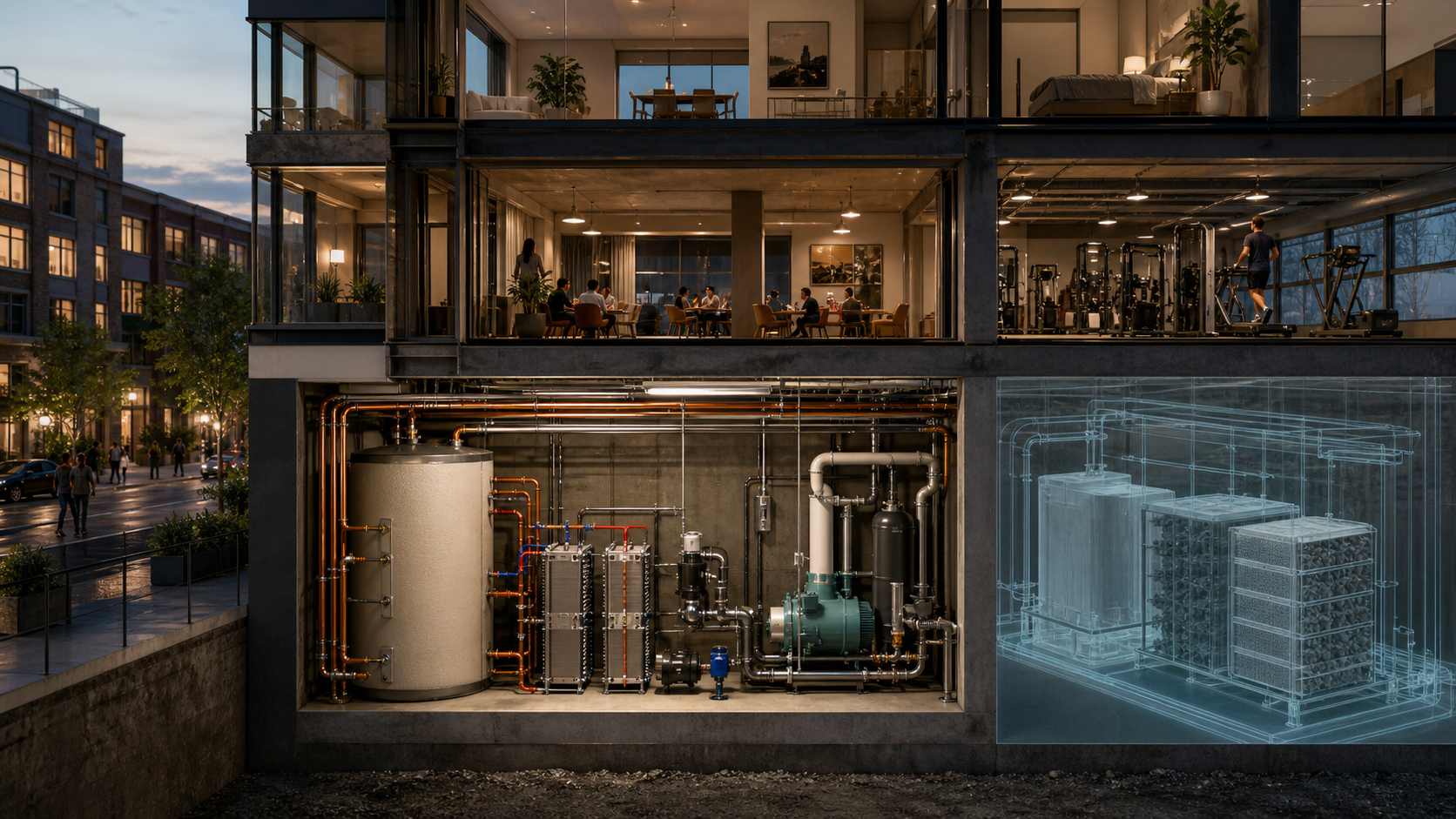
A peer-reviewed review of building thermal energy storage found that some commercially viable materials and systems are mature enough for operation, while longer-duration thermochemical storage and broader integration with renewable electricity still need development. The authors report that payback can be under ten years in some homes and large buildings, but that is a synthesis of case-specific evidence rather than a universal cost promise or a new operating project.
Why it matters
Heating, cooling, and hot water often peak at different times from renewable electricity or available waste heat. Storing heat or cold can shift demand, improve comfort, and lower emissions when the system, energy source, controls, and building are well matched, but poor design or a high-carbon charging source can erode those benefits.
What to watch
- Measured energy, cost, and emissions performance from complete systems across climates, building types, tariffs, and occupancy patterns.
- Progress on heat exchangers, phase-change media, thermochemical seasonal storage, controls, safety, durability, and circular material design.
- Whether installers, utilities, housing providers, and local energy communities can make thermal storage understandable, affordable, and maintainable for users.
Sources & evidence
- Increasing the sustainability of buildings by using thermal energy storagePeer-reviewed Review Article in Nature Reviews Clean Technology, published January 2, 2026, DOI 10.1038/s44359-025-00123-4; led by the GREiA Research Group at the University of Lleida with CNR ITAE, Warsaw University of Technology, and Ghent University collaborators. It synthesizes economic, environmental, and social evidence; it is not a new deployment trial, and its under-ten-year payback statement is not guaranteed for every building.
Continue learning with ACC
Explore ACC's buildings and transportation guide