ACC News Brief
Clean Industry China
AI-assisted simulation designs a heat-pump distillation case with 80% lower energy use
What happened
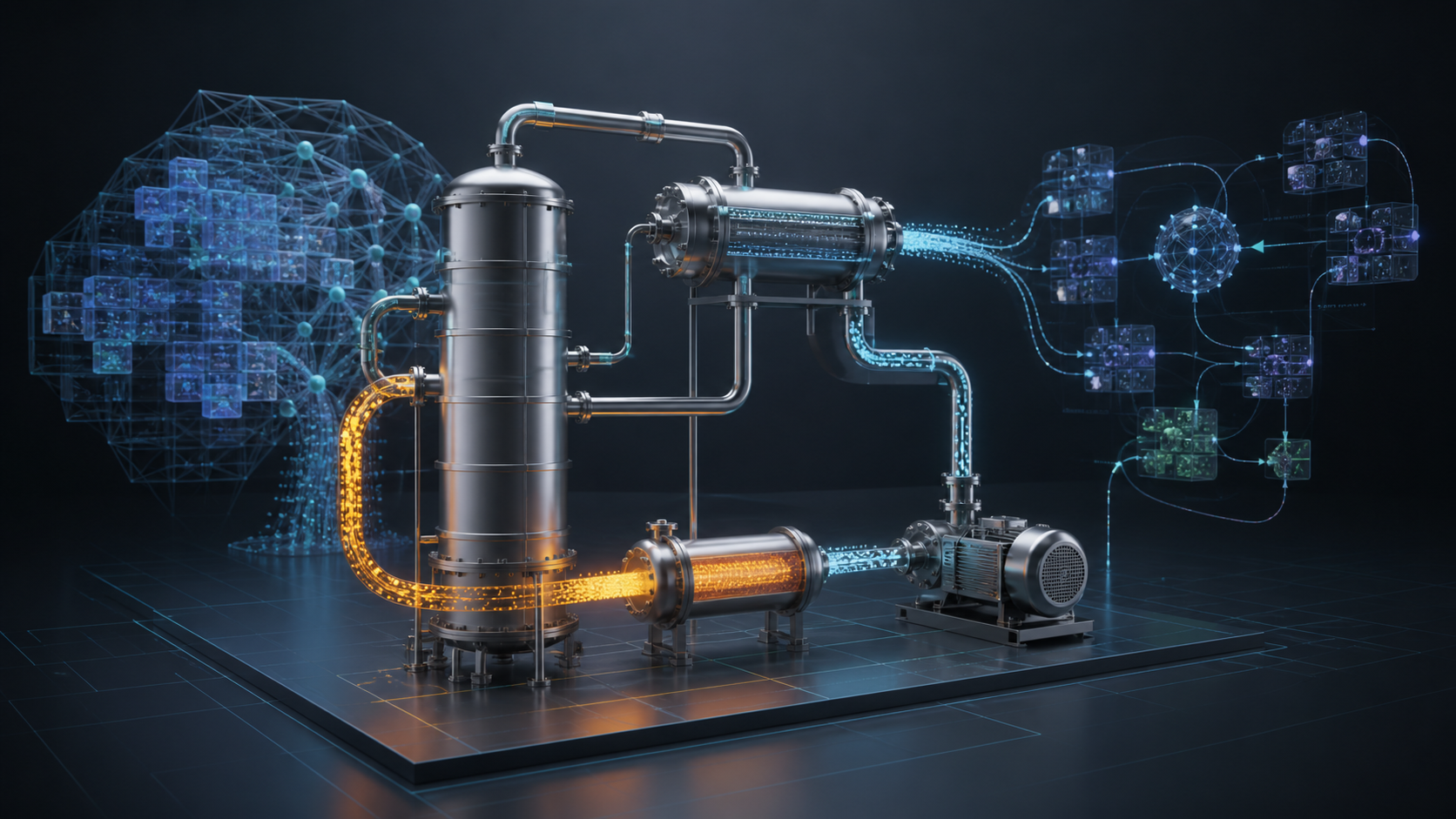
Researchers connected a large-language-model reasoning agent to engineering tools and used it to simulate and optimize a representative 100-kilogram-per-hour methanol-and-ethanol separation. In the Aspen Plus case study, the agent generated a heat-pump-assisted design that used 10.7 kilowatts of compressor electricity in place of 53.7 kilowatts of steam input, cutting modeled energy demand by 80% compared with the optimized conventional process. The result is a software-and-simulation prototype, not a plant trial or proof of autonomous industrial operation.
Why it matters
Distillation consumes substantial industrial heat, and heat pumps can recycle vapor energy that would otherwise be rejected. Automating transparent simulations could help engineers screen decarbonization options faster, but the value depends on expert validation, correct process data, real equipment behavior, clean electricity, economics, safety, and reliable control outside this narrow case.
What to watch
- Independent reproduction of the model, prompts, emission factors, and Aspen Plus results by process engineers.
- Pilot or operating-plant evidence covering dynamic loads, product quality, compressor limits, safety, maintenance, capital cost, and measured energy use.
- Tests across other mixtures and separation systems, with human review requirements and a full lifecycle boundary for equipment and energy supply.
Sources & evidence
- Reasoning-agent-driven process simulation, optimization, carbon accounting and decarbonization of distillationPeer-reviewed open-access Article in Communications Engineering, published January 8, 2026. The 80% energy reduction and 98% modeled emissions reduction apply to one representative simulated methanol-ethanol case under stated heat-pump and energy-supply assumptions, not to an operating industrial plant.
- AI-Automated Aspen Project code repositoryPublic repository cited in the paper's code-availability statement. The paper says the study data and prompts are disclosed in the article and supplementary data; reproducing the workflow also requires Aspen Plus and other dependencies.
Continue learning with ACC
Explore ACC's AI and data-center climate guide