ACC News Brief
Water Security Tianjin, China
A nanoscale tracer detects hidden groundwater pollution in a field test
What happened
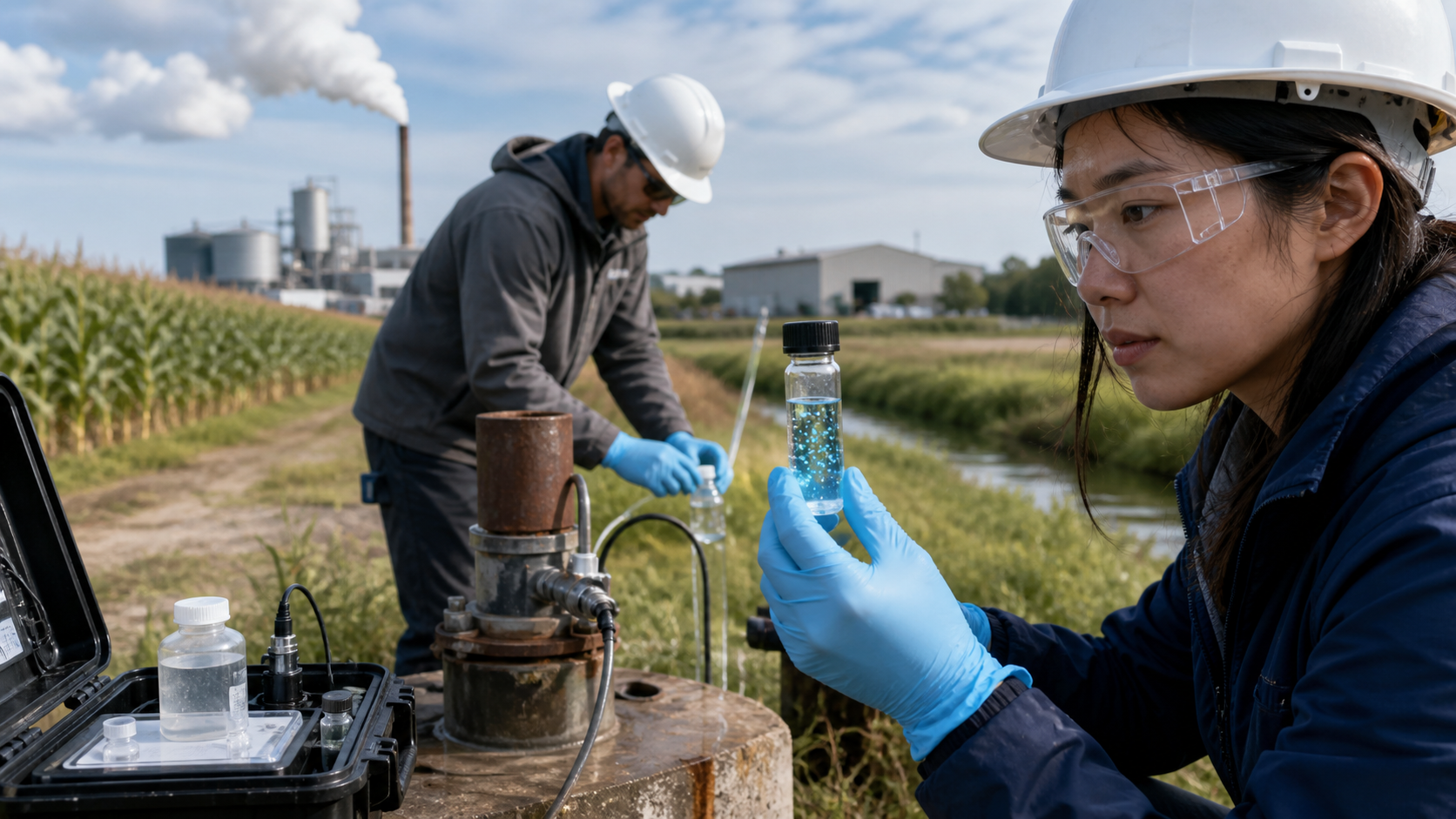
Researchers created a polymer-coated carbon nanoreporter whose embedded probe is released when it encounters thin films or droplets of free-phase organic contaminants. In a field demonstration at a former petrochemical plant in Tianjin, they injected 100 liters of the reporter through one well, recovered samples from three extraction wells, and produced contaminant-mass estimates consistent with soil-core measurements.
Why it matters
Hidden pockets of solvents and petroleum-like liquids can keep polluting groundwater for years and are difficult to characterize with sparse drilling. This reporter could help target cleanup, but it detects contamination rather than removing it and has so far been demonstrated at one field site rather than across diverse aquifers and regulatory settings.
What to watch
- Independent field trials across different geology, groundwater chemistry, contaminant mixtures, and flow conditions.
- Recovery rates, ecotoxicity, persistence, regulatory review, and methods for preventing unintended nanoparticle release.
- Whether better source-zone mapping reduces drilling, cleanup time, cost, and residual pollution in real remediation projects.
Sources & evidence
- A nano-structured reporter for high-sensitivity contaminant detection in groundwaterPeer-reviewed open-access Article in Nature Communications, published January 13, 2026. It includes column, intermediate-scale, and one field-scale demonstration; the technology senses free-phase organic contaminants and does not itself remediate groundwater.
Continue learning with ACC
Explore ACC's practical climate action guide