ACC News Brief
Climate Resilience Global Coasts
Climate-mode collisions could sharpen coastal flood warnings months ahead
What happened
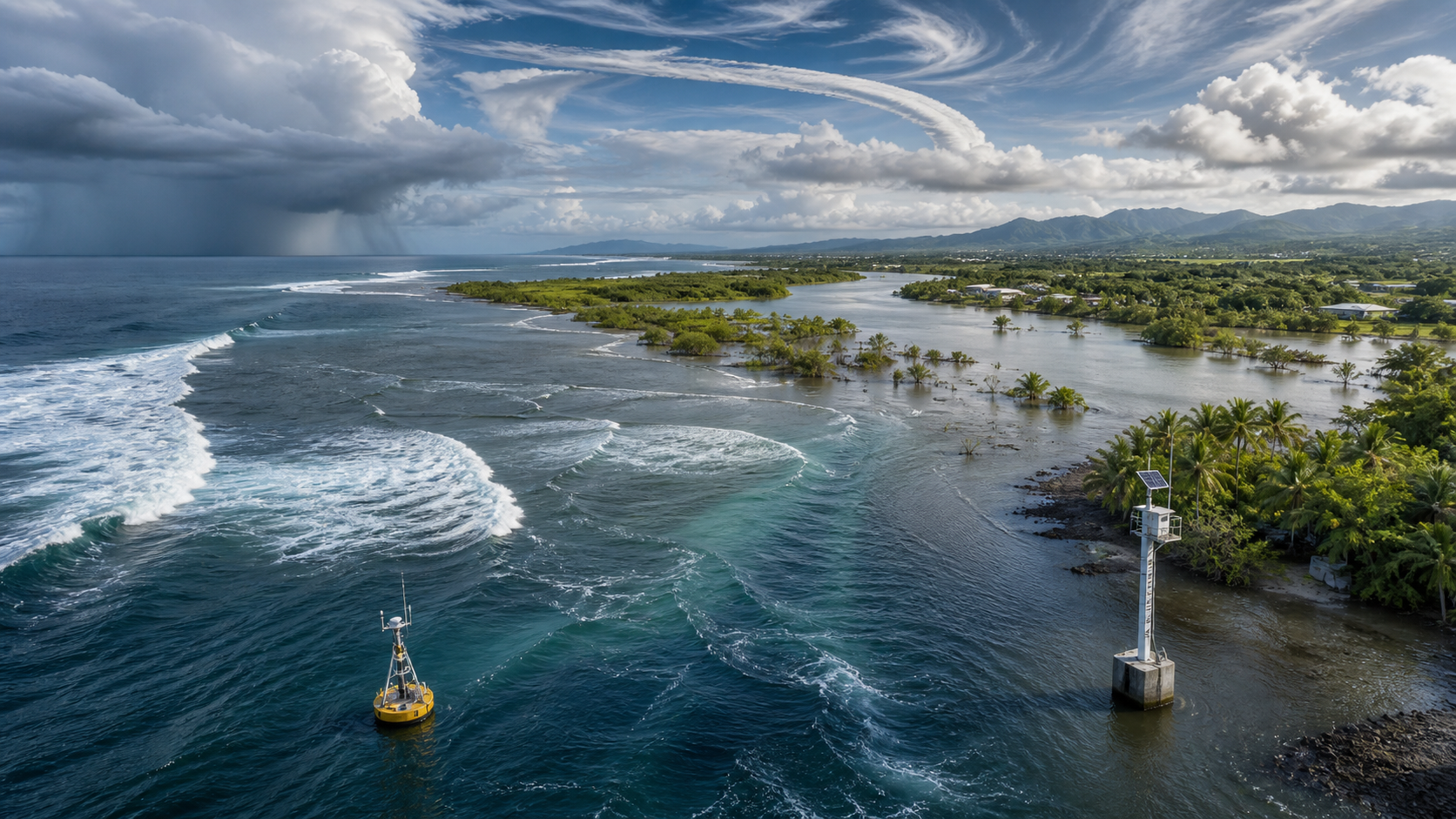
Researchers analyzed observations and reanalysis data from 1958 through 2023 and found that seasonally aligned phases of El Nino-Southern Oscillation and the North Atlantic Oscillation can interact nonlinearly, producing coastal water levels higher than expected from either pattern alone. A conceptual climate model that included those interactions generated skillful seasonal hazard predictions several months ahead.
Why it matters
More lead time could help coastal communities prepare people, infrastructure, and emergency services before elevated-risk seasons. The study demonstrates retrospective predictability in a conceptual model, not a finished local warning service, and local exposure still depends on tides, waves, topography, development, and sea-level rise.
What to watch
- Prospective forecasts tested in real time against tide gauges, waves, storms, and observed flooding.
- Local warning systems that combine large-scale climate modes with coastal elevation and community vulnerability.
- How rising mean sea level changes the thresholds and consequences of the same seasonal climate combinations.
Sources & evidence
- Climate mode interactions amplify coastal flood risks and their seasonal predictabilityPeer-reviewed Article in Nature Geoscience, published January 20, 2026. DOI: 10.1038/s41561-025-01903-0. The analysis combines global observations and reanalysis for 1958-2023 with a conceptual prediction model; it does not validate an operational warning system.
Continue learning with ACC
Explore ACC's climate resilience guide