ACC News Brief
Clean Energy China
A two-amp-hour lithium-metal cell reached a 15-minute lab charge
What happened
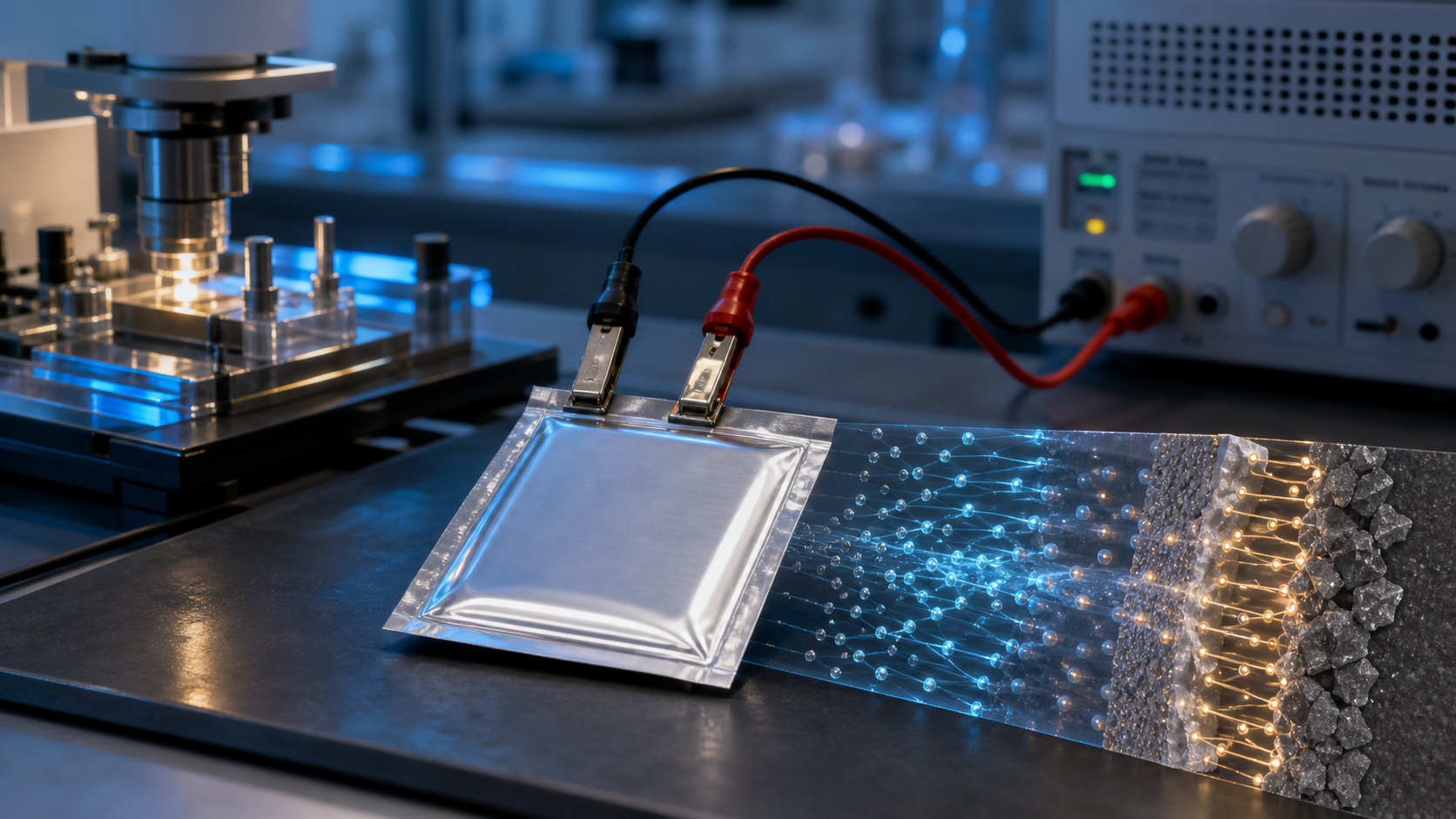
Researchers redesigned an electrolyte solvent to create what they call planar-aligned electron channels, then tested it in 2-amp-hour lithium-metal pouch cells. The cells reached a full charge in 15 minutes at a 4 C rate and a reported charging power density of 1,747.6 watts per kilogram under controlled testing; this is a laboratory demonstration, not a commercial battery pack.
Why it matters
Faster charging could make electric mobility and other battery uses more convenient, but lithium-metal systems must also prove long cycle life, safety, manufacturability, and responsible material use. A strong result in a pouch cell narrows the gap between coin-cell research and practical formats without closing it.
What to watch
- Independent replication of the 15-minute charge result in larger cells and complete battery packs.
- Cycle life, thermal safety, dendrite control, and performance across realistic temperature and charging conditions.
- Electrolyte cost, manufacturing yield, material recovery, and lifecycle impacts at commercial scale.
Sources & evidence
- Molecularly aligned electron channels for ultrafast-charging practical lithium-metal batteriesPeer-reviewed Article in Nature Energy, published January 23, 2026. DOI: 10.1038/s41560-025-01961-z. The reported 2 Ah pouch-cell result is a controlled laboratory demonstration, not evidence of a commercial battery or vehicle.
Continue learning with ACC
Explore ACC's buildings and transportation guide