ACC News Brief
Food & Agriculture Brazil
Brazil's farm soils carry a 1.4-petagram carbon debt
What happened
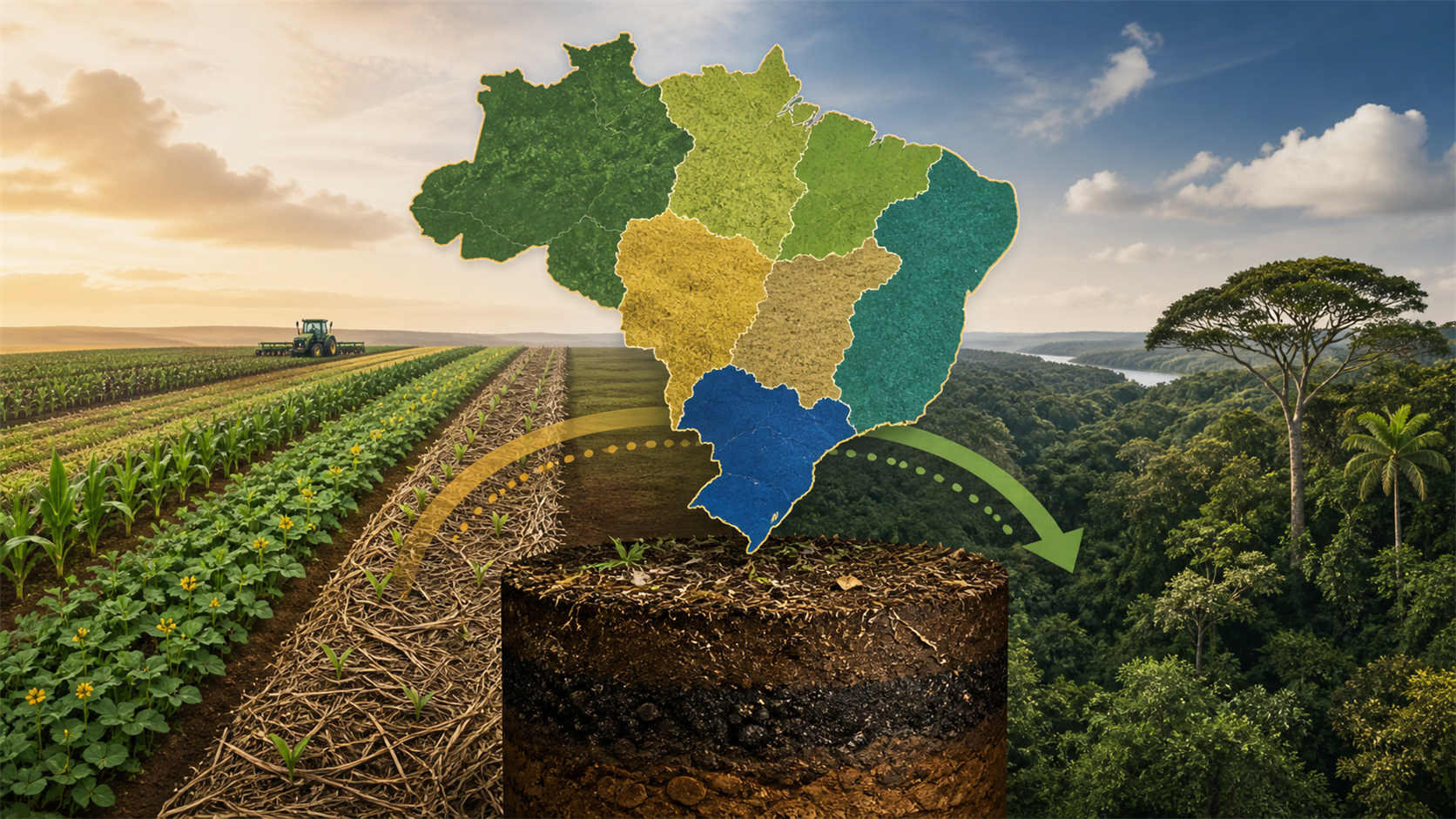
A meta-analysis of 372 studies and 4,290 observations estimated that land-use change has left Brazil's upper 30 centimeters of soil with a carbon debt of 1.40 ± 0.1 petagrams of carbon, equivalent to about 5.2 petagrams of carbon dioxide. No-till cropland still held less carbon than native vegetation, but its estimated 11.4% loss was smaller than the 21.4% loss under conventional tillage.
Why it matters
The findings identify substantial room to improve soil management without treating every estimated tonne as recoverable. Crop rotations, intercropping, integrated systems, and less disruptive tillage may narrow losses, but outcomes depend on biome, soil, climate, adoption, and how long added carbon remains stored.
What to watch
- Field verification of recovery potential across the Cerrado, Atlantic Forest, and Brazil's other biomes.
- Measurements below 30 centimeters and long-term evidence on durability and additionality.
- Farmer access, food production, biodiversity, and whether incentives reward verified gains instead of theoretical potential.
Sources & evidence
- Soil carbon debt from land use change in BrazilPeer-reviewed open-access Article in Nature Communications, published January 26, 2026. The national carbon debt and recovery potential are meta-analysis estimates for the upper 0–30 centimeters of soil; technical potential is not a promise of practical or permanent nationwide recovery.
Continue learning with ACC
Explore ACC's ecosystems and biodiversity guide