ACC News Brief
Climate Science Congo Basin
Congo peatland lakes reveal a pathway for millennia-old carbon
What happened
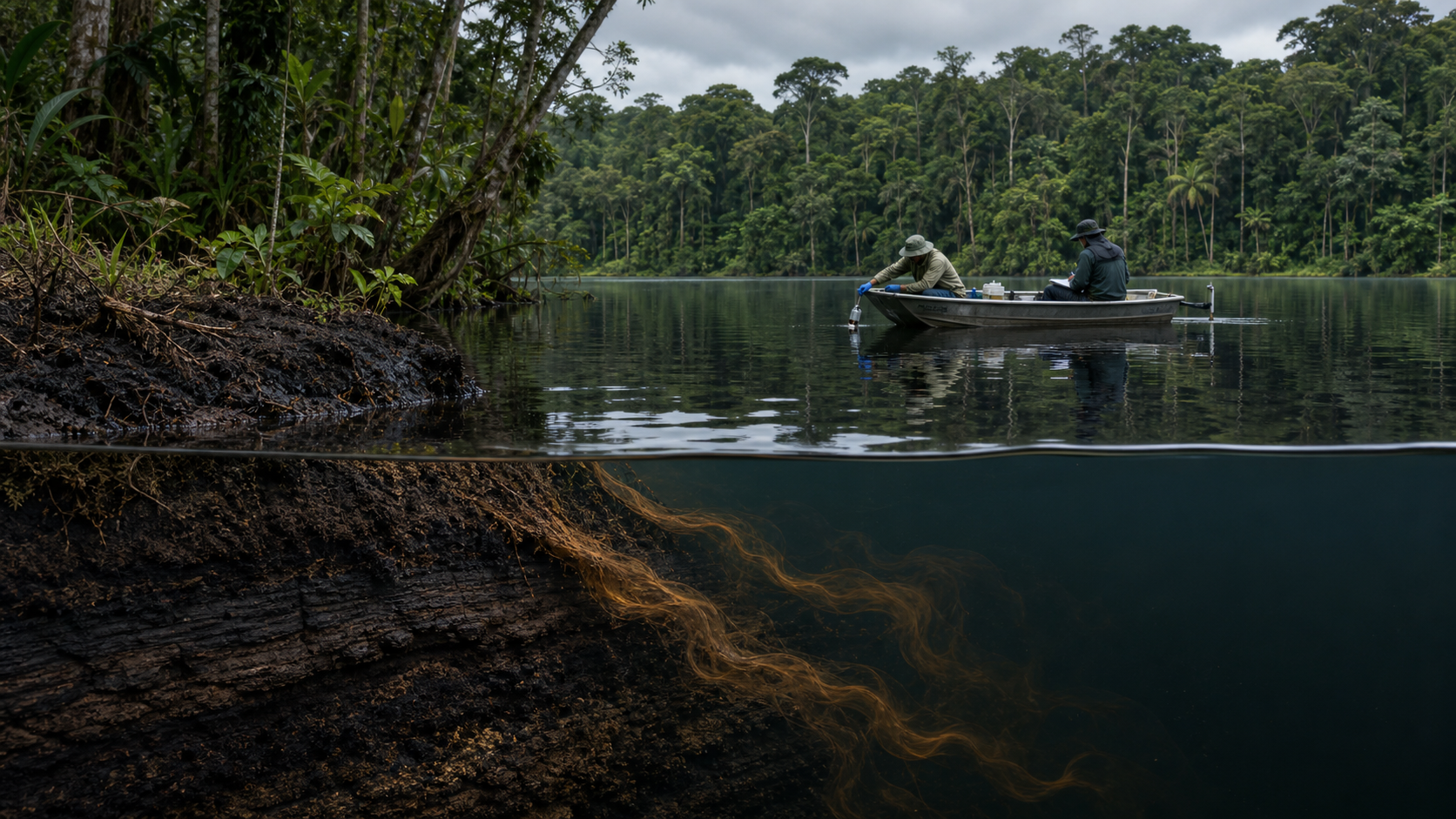
Radiocarbon and stable-isotope measurements from Lakes Mai Ndombe and Tumba found dissolved inorganic carbon approximately 2,170 and 3,515 years old. Mixing models attributed about 39–40 percent of the sampled dissolved carbon to surrounding peat, identifying a lake-and-river pathway that can move ancient peat carbon toward the atmosphere.
Why it matters
A previously undercounted pathway matters when evaluating the stability of a globally important tropical carbon store. The study does not establish that the peatland has stopped being a net sink, that present-day climate change caused the flux, or that two lakes represent every tropical peatland.
What to watch
- Seasonal and multi-year sampling plus a complete regional carbon balance.
- The hydrological transport mechanism and responses to drought, drainage, fire, and land disturbance.
Sources & evidence
- Millennial-aged peat carbon outgassed by large humic lakes in the Congo BasinPeer-reviewed Article, Nature Geoscience (2026), published February 23, 2026. Isotopes were observed in two lakes; source fractions and wider carbon-flux implications are modeled or extrapolated.
- Peatland lakes in the Congo Basin release carbon that is thousands of years oldETH Zurich institutional explanation of the sampling and carbon-pathway evidence.
- Congo peatland lake source dataPublic source-data archive associated with the study.
Continue learning with ACC
Explore ACC's ecosystems and natural climate solutions guide