ACC News Brief
Resilience & Adaptation Global cities
Urban cooling depends on healthy trees near people—not planting totals
What happened
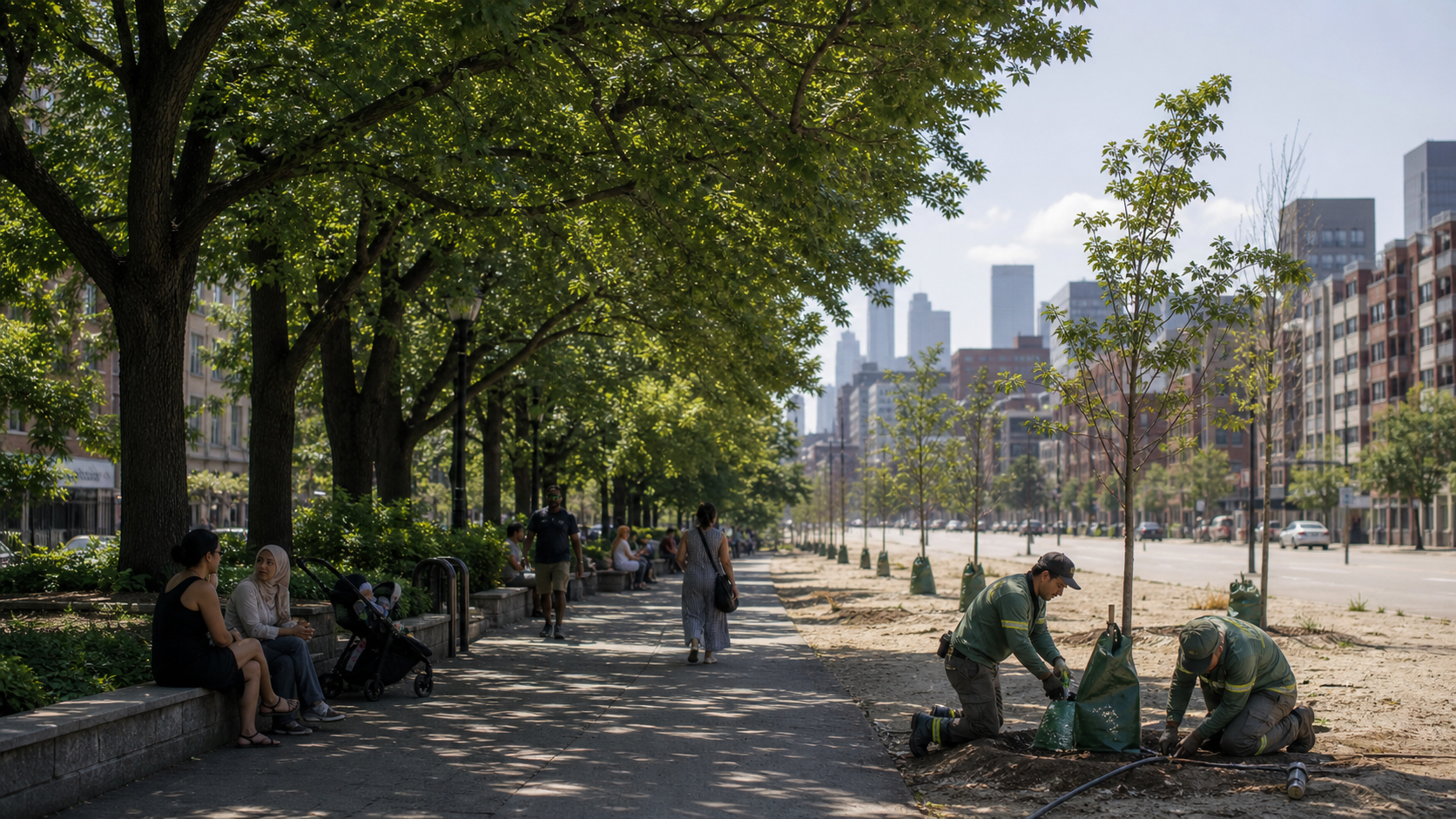
A peer-reviewed Comment synthesizes evidence that urban trees cool effectively only when cities achieve three conditions: enough canopy close to people, healthy trees supported by adequate soil and water, and protection long enough for trees to mature. Counting seedlings alone can therefore overstate heat-adaptation progress.
Why it matters
Urban forestry works best as long-term public-health infrastructure, with shade directed toward heat-vulnerable residents and funding for survival and maintenance. The paper is an evidence synthesis, not a new controlled field trial, and canopy or performance thresholds from individual cities are not universal rules.
What to watch
- Tree survival, mature canopy near heat-vulnerable residents, and transparent measures of neighborhood shade and temperature.
- Maintenance funding, water demand, species choice, soil volume, ventilation, and protection of existing mature trees.
Sources & evidence
- Urban forestry for cooler cities faces three critical hurdlesPeer-reviewed Comment, Nature Communications 17 (2026), from RMIT University, the University of Melbourne, and Weill Cornell Medicine. Published March 12, 2026. Evidence synthesis and design argument; not a new intervention trial.
Continue learning with ACC
Explore ACC's climate resilience guide