ACC News Brief
Biodiversity & Conservation Global
Mature salt marsh protection is essential for blue-carbon gains
What happened
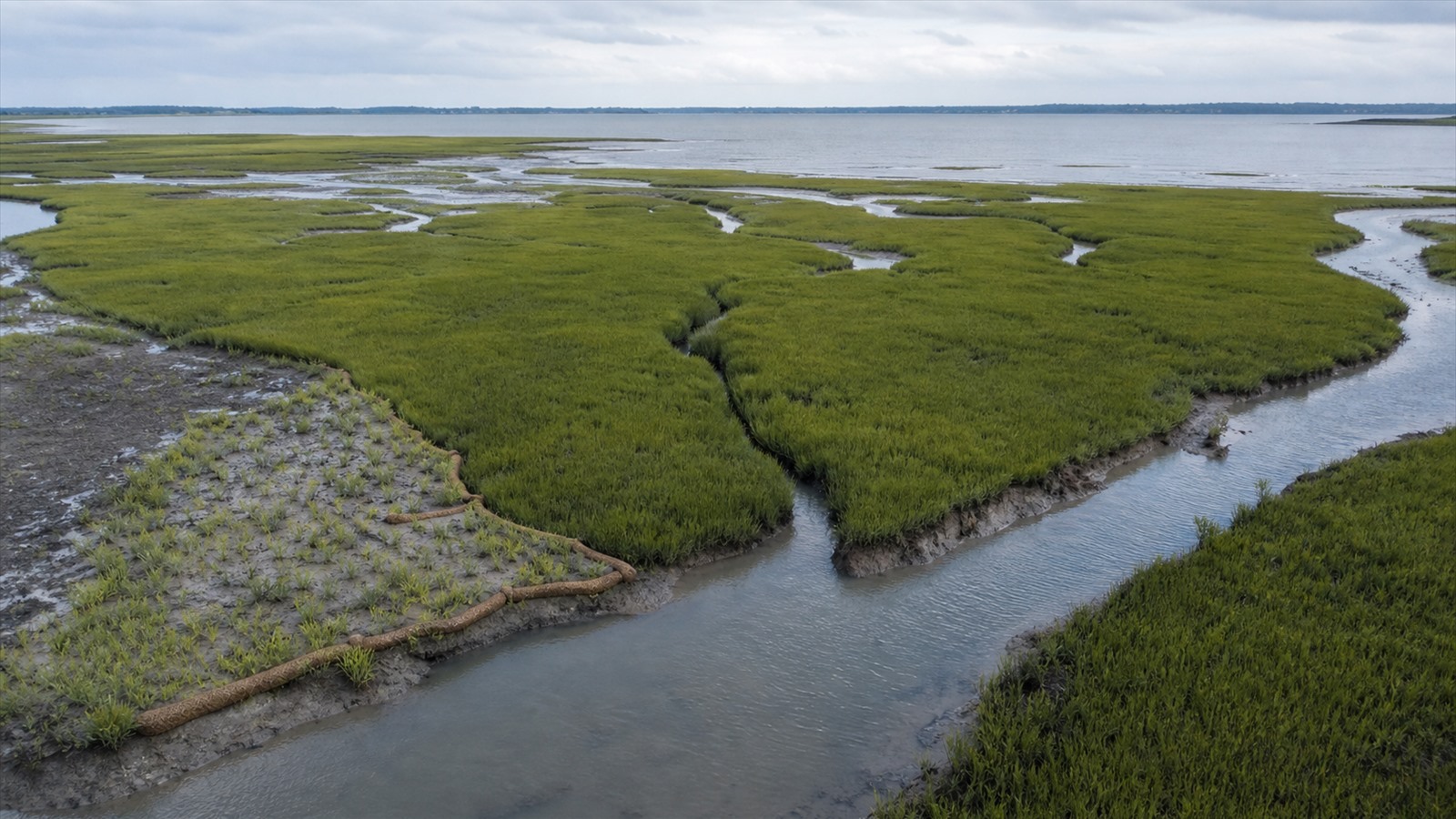
A global assessment combining satellite imagery, machine learning, and field-calibrated data estimated a net loss of 0.52 million tonnes of surface soil organic carbon from changing salt marshes between 2002 and 2019. The study found that losses from mature, carbon-rich marshes outweighed gains in newer, lower-density marshes and attributed about 60% of gross losses to the United States, equivalent to 6.2 million tonnes of CO2 only if that carbon were fully released. The research estimates changes in the upper 20 centimeters of marsh soil; it does not directly measure atmospheric emissions or the full carbon stock at depth.
Why it matters
Restoration remains valuable, but newly created marsh cannot immediately replace the carbon, habitat, and coastal protection built up in mature marshes over decades. Preventing conversion and erosion of carbon-rich marshes should accompany long-term restoration, sediment management, and field monitoring.
What to watch
- Protection of mature marshes, limits on conversion to aquaculture or development, and restoration designs that maintain sediment and tidal flow.
- Long-term field measurements of carbon density, restoration age, erosion, sea-level rise, and how much disturbed soil carbon reaches the atmosphere or ocean.
Sources & evidence
- Global blue carbon losses from salt marshes exceed restoration gainsPeer-reviewed Nature Communications article 17, 3744, DOI 10.1038/s41467-026-70158-z, published April 24, 2026. Estimates cover surface soil organic carbon at 0-20 centimeters using remote sensing and machine learning calibrated with field observations; the conditional CO2 equivalent is not a measured atmospheric release.
Continue learning with ACC
Explore ACC's ecosystems and nature guide