ACC News Brief
Climate Solutions United States
Methane monitoring sets guardrails for wastewater biogas benefits
What happened
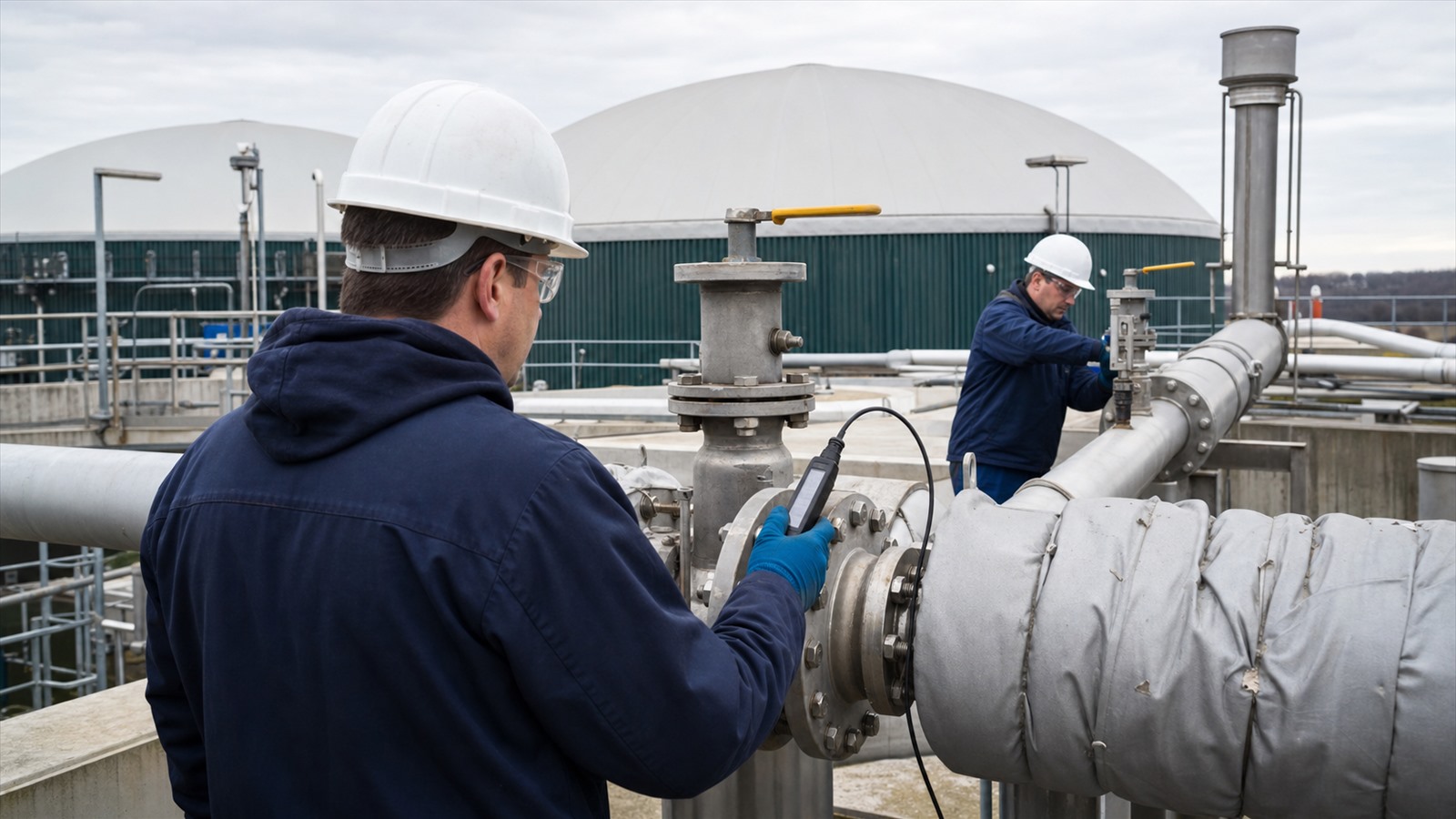
Wastewater biogas can displace fossil energy, but its climate benefit depends on keeping fugitive methane low. A Nature Sustainability Policy Brief, backed by a peer-reviewed national-scale analysis, calls for facility-wide measurement, reporting, verification, and leak detection and repair. The analysis compiled measured leakage spanning roughly 0.4% to more than 65% and estimated pathway-specific climate break-even thresholds of about 2% to 10%, depending on heat recovery, grid emissions, and how the gas is used. Those are modeled thresholds, not proof that any unmeasured facility is climate-positive.
Why it matters
This is a fixable integrity problem. Measuring the whole system, repairing leaks, and tying incentives to verified performance can preserve real climate and energy gains instead of assuming them. Captured methane also remains usable energy, so leak prevention can support safety and operating value as well as emissions goals.
What to watch
- Standardized, facility-wide methane measurement and disclosure, with performance thresholds that tighten as electricity grids become cleaner.
- Independent before-and-after measurements showing whether leak detection, equipment upgrades, and repairs deliver durable reductions across complete system boundaries.
Sources & evidence
- Methane leakage can erase the climate benefits of wastewater biogas recoveryNature Sustainability Policy Brief, volume 9, pages 958-959, DOI 10.1038/s41893-026-01805-y, published April 27, 2026. It translates the companion analysis into recommendations for whole-facility measurement, reporting, verification, leak detection and repair, and low-leak infrastructure; it is not a separate field-measurement study.
- Methane leakage thresholds for net climate benefits of wastewater biogas recoveryPeer-reviewed open-access Nature Sustainability article, DOI 10.1038/s41893-026-01818-7, published April 27, 2026. The national-scale assessment compiled heterogeneous measured leakage data from more than 50 facilities and modeled pathway-specific break-even thresholds; results depend on system boundaries, grid intensity, heat recovery, and utilization assumptions.
Continue learning with ACC
Explore ACC's climate solutions pathways