ACC News Brief
Ecosystems Amazon Basin
Deforestation could lower the Amazon's climate resilience threshold
What happened
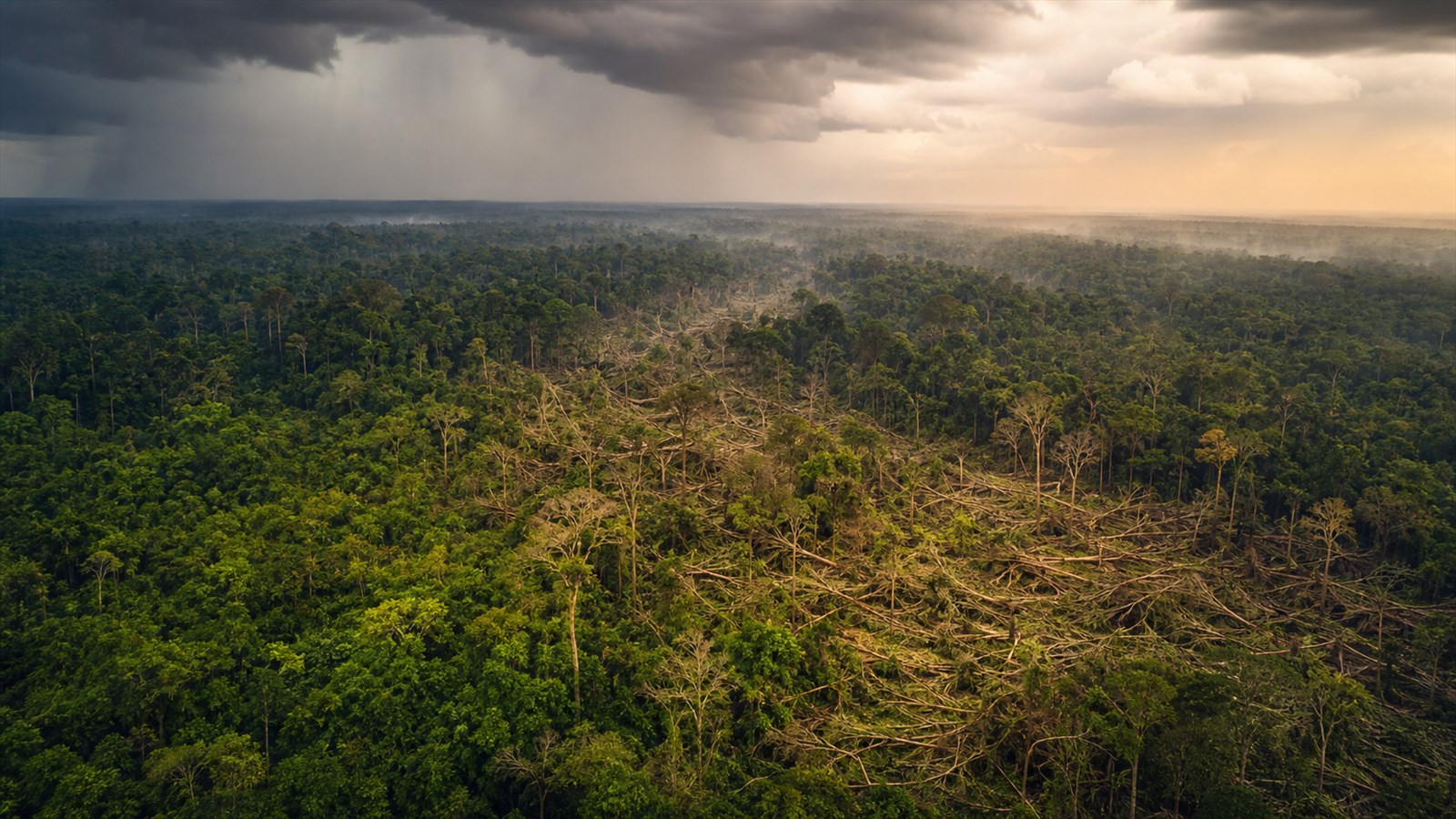
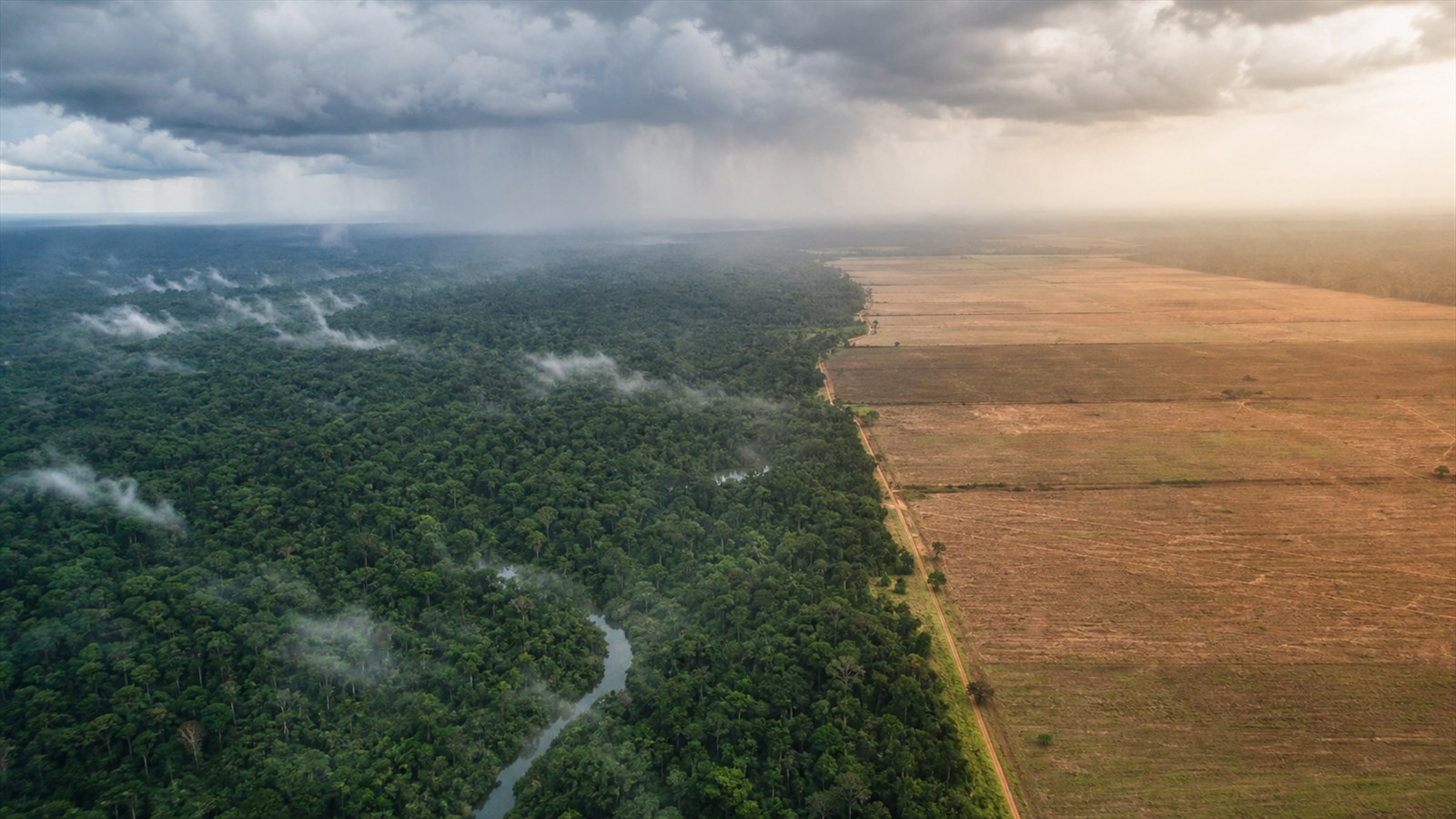
A dynamical-systems study coupled Amazon ecosystem transitions with atmospheric moisture transport under multiple emissions pathways. Without deforestation, the model placed a broad stability threshold near 3.7-4.0 C of global warming, with up to one-third of the forest at risk. When deforestation was included, a modeled 62-77% near-system-wide transition appeared under 1.5-1.9 C of warming combined with 22-28% deforestation. These are model-derived risk thresholds, not precise forecasts or proof that a single irreversible tipping point will occur at those exact values.
Why it matters
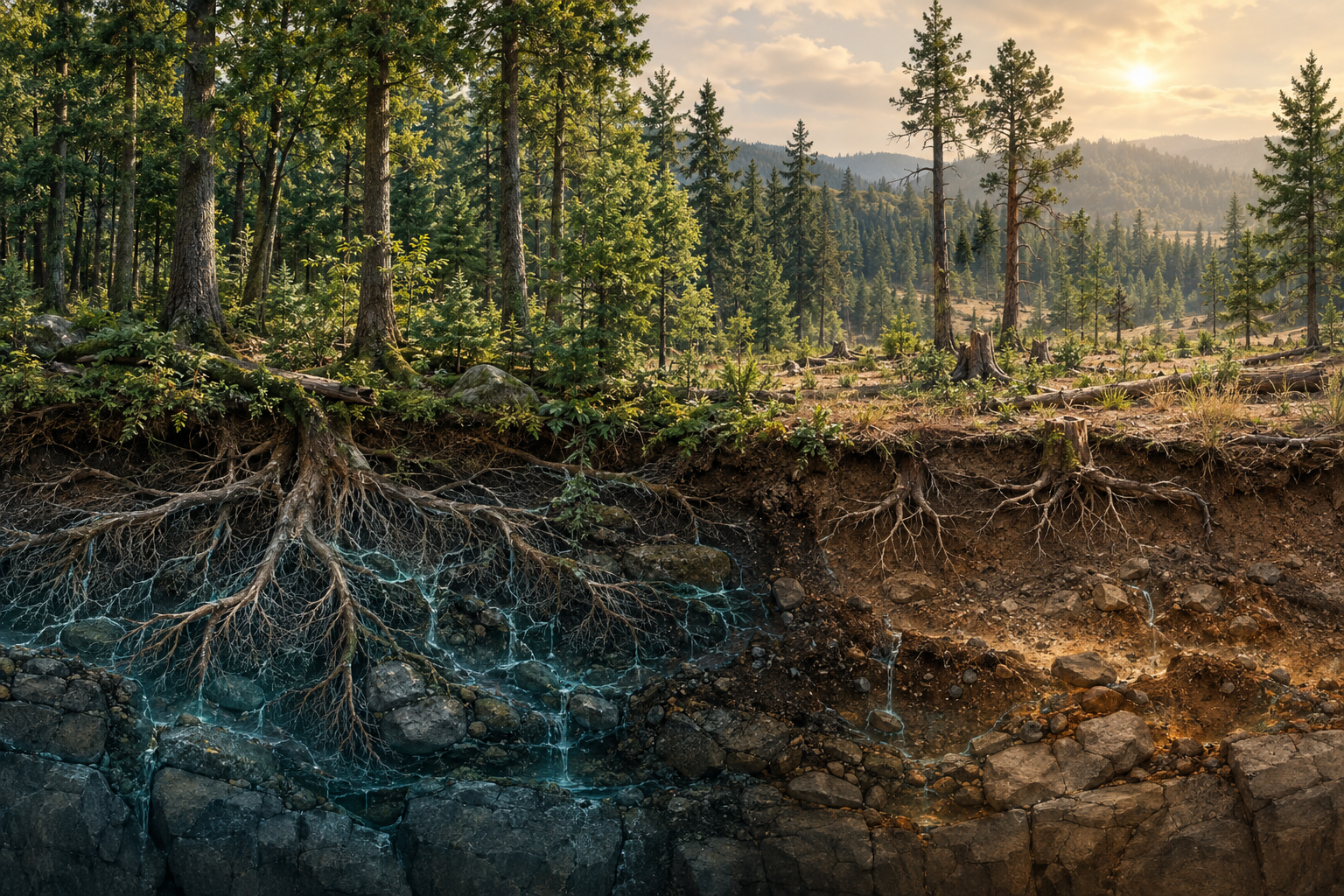
Deforestation does more than remove trees and release carbon. By weakening moisture recycling, it can make remaining forest more vulnerable to warming, so forest protection and climate mitigation reinforce each other.
What to watch
- Observed changes in rainfall recycling, dry-season length, tree mortality, fire, and recovery across intact, degraded, and cleared parts of the basin.
- Whether governments reduce deforestation and degradation while models narrow uncertainty around thresholds, regional transitions, timescales, and possible recovery.
Sources & evidence
- Deforestation-induced drying lowers Amazon climate thresholdOpen-access Nature modeling study published May 6, 2026, DOI 10.1038/s41586-026-10456-0. The reported warming and deforestation ranges are modeled transition risks, not deterministic real-world tipping dates.
Continue learning with ACC
Explore ACC's ecosystems guide