ACC News Brief
Ecosystems Amazon Basin
Storms and atmospheric dryness could accelerate Amazon biomass turnover
What happened
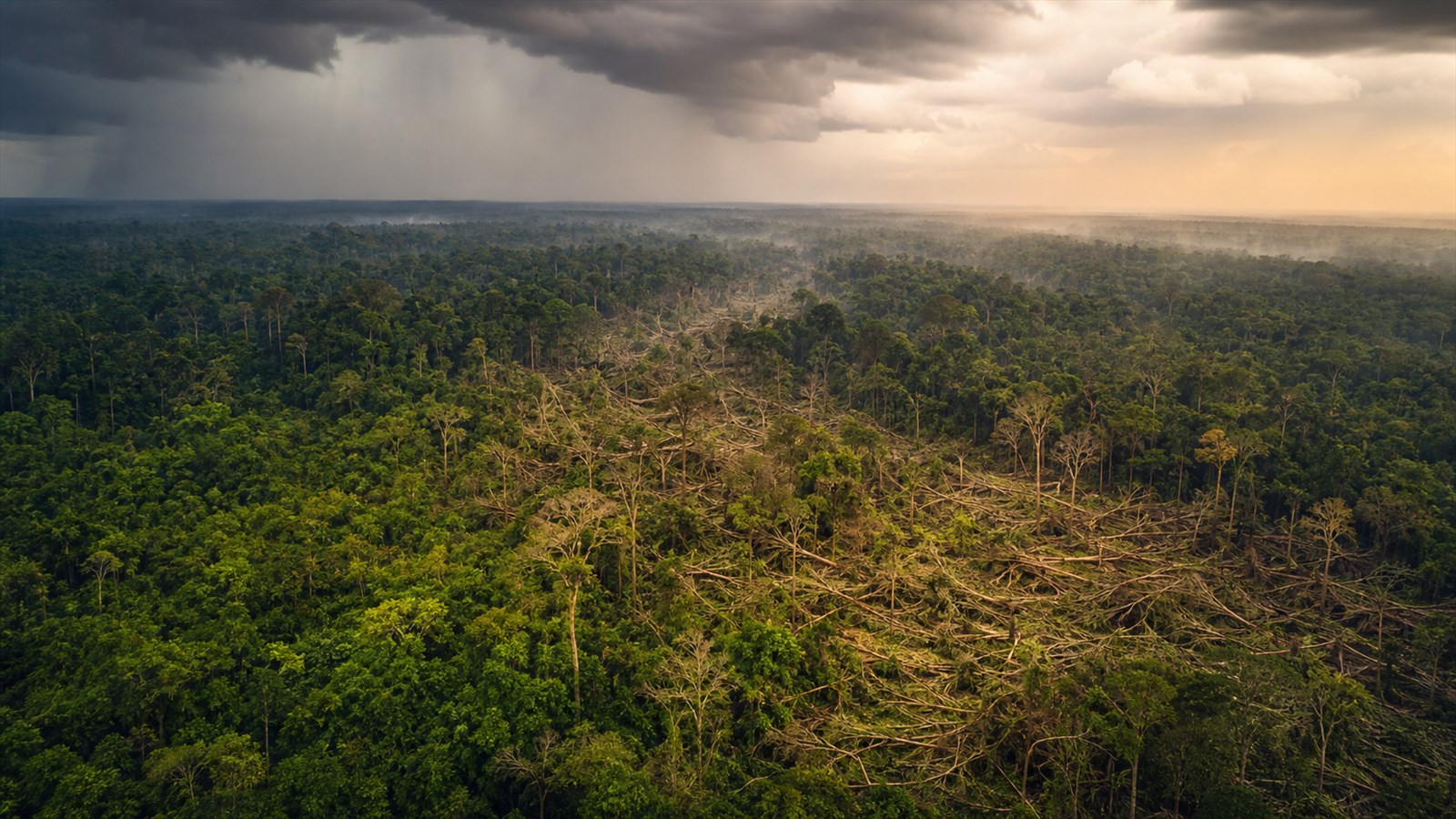
A Nature Climate Change study combined satellite and field measurements to estimate kilometer-scale aboveground biomass turnover across intact Amazon forest. Convective storms emerged as a major spatial driver, exceeding vapor-pressure deficit and precipitation extremes in the analysis. Scenario projections reduced forest biomass turnover time by about 3% under SSP1-2.6 and about 15% under SSP5-8.5 by century end. Those percentages are modeled changes in turnover time, not direct forecasts of forest area lost.
Why it matters
Faster turnover can change how long carbon remains stored in living forest and can weaken resilience even without clear-cutting. Storm disturbance and atmospheric dryness therefore belong alongside fire and deforestation in forest-risk planning.
What to watch
- Longer satellite and plot records that can separate storm damage, drought stress, mortality, regrowth, and regional differences across the basin.
- Whether Earth-system models improve their treatment of wind disturbance and biomass turnover, and how conservation reduces additional human pressure on intact forest.
Sources & evidence
- Increasing atmospheric dryness and storms accelerates biomass turnover in Amazonian forestsPeer-reviewed Nature Climate Change study published May 13, 2026, DOI 10.1038/s41558-026-02639-4. It integrates observations and scenario projections; end-century changes are not direct observations.
Continue learning with ACC
Explore ACC's ecosystems guide