ACC News Brief
Water Security United States
Solar desalination prototype harvests salt while making freshwater
What happened
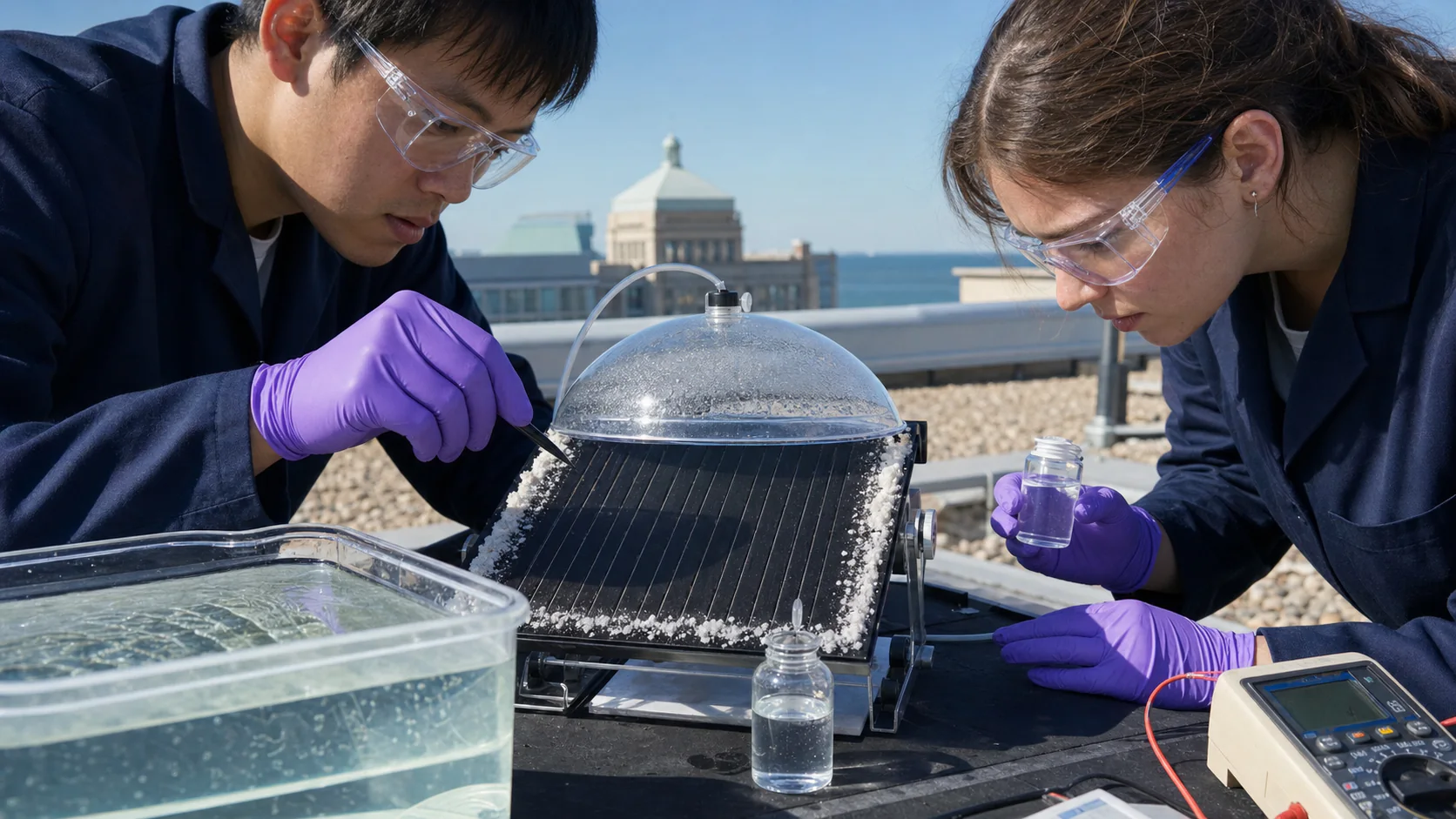
University of Rochester researchers tested a laser-textured black-aluminum solar evaporator with real ocean water. In a week-long one-sun experiment, the prototype averaged 1.76 plus or minus 0.04 kilograms of evaporation per square meter per hour and 61.74 plus or minus 2.46 grams of harvested salt per square meter per hour, while keeping reservoir salinity stable. Its outdoor demonstration used a 9-square-centimeter panel with hourly manual sun tracking. This is a small research prototype, not a municipal desalination system.
Why it matters
Brine disposal and salt clogging are two central limits of desalination. A device that moves crystals away from its active surface could address both, but only if water collection, durability, manufacturing, and economics survive scale-up.
What to watch
- Months-long fouling and corrosion tests, larger systems that collect rather than only evaporate water, passive sun tracking, and independent field replication.
- Full lifecycle cost, energy and manufacturing demands, and safe separation or use of the mixed salts harvested from real seawater.
Sources & evidence
- Additive-free and brine-discharge-free solar-thermal desalination with simultaneous complete mineral mining from ocean waterPeer-reviewed prototype study, Light: Science & Applications, DOI 10.1038/s41377-026-02315-4, published May 27, 2026. The outdoor device was 9 square centimeters and manually tracked the sun.
- Researchers develop self-cleaning, solar-powered method for ocean water desalinationUniversity of Rochester explanation published May 27, 2026, with project context and limits of the research prototype.
Continue learning with ACC
Explore ACC's climate resilience guide