
ACC News Brief
Climate Science Global
Modeled atmospheric-river risks persist after carbon removal
What happened
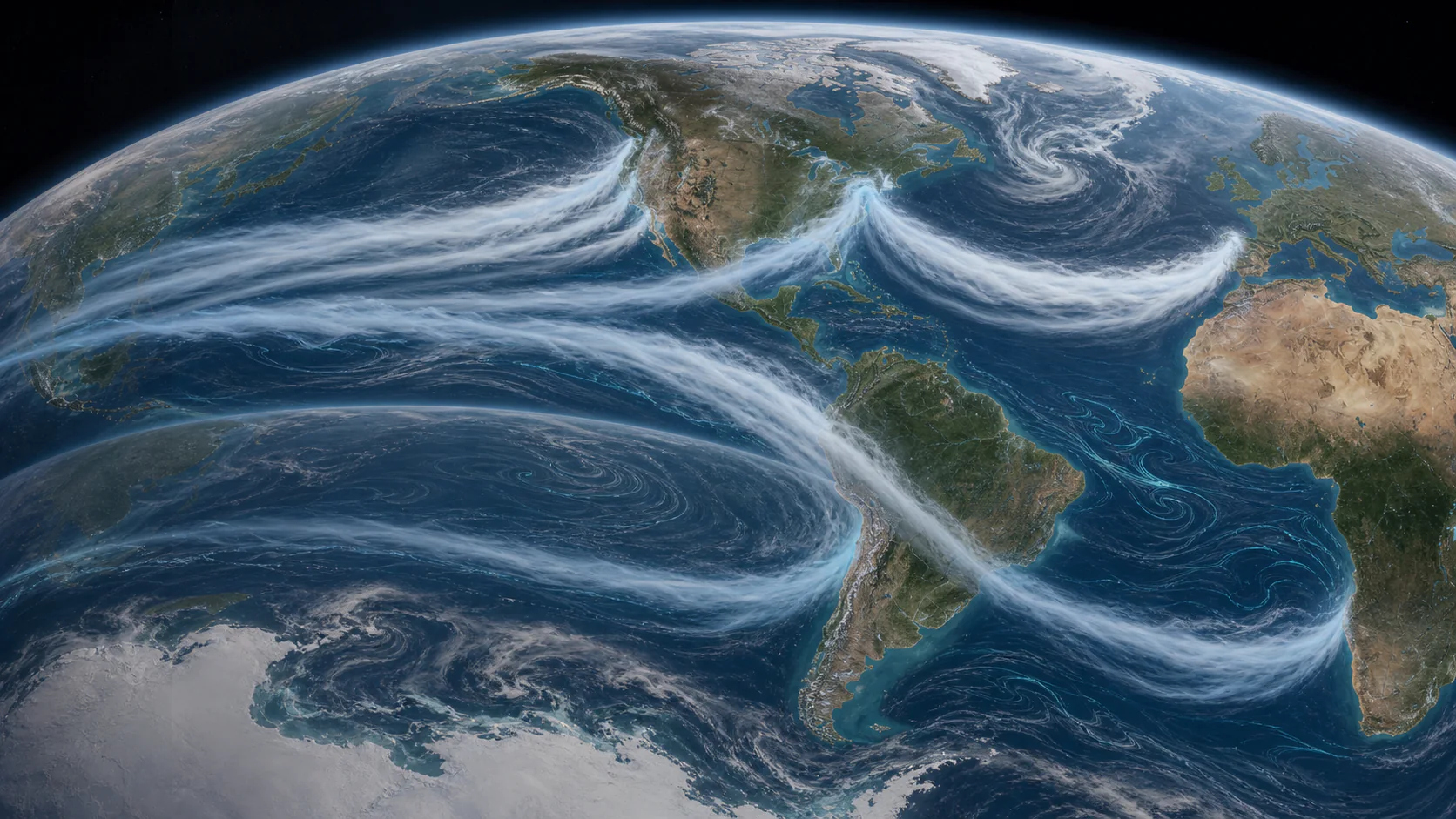
Large-ensemble climate-model experiments that raised and then lowered atmospheric carbon dioxide found that atmospheric-river frequency and intensity did not fully return to present-day states after concentrations declined. Persistent increases appeared along western North America, Europe, South America, East Asia, and Antarctica, linked in the model to slow recovery of the Atlantic overturning circulation and Southern Ocean temperatures.
Why it matters
Removing carbon dioxide is important, but it may not quickly reverse every accumulated hydroclimate risk. These are idealized model experiments, not observations or a forecast of a specific flood, so the result needs confirmation across more models and real-world data.
What to watch
- Replication across climate models and observational evidence for the projected hysteresis mechanisms.
- How flood standards, infrastructure design, and coastal adaptation account for slow-to-reverse risks.
Sources & evidence
- Hysteresis in global atmospheric river activity under carbon dioxide removalPeer-reviewed large-ensemble climate-model study, npj Climate and Atmospheric Science, DOI 10.1038/s41612-026-01454-0, published June 12, 2026; early-access unedited manuscript.
Continue learning with ACC
Explore ACC's climate science guide