ACC News Brief
Climate Science North American Prairie Pothole Region
Warming weakens the long-term climate benefit of temperate wetlands
What happened
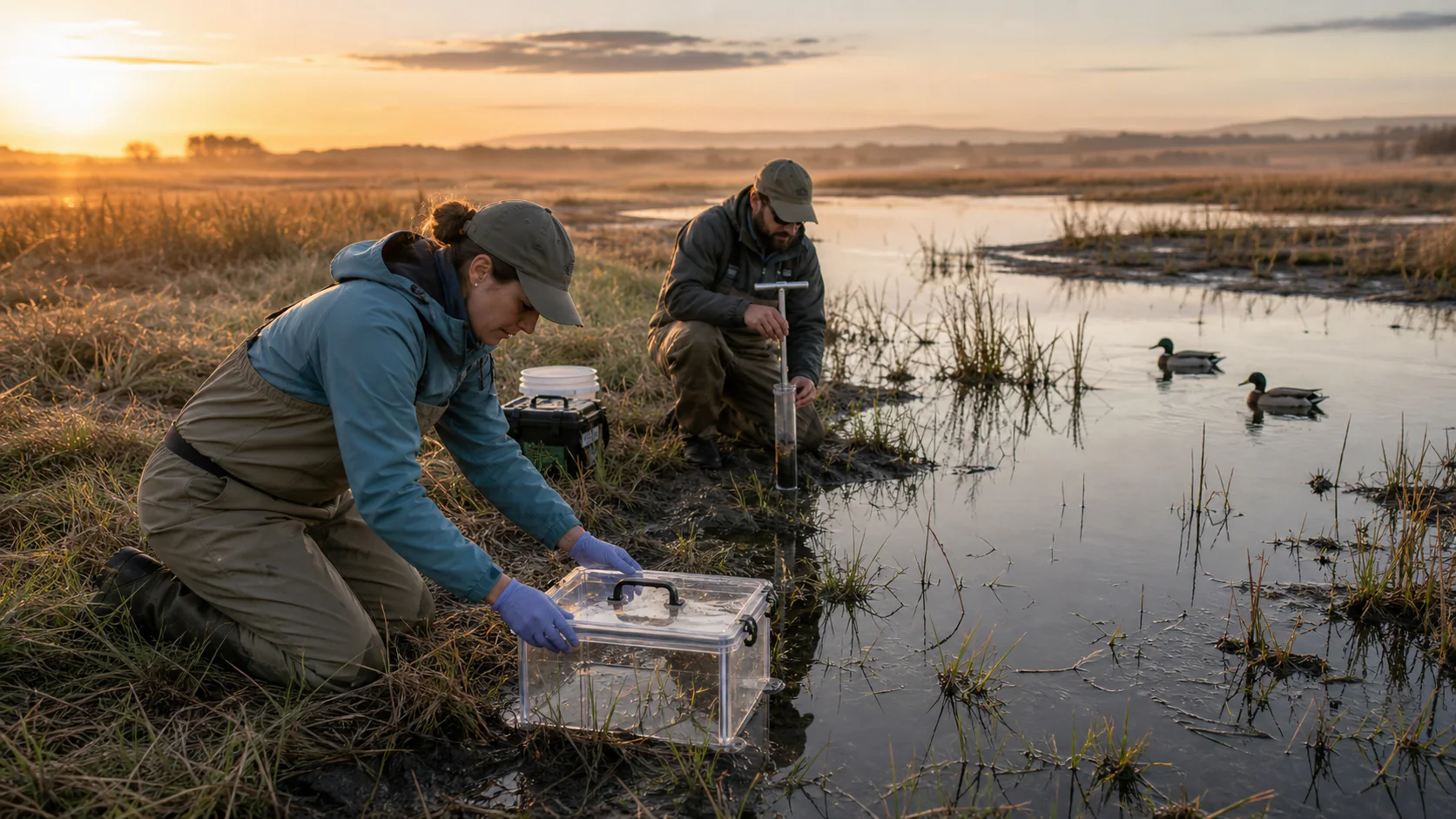
Researchers combined more than 19,000 methane-chamber measurements from 202 wetlands with 16 dated sediment cores across North America's Prairie Pothole Region. Under a high-forcing scenario, they project methane emissions approaching 950 kilograms per hectare per year by 2100 while carbon-dioxide sequestration weakens, potentially shifting the regional long-term greenhouse-gas balance; the result is regional and scenario-dependent, not a claim that all wetlands are currently climate sources.
Why it matters
This is not a case for draining wetlands, which provide habitat, water storage, and flood protection. It shows why conserving wetlands and cutting warming must work together: rising temperatures can erode part of the climate benefit that intact ecosystems have accumulated over time.
What to watch
- Continued field measurements across wetland types, water levels, seasons, and regions beyond the Prairie Potholes.
- How lower-emissions pathways and wetland restoration practices change the projected methane and carbon balance.
Sources & evidence
- Temperate wetlands lose climate-cooling capacity under warmingPeer-reviewed open-access research article, Nature Communications, DOI 10.1038/s41467-026-74772-9, published June 25, 2026; early-access unedited manuscript.
- Study code and supporting archiveZenodo research record linked from the article.
Continue learning with ACC
Explore ACC's ecosystems guide