ACC News Brief
Clean Energy Laboratory research
Single-atom catalyst improves high-temperature CO2 electrolysis in a lab cell
What happened
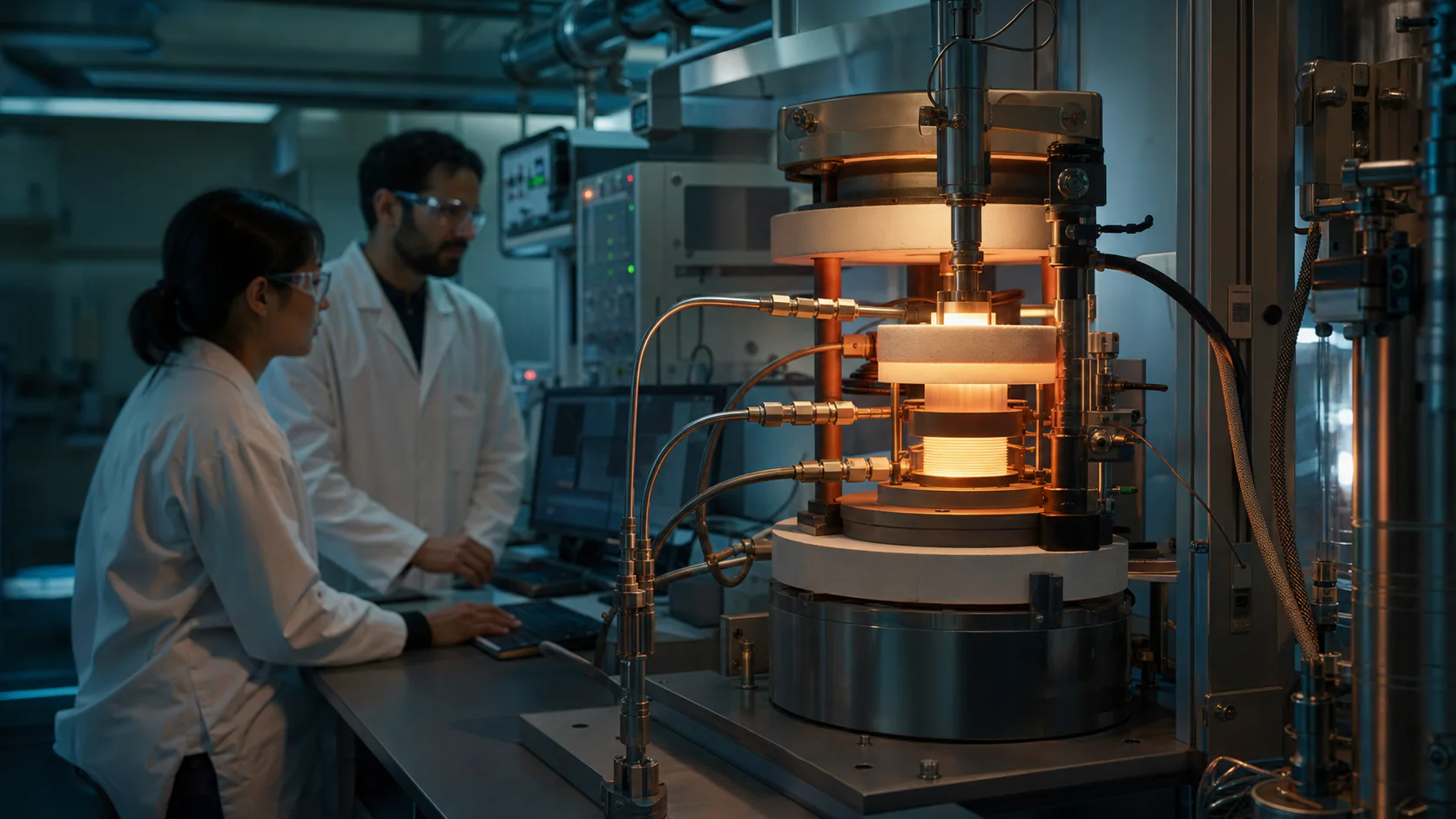
Nature Communications researchers reported a strong metal-support interaction that kept high-valent iridium single atoms stable on a lanthanum-strontium-ferrite cathode in a solid oxide electrolysis cell. In laboratory tests, the modified cathode increased CO2-to-CO current density by 80.8% versus the unmodified material, reached 3.02 A/cm2 at 800 C and 1.5 V, and maintained nearly 100% Faradaic efficiency with stability beyond 600 hours.
Why it matters
Durability is a major barrier for high-temperature electrolysis that could turn captured CO2 into carbon-monoxide feedstock. The climate value still depends on low-carbon electricity and heat, whole-system efficiency, iridium use, cost, scale, and what ultimately happens to the carbon. This is early laboratory evidence, not a commercial stack demonstration.
What to watch
- Independent replication and tests in larger cells and multi-cell stacks.
- Performance under thermal cycling, gas impurities, and operating periods well beyond 600 hours.
- Lifecycle emissions, iridium loading, system cost, and whether products remain out of the atmosphere.
Sources & evidence
- Nature Communications: Stable high-valent iridium single atoms for high-temperature CO2 electrolysisOpen-access early-version research article published July 18, 2026; DOI 10.1038/s41467-026-75580-x.
Continue learning with ACC
Explore ACC's renewable energy and grid guide