ACC News Brief
Clean Energy Global research
Triple-junction solar cell reaches 32.22% certified lab efficiency
What happened
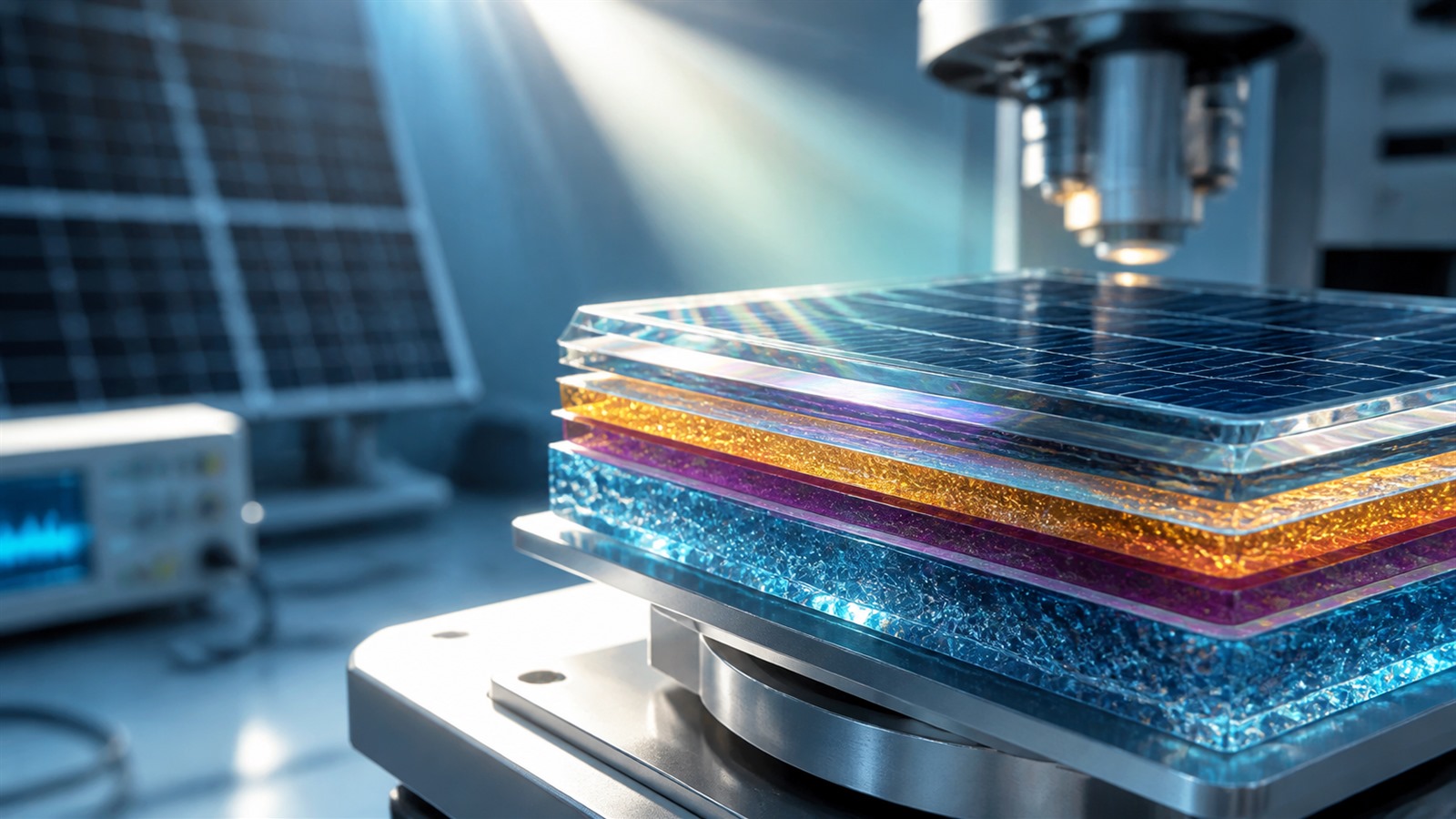
Researchers report a certified 32.22% steady-state efficiency for a 1.046-square-centimeter perovskite-perovskite-silicon triple-junction solar cell and 26.97% for a 15.62-square-centimeter device. The design combines defect passivation with optical management across the layered cell.
Why it matters
Stacking materials that absorb different parts of sunlight can move solar cells beyond the efficiency limits of a single junction. These are laboratory devices in an early-access paper, not commercial modules, so scale, durability, manufacturing yield, materials, and cost remain decisive.
What to watch
- Independent replication and larger certified devices and modules.
- Long-duration outdoor stability under heat, moisture, ultraviolet light, and repeated cycling.
- Manufacturing yield, lead management, material supply, recycling, and delivered electricity cost.
Sources & evidence
- Defect passivation and optical management of triple-junction solar cellsPeer-reviewed Nature research article published August 17, 2026; current page is an accepted early-access version.
Continue learning with ACC
Explore ACC's renewable electricity and grid guide