ACC News Brief
Biodiversity & Conservation Benin and the Gulf of Guinea
Benin survey confirms a living deep-water coral garden
What happened
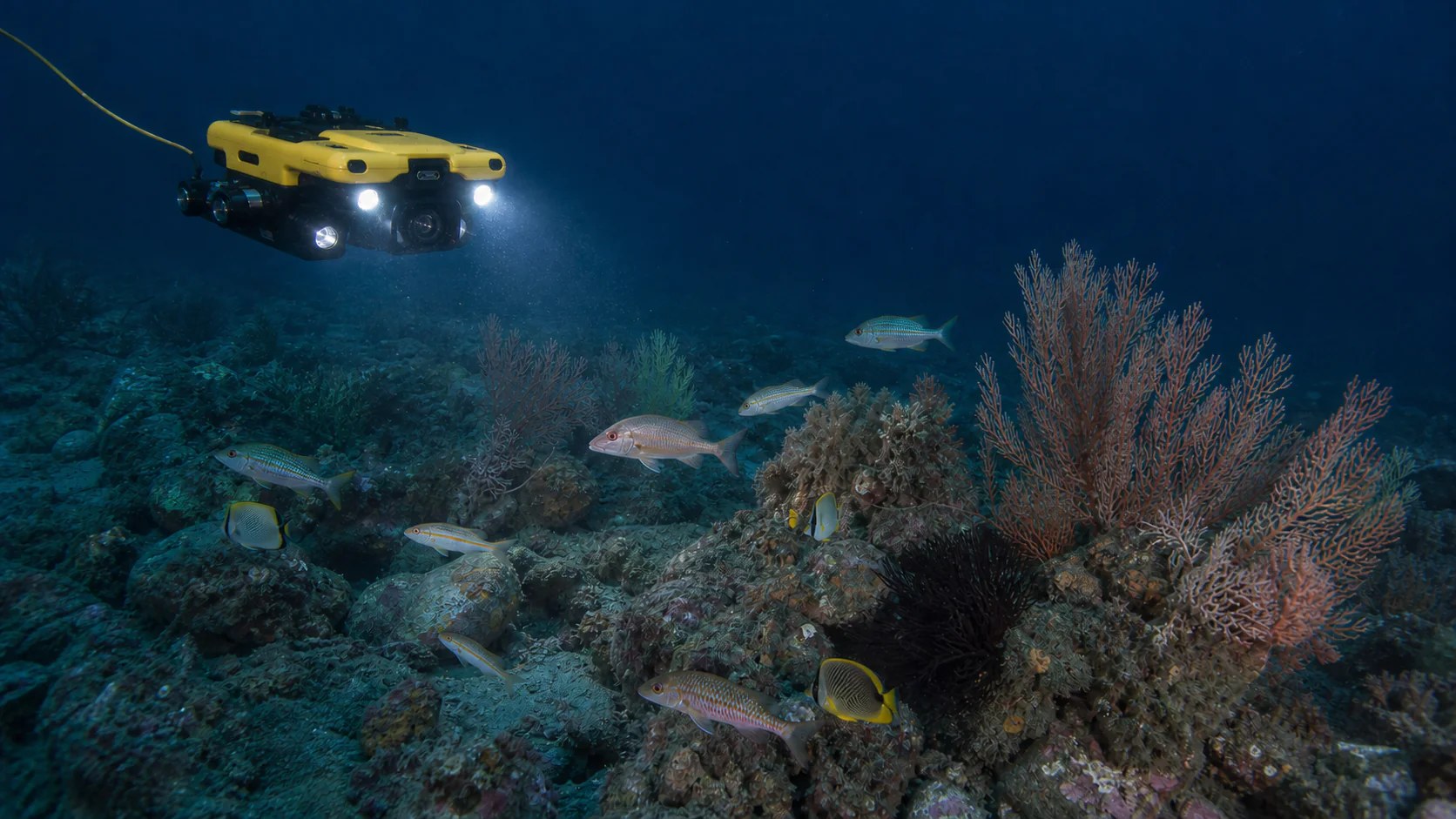
A Frontiers in Marine Science team combined 11.5 kilometers of side-scan sonar surveys with underwater video to confirm living coral communities at about 54 meters depth off Benin. The July 20 paper reports at least six octocoral forms, two black-coral taxa, and eight associated reef-fish species at selected rocky targets. The authors describe it as the first confirmed living mesophotic coral ecosystem on the Benin continental shelf, while stressing that visual species identifications remain provisional and the survey covered only part of the potential habitat.
Why it matters
The discovery supplies a scientific baseline for a poorly studied part of the Gulf of Guinea and shows how locally led exploration can reveal habitats that marine planning had largely overlooked. It is hopeful evidence of living biodiversity, not proof that the ecosystem is extensive, stable, or protected from fishing and other pressures.
What to watch
- Physical sampling and broader acoustic mapping to confirm species, age, habitat extent, and connectivity.
- Quantitative surveys that track coral condition, fish communities, temperature, oxygen, and human pressures over time.
- Whether Benin includes verified mesophotic habitat in marine spatial planning and designs protection with local fishing communities.
Sources & evidence
- First evidence of live mesophotic coral reefs on the Benin continental shelfOpen-access Frontiers in Marine Science brief research report published July 20, 2026; DOI 10.3389/fmars.2026.1848226.
- Underwater drones discover coral reefs off Benin long presumed deadFrontiers editorial summary published July 20, 2026, including researcher comments and the study's sampling limitations.
- The thriving coral reef that defeated time in West AfricaInside Climate News reporting by Johnny Sturgeon, published July 20, 2026, on the locally led field campaign and possible conservation next steps.
Continue learning with ACC
Explore ACC's ecosystems and biodiversity guide