ACC News Brief
Climate Resilience Southern China and Hong Kong
Typhoon Noul leaves heavy rain and flood risk after southern China landfall
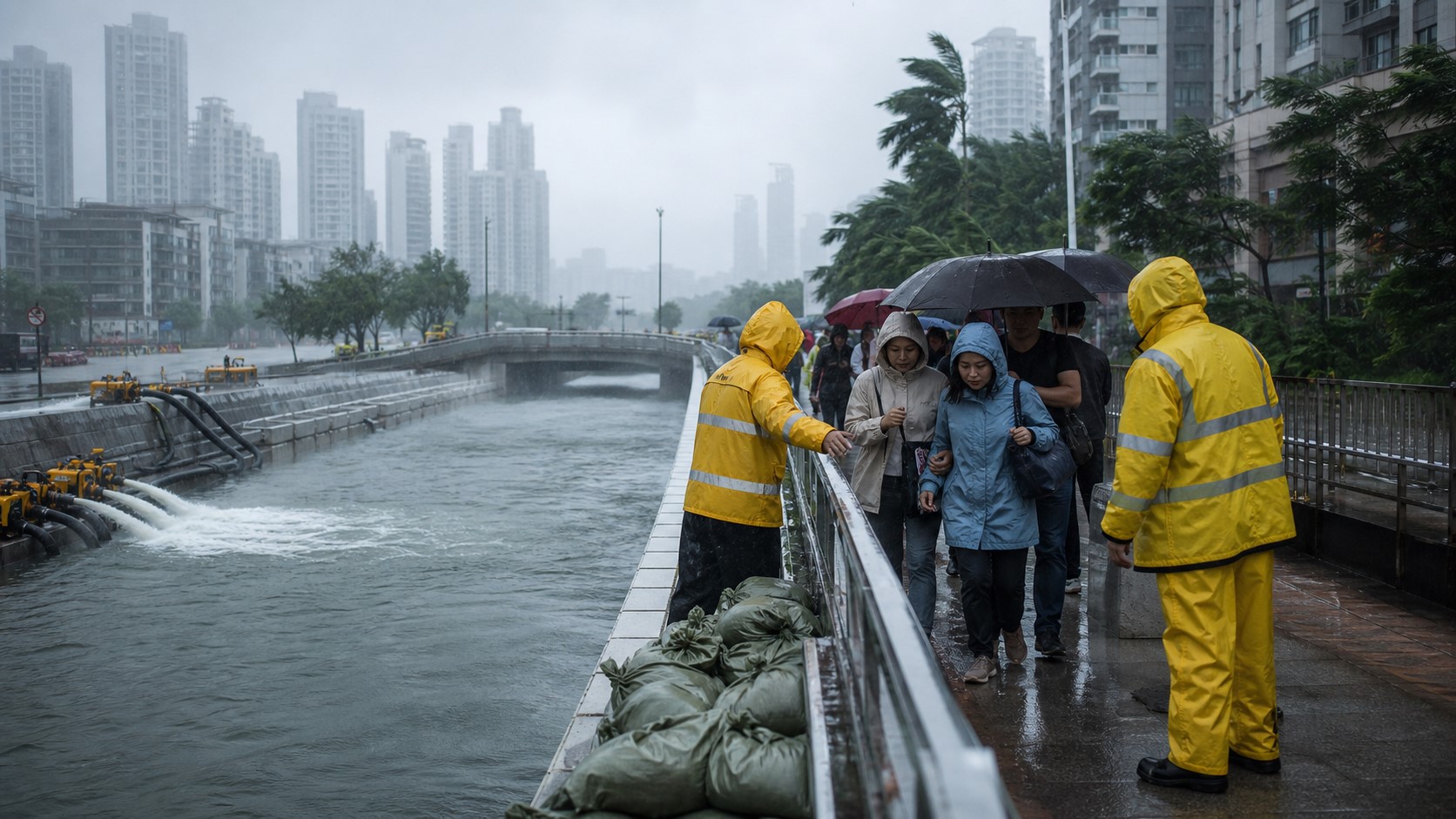
What happened
Typhoon Noul weakened to a tropical storm after making landfall in southern China, but heavy rain and flood danger continued Sunday, the Associated Press reported. More than 801,000 people had been relocated in Guangdong, around 350 Hong Kong flights were canceled, and at least 21 people were injured in the city during the typhoon period. China's Ministry of Water Resources upgraded its flood-control emergency response because of high mountain-flood risks.
Why it matters
A storm's wind category can fall while rainfall, flash-flood, landslide, transport, and recovery risks remain high. Resilience depends on early evacuation, drainage capacity, slope monitoring, backup communications, safe shelters, and warnings that continue after landfall rather than ending with the strongest winds.
What to watch
- Rainfall totals, mountain-flood and landslide alerts, and any expansion of evacuation or shelter needs.
- Restoration of flights, transit, power, water, and access to affected communities.
- Post-event reviews of drainage, warnings, evacuation support, and development in flood-prone areas.
Sources & evidence
- Typhoon Noul weakens after making landfall, brings heavy rain to southern ChinaAssociated Press report published July 26, 2026, on relocations, flight cancellations, injuries, rainfall, and flood-control response.
Continue learning with ACC
Explore ACC's climate resilience guide