ACC News Brief
Resilience Greece and Southern Europe
Deadly helicopter collision underscores Europe's dangerous wildfire emergency
What happened
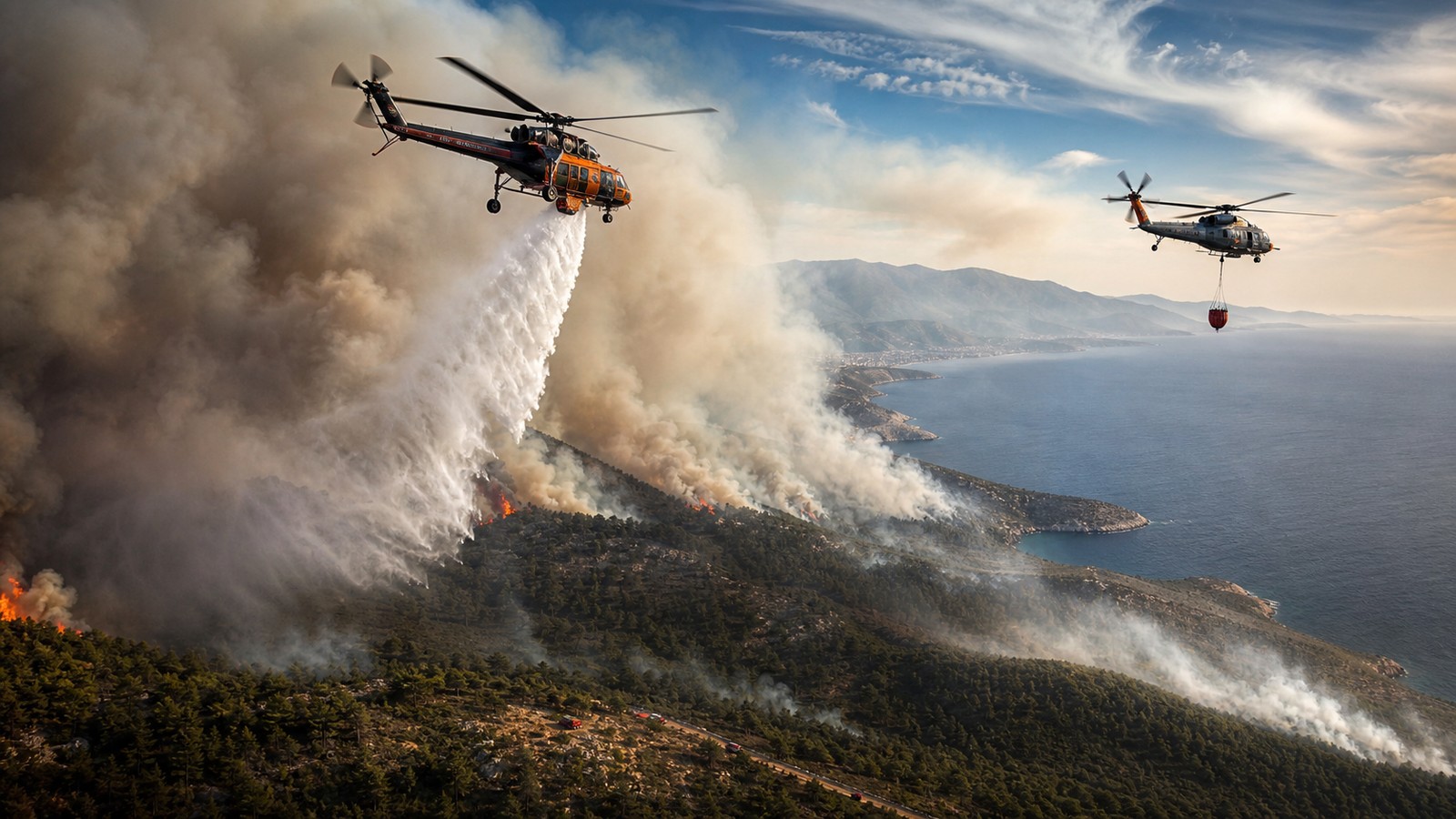
Two Greek firefighting helicopters collided while battling a wind-driven fire west of Athens, killing a Greek coordinator and a Danish pilot; two other crew members survived. Nearly 500 responders and 23 aircraft were deployed as strong winds drove evacuations in Greece, while major fire operations continued in France and Spain.
Why it matters
Aerial firefighting is high-risk work and cannot substitute for prevention, evacuation planning, defensible space, trained ground crews, and climate adaptation. The emergency shows how simultaneous fires, extreme winds, dry fuels, and limited escape routes can strain regional response capacity.
What to watch
- The investigation into the collision and any resulting aviation-safety changes.
- Whether winds and dry fuels trigger renewed evacuations or flare-ups across the region.
- How European countries coordinate crews, aircraft, recovery, and prevention after the fire season.
Sources & evidence
- 2 killed when firefighting helicopters collide near Athens as Europe's wildfire emergency ragesAssociated Press report published August 2, 2026, with updates from Greece, France, and Spain.
Continue learning with ACC
Explore ACC's climate resilience guide