ACC News Brief
Climate Science Baffin Island, Canadian Arctic
Barnes Ice Cap lost its summer snow cover unusually early
What happened
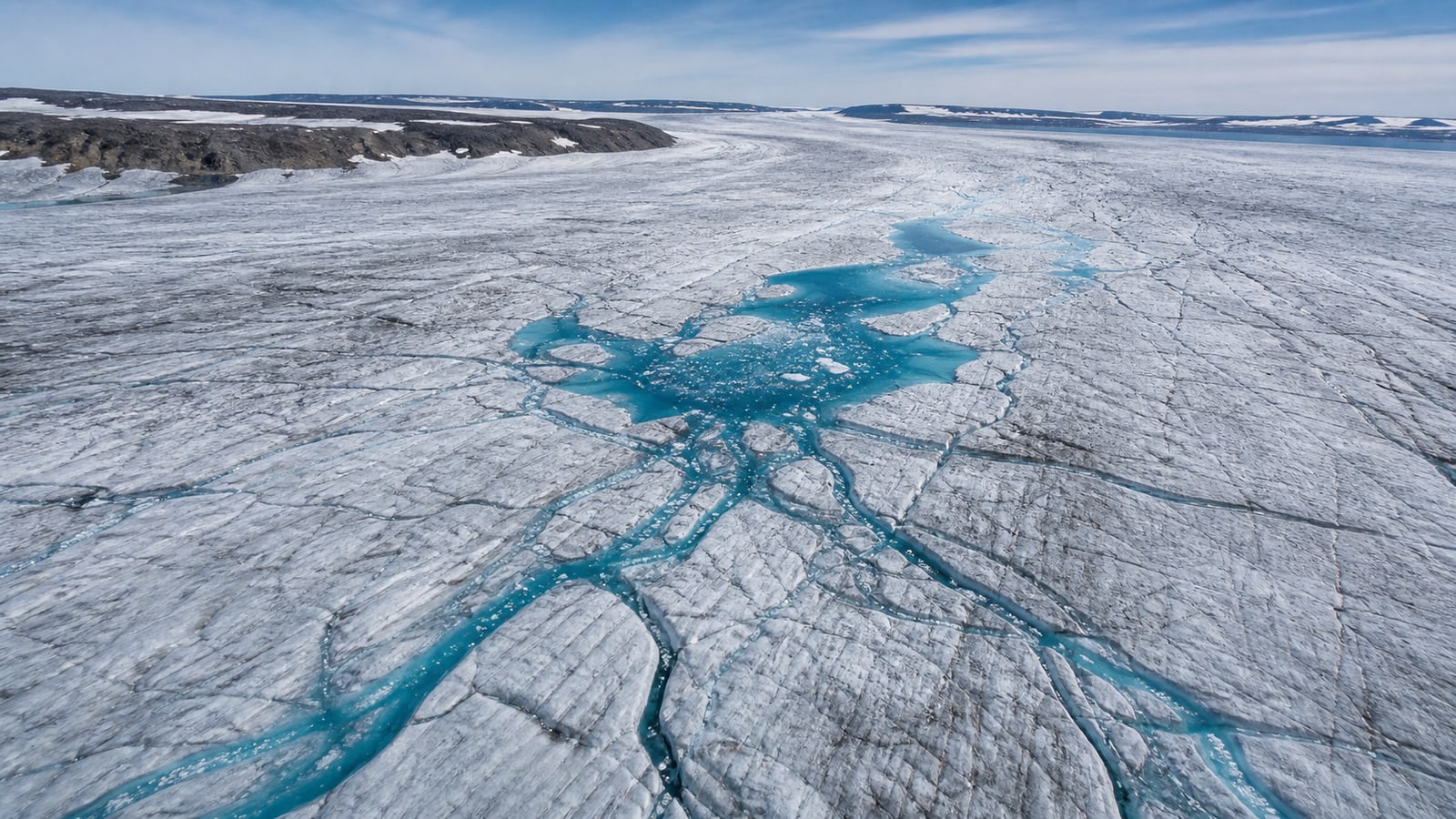
A NASA Earth Observatory account syndicated by Phys.org on August 4 says the Barnes Ice Cap entered summer with thin snow and was mostly bare by mid-July, the earliest such exposure observed by glaciologist Mauri Pelto. Landsat 9 imagery showed melt ponds and channels spreading across the roughly 5,700-square-kilometer ice cap.
Why it matters
Bright snow reflects more sunlight than darker bare ice. When snow disappears early, the exposed surface absorbs more energy, meltwater drainage begins sooner, and less water can refreeze into the ice cap, reinforcing seasonal mass loss.
What to watch
- How much mass the ice cap loses by the end of the 2026 melt season.
- Whether early bare-ice exposure becomes more frequent across the Canadian Arctic.
- How Landsat and field measurements refine estimates of runoff, thinning, and retreat.
Sources & evidence
- Early snow loss exposes Barnes Ice Cap bare ice by mid-JulyPhys.org report published August 4, 2026, provided by NASA and based on NASA Earth Observatory's Landsat analysis.
- A Bare Summer for Barnes Ice CapNASA Earth Observatory original published August 3, 2026, with Landsat 9 observations, measurements, and scientific context.
Continue learning with ACC
Explore ACC's climate science guide