ACC News Brief
Climate Solutions South Korea and Global Oceans
Marine carbon-removal prototype mineralizes dissolved CO2
What happened
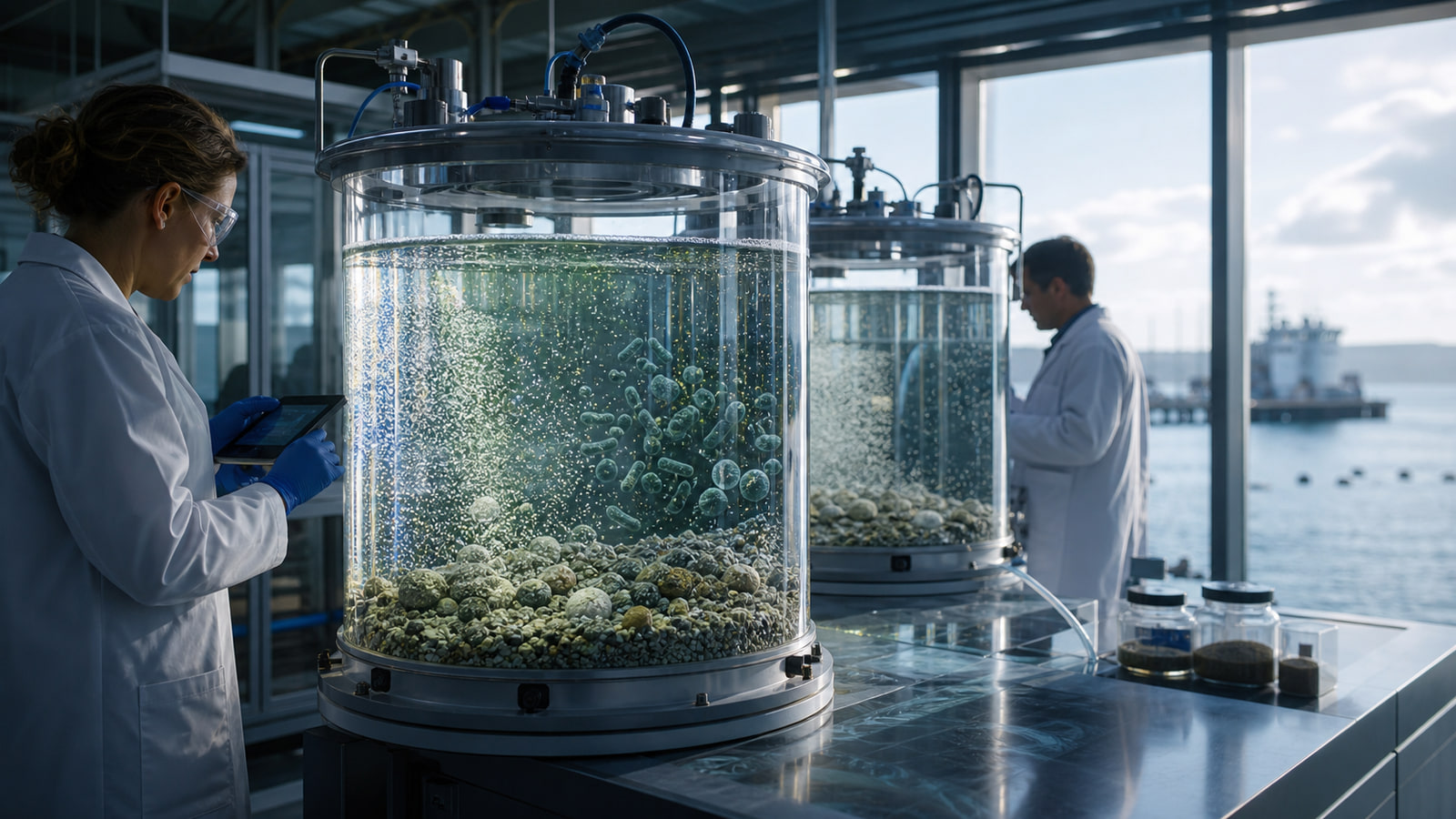
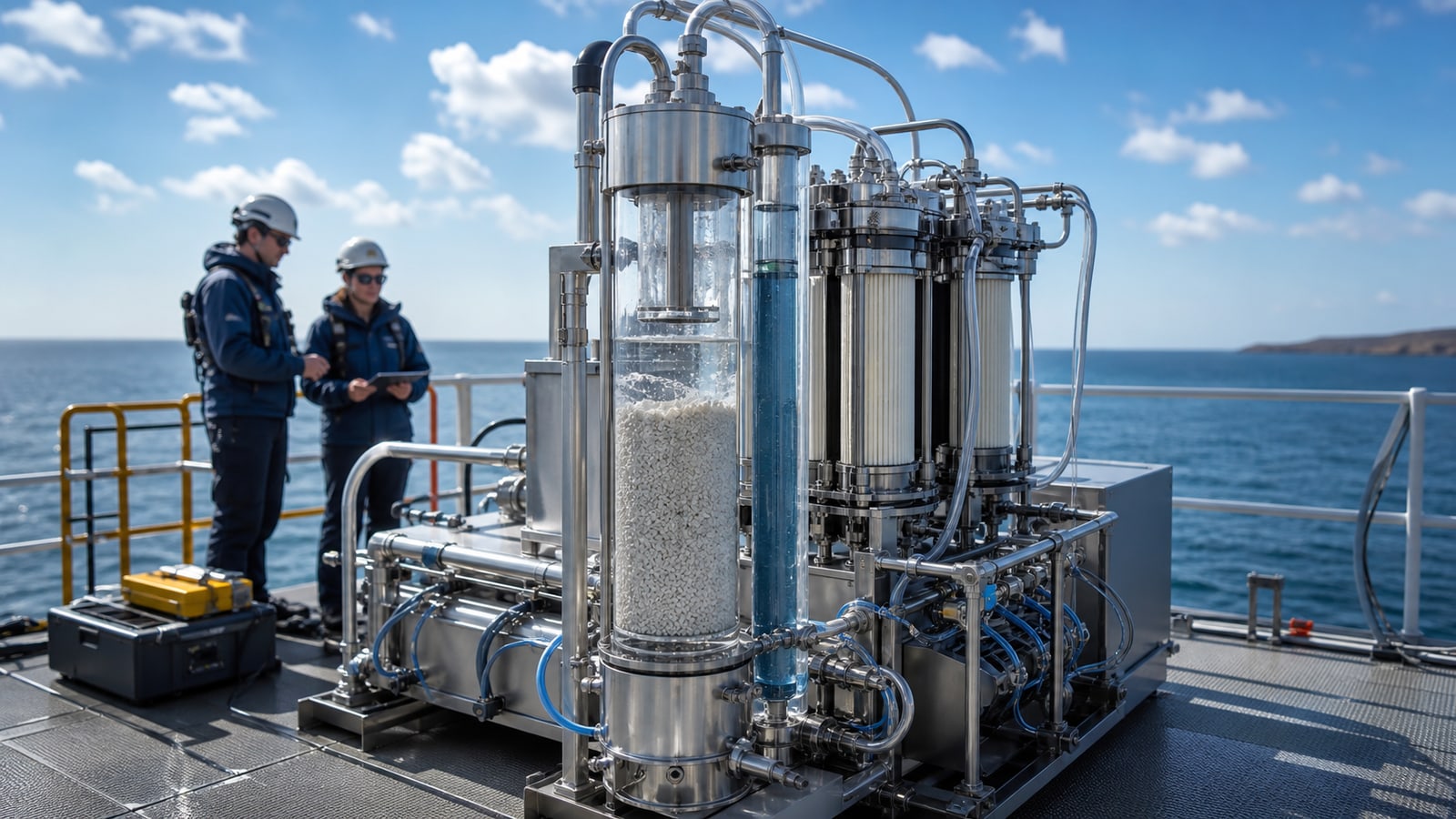
KAIST and MIT researchers developed a hollow-fiber electrochemical prototype that converts dissolved ocean carbon into stable calcium carbonate. In tests with Jeju seawater, the device operated for more than 120 hours, removed 80% to 90% of dissolved inorganic carbon, and used up to 54% less electricity than the comparison technologies described by the team.
Why it matters
Durable carbon removal may be needed alongside rapid emissions cuts, but ocean-based methods must prove energy use, permanence, ecological safety, monitoring, cost, and scalability. The design addresses mineral scaling by forming solids away from electrode surfaces and using generated gas bubbles to limit buildup.
What to watch
- Independent replication and longer tests in varied real-world seawater conditions.
- Full life-cycle energy, material, ecological, and cost assessments at larger scale.
- Reliable accounting for additional atmospheric carbon uptake and permanent mineral storage.
Sources & evidence
- Marine carbon removal technology that turns carbon dioxide in seawater into 'stone' for permanent storageKAIST research release published by Phys.org on August 4, 2026, based on a peer-reviewed Advanced Energy Materials paper.
Continue learning with ACC
Explore ACC's climate solutions pathways