ACC News Brief
Oceans & Water Arctic sea ice
Arctic test finds oil dispersant changed microbes without speeding breakdown
What happened
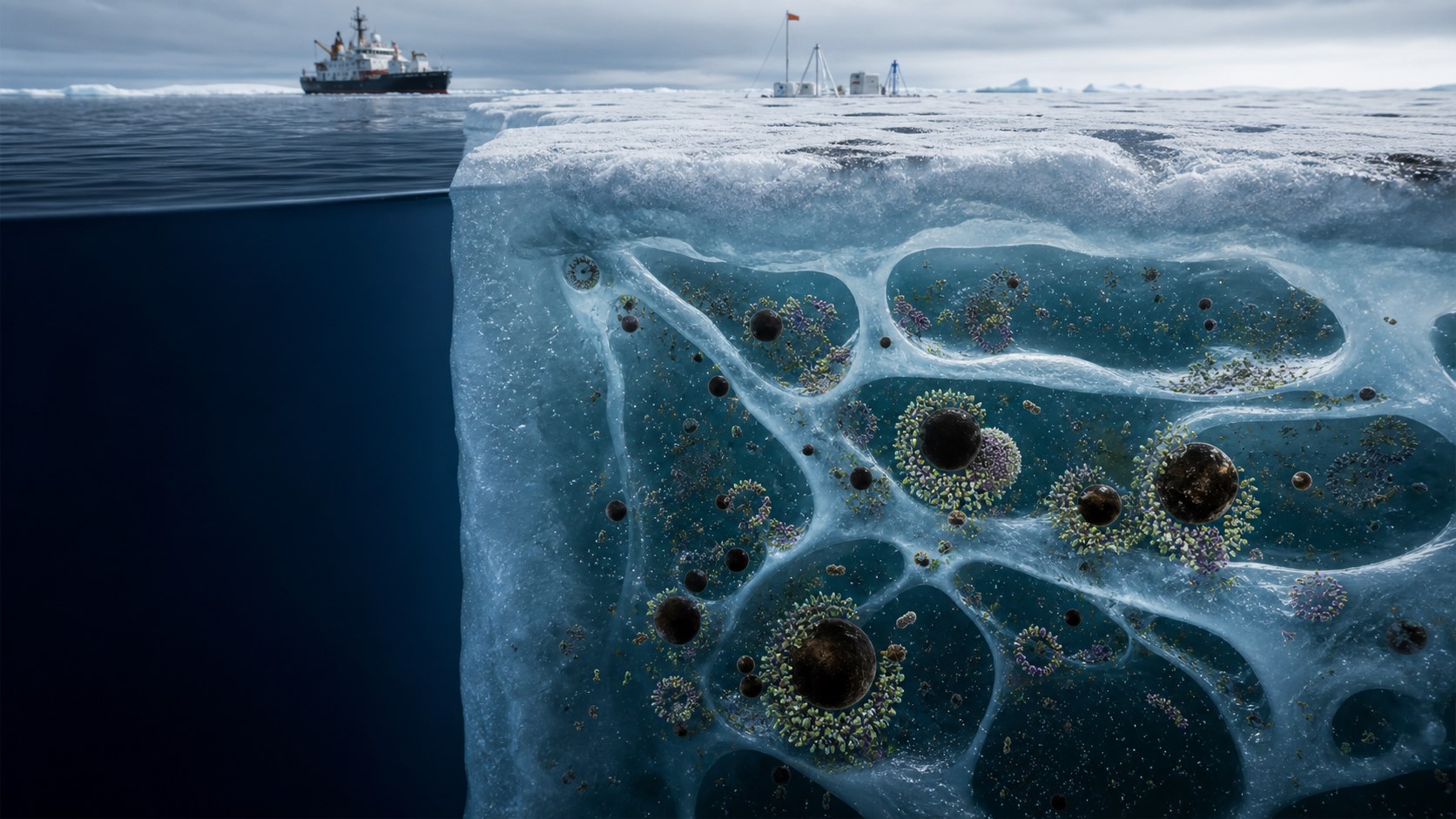
Estonian and Norwegian researchers exposed laboratory sea-ice mesocosms to dispersed crude oil or dispersant for three months. The dispersant increased the share of bacteria with oil-degrading potential and substantially changed the microbial community, but it did not clearly accelerate oil biodegradation under the low-microbe, controlled sea-ice conditions.
Why it matters
Retreating Arctic ice is increasing shipping and spill risk in a region where cold, salinity, darkness, and brine channels can change cleanup performance. A response tool that disperses oil but does not speed breakdown may shift exposure rather than eliminate it, so Arctic-specific evidence matters.
What to watch
- Field and larger mesocosm studies under realistic currents, light, weather, and ice conditions.
- Comparisons of dispersant use with mechanical recovery and other Arctic response options.
- Ecological effects on sea-ice food webs in addition to measured oil degradation.
Sources & evidence
- Oil dispersants reshape Arctic sea-ice microbes but do not markedly accelerate oil breakdownEstonian Research Council report published by Phys.org on August 7, 2026, describing the mesocosm design, microbial changes, result, and limitations.
- Microbial succession and hydrocarbon-degrading potential in Arctic sea icePeer-reviewed FEMS Microbes study of dispersed crude oil and chemical dispersant in simulated sea ice.
Continue learning with ACC
Explore ACC's ecosystems guide