ACC News Brief
AI & Data Centers United States
Tracker analysis — announced, pre-construction, and construction projects; not operating capacity
U.S. gas-development pipeline grows as data-center plans expand
What happened
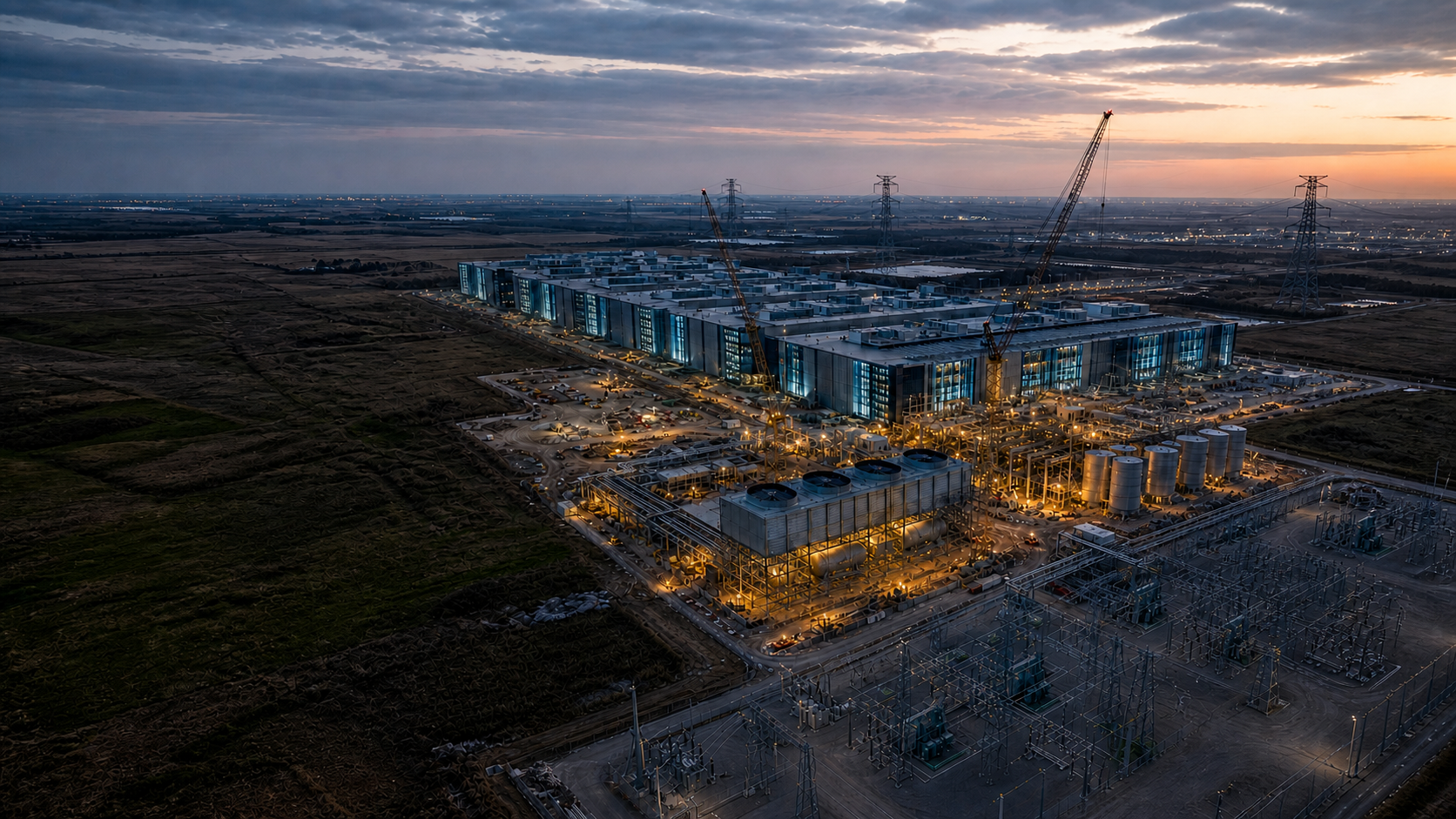
Global Energy Monitor's August 25 tracker analysis counts 378 gigawatts of U.S. gas-fired capacity in development, up 50 percent from its January release. Of that total, 189 gigawatts is intended primarily to serve data centers. Projects GEM classifies as under construction total 52 gigawatts, including 16.9 gigawatts intended to directly power data centers. The pipeline also includes announced and pre-construction proposals, so these figures do not mean every project will be completed or operate.
ACC context
Data-center electricity demand can influence which power plants, transmission lines, storage systems, and efficiency measures are built. Evaluating that growth requires separating proposals from construction and operation, then tracking actual energy use, generation mix, emissions, water needs, local pollution, and who pays for new infrastructure.
Why it matters
Gas infrastructure built for rapidly growing computing demand could remain in service for decades and add carbon dioxide, upstream methane, and local air-pollution risks. But the climate and consumer consequences depend on which projects receive permits and financing, reach construction, and ultimately operate—and on how often they run.
What to watch
- Which announced and pre-construction projects move into physical construction or are delayed, shelved, or cancelled in GEM's next release.
- Whether projects identify turbines or engines, firm start dates, permits, fuel supply, and specific data-center customers.
- Actual operating emissions, methane controls, local air and water impacts, and ratepayer or tax exposure for projects that advance.
- Whether efficiency, flexible computing loads, renewables, storage, and transmission change the amount of new gas capacity ultimately needed.
Sources & evidence
- Global Energy Monitor report on U.S. gas proposals tied to data centersTracker analysis dated August 25, 2026. Status boundary: the totals combine announced, pre-construction, and construction projects and are not operating capacity or a forecast that every project will be built.
- Global Energy Monitor direct report PDFAugust 2026 report underlying the 378 GW total U.S. development pipeline, the 189 GW intended primarily for data centers, and the construction-stage subtotals.
- Global Oil and Gas Plant Tracker methodology and status definitionsGlobal Energy Monitor tracker page used to distinguish announced, pre-construction, construction, and operating projects; August 2026 release context.
- The Guardian coverage of U.S. gas proposals and data centersIndependent coverage published August 25, 2026 and updated August 26, 2026.
Continue learning with ACC
Explore ACC's AI and data-center energy guide