ACC News Brief
Climate Science Eastern equatorial Pacific / Galapagos
Peer-reviewed regional paleoclimate reconstruction - not a forecast for an individual ENSO event
Galapagos corals show eastern Pacific ENSO variability has intensified
What happened
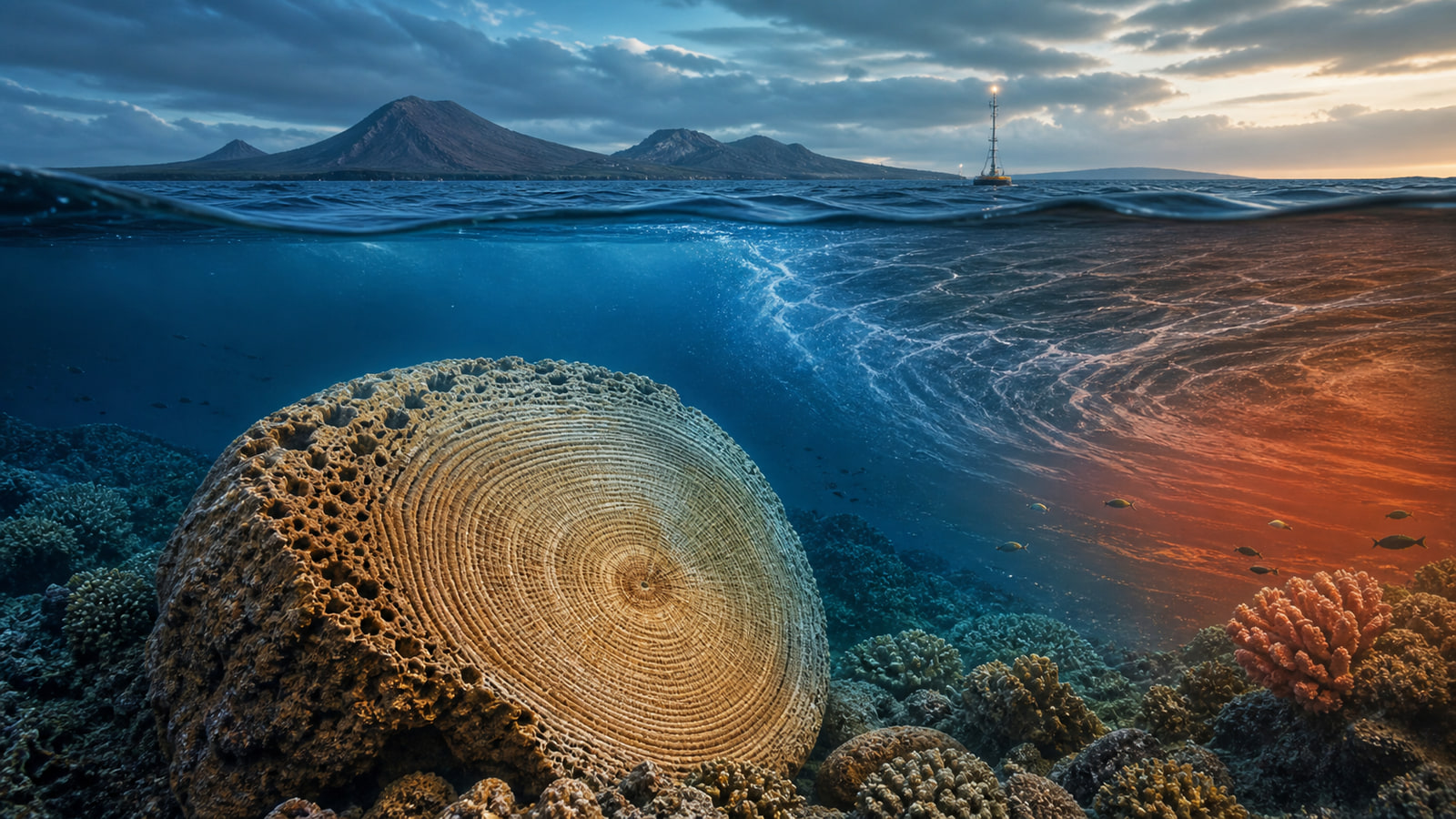
A peer-reviewed Science study reconstructed eastern Pacific El Nino-Southern Oscillation variability using the chemistry of Galapagos coral skeletons spanning the past millennium. The authors report that recent variability is 36.5 percent higher than during the preindustrial millennium, with the rise concentrated in stronger El Nino events and the sharpest increase in the past four decades. The study says the recent change exceeds simulated natural variability and parallels rising global temperature.
ACC context
The 36.5 percent comparison describes variability in the reconstructed eastern Pacific record, not a claim that every modern El Nino is 36.5 percent stronger. Proxy uncertainty, regional differences, and natural variability still matter; the paper's conclusion is about the long-term pattern and its consistency with warming.
Why it matters
ENSO shifts rainfall, heat, drought, marine conditions, and disaster risk around the world. A millennium-scale record gives scientists a longer baseline than modern instruments alone and strengthens evidence that eastern Pacific variability is changing as the planet warms. It does not predict the impacts of any single El Nino event.
What to watch
- Independent coral and other paleoclimate reconstructions from additional Pacific locations.
- How climate models reproduce the regional pattern and the stronger contribution from El Nino events.
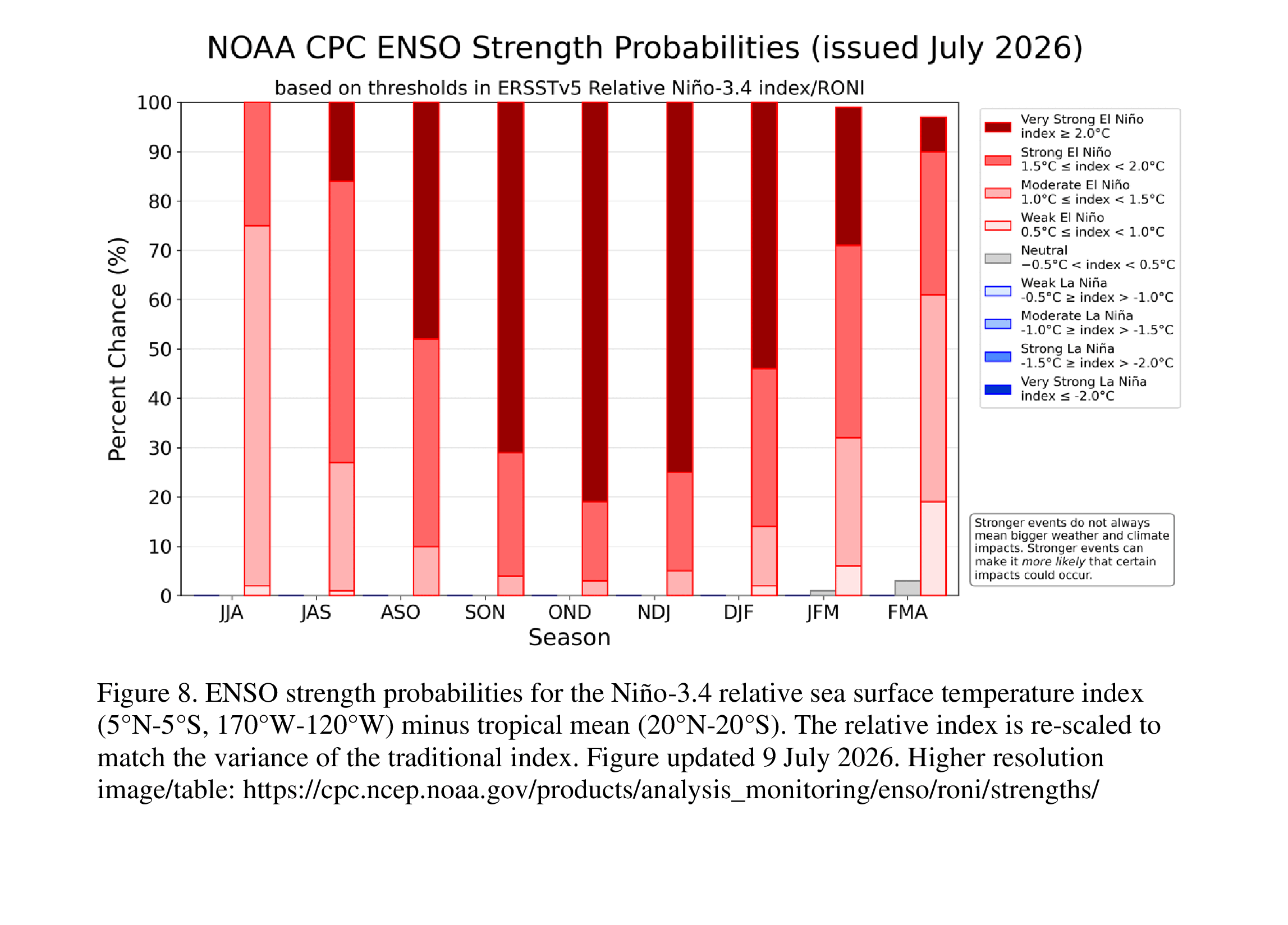
- Operational NOAA and WMO forecasts for current conditions, which remain separate from this historical reconstruction.
Sources & evidence
- Recent strengthening of eastern Pacific ENSO in the last millennium paleorecordPeer-reviewed Science article published August 27, 2026, DOI 10.1126/science.ady2660.
Continue learning with ACC
Learn how observations, paleoclimate records, and models build climate evidence