ACC News Brief
Environmental Health California and Pacific Coast
PEER-REVIEWED ACCEPTED EARLY VERSION; FIELD OBSERVATION + MECHANISTIC INFERENCE - no individual exposure or health-effect estimate; final Version of Record pending
Study finds evidence of Tijuana River wastewater VOC transport north via ocean-air exchange
What happened
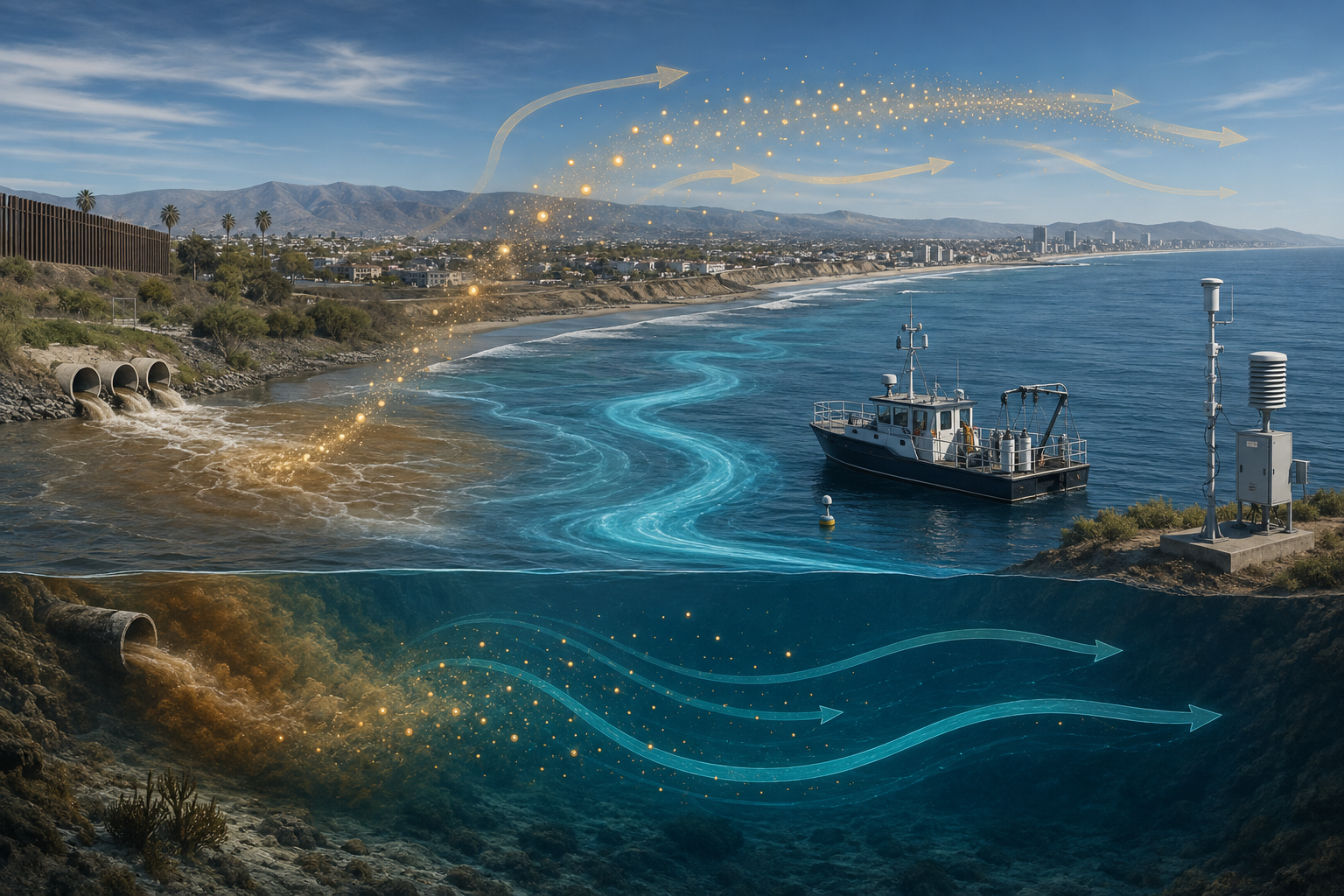
A peer-reviewed field study detected volatile organic compounds associated with anomalous dry-season Tijuana River wastewater flows in coastal air about 35 kilometers north of the river source. Coupled atmospheric and hydrographic evidence indicates that ocean transport followed by air-sea exchange extended the compounds' persistence beyond what atmospheric oxidation alone would predict.
ACC context
The study examined one anomalous coastal event and detected transport, not personal dose or clinical harm. Its mechanism should not be generalized to every compound, season, or wastewater discharge.
Why it matters
Coastal wastewater can move through connected ocean and atmospheric pathways, complicating assumptions that offshore discharge keeps pollution confined near its source and informing where monitoring may be needed.
What to watch
- Replication across seasons, flow conditions, coastal locations, and a wider range of compounds.
- Measurements that connect environmental concentrations to individual exposure and health outcomes.
- Wastewater treatment, coastal monitoring, and cross-border response decisions informed by the transport pathway.
Sources & evidence
- Persistence of organic compounds extended through ocean transport and air-sea exchangePeer-reviewed, citable Scientific Reports accepted article published as an early version on September 5, 2026, combining coastal air samples with atmospheric and hydrographic analysis; it is awaiting the final Version of Record.
Continue learning with ACC
See how field observations and multiple data streams support environmental findings