ACC News Brief
Ecosystems Global Forests
VERIFIED ASSOCIATION - final peer-reviewed Article; remote-sensing analysis with statistically inferred resilience
More than a third of global forests gained productivity while losing resilience

What happened
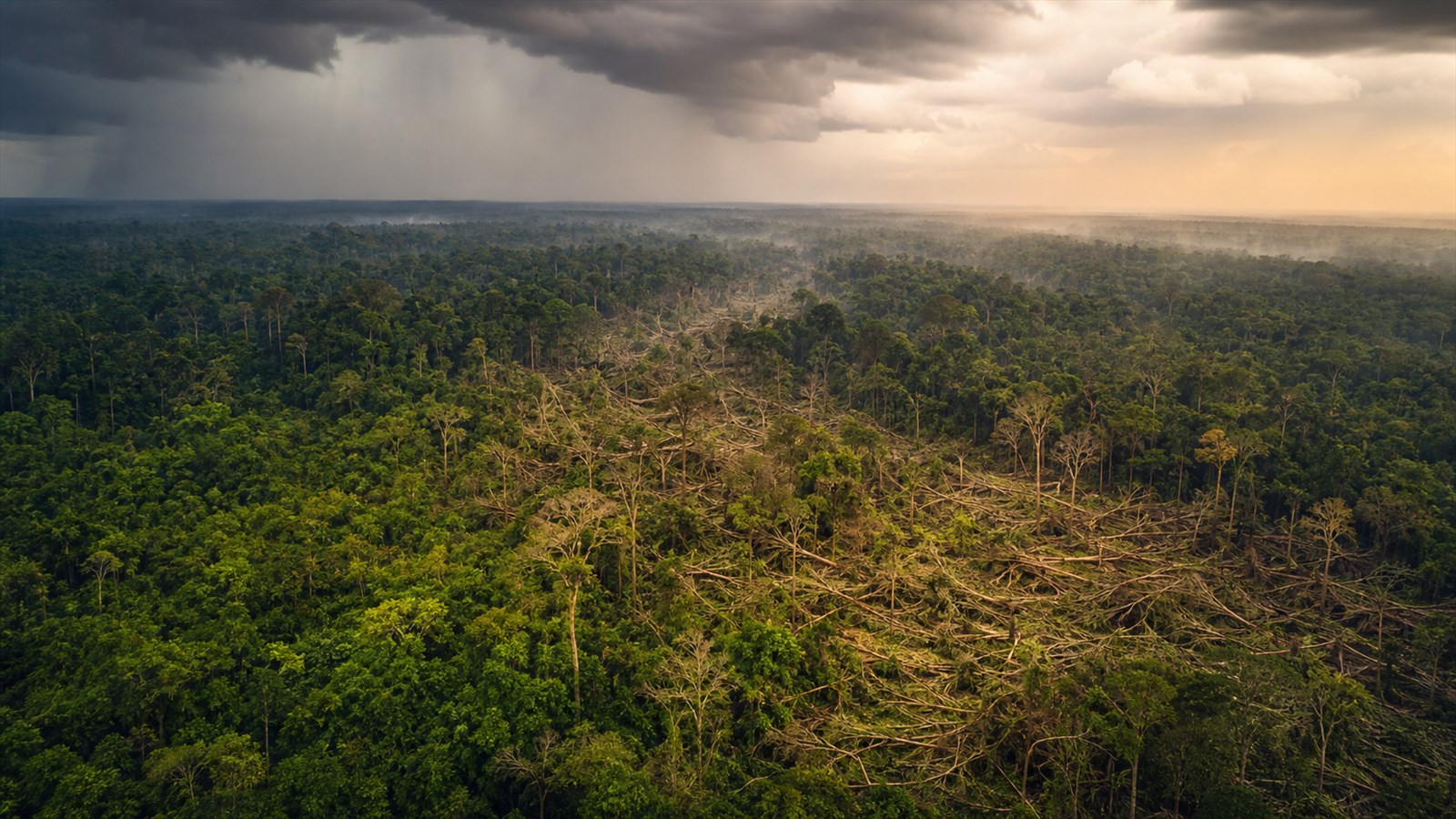
A Communications Earth & Environment study using multiple remote-sensing datasets from 2001-2021 found that more than one-third of global forests simultaneously gained gross primary productivity and lost inferred resilience. Rising atmospheric vapour pressure deficit, a measure of atmospheric drying demand, was the primary driver associated with resilience loss. Non-intact forests were about twice as sensitive as intact forests.
ACC context
The resilience measure is inferred from temporal satellite signals; it is not a direct measurement of imminent forest collapse. The driver analysis supports a strong association with atmospheric aridity but does not replace ecosystem-specific field evidence.
Why it matters
Higher plant productivity can look like ecosystem improvement while masking a declining capacity to recover from disturbance. Because forests are major carbon stores and sinks, monitoring productivity without resilience may overstate the durability of their climate benefit.
What to watch
- Ground-based tests of the remote-sensing resilience indicators across forest types.
- Whether intact-forest protection and restoration reduce sensitivity to atmospheric aridity.
- Monitoring that reports forest productivity and inferred resilience together.
Sources & evidence
- Atmospheric aridity drives functional reorganisation and resilience loss in global forestsCommunications Earth & Environment final published open-access Article dated September 10, 2026; the multi-source remote-sensing record spans 2001-2021.
Continue learning with ACC
Learn how satellite indicators and uncertainty support climate evidence