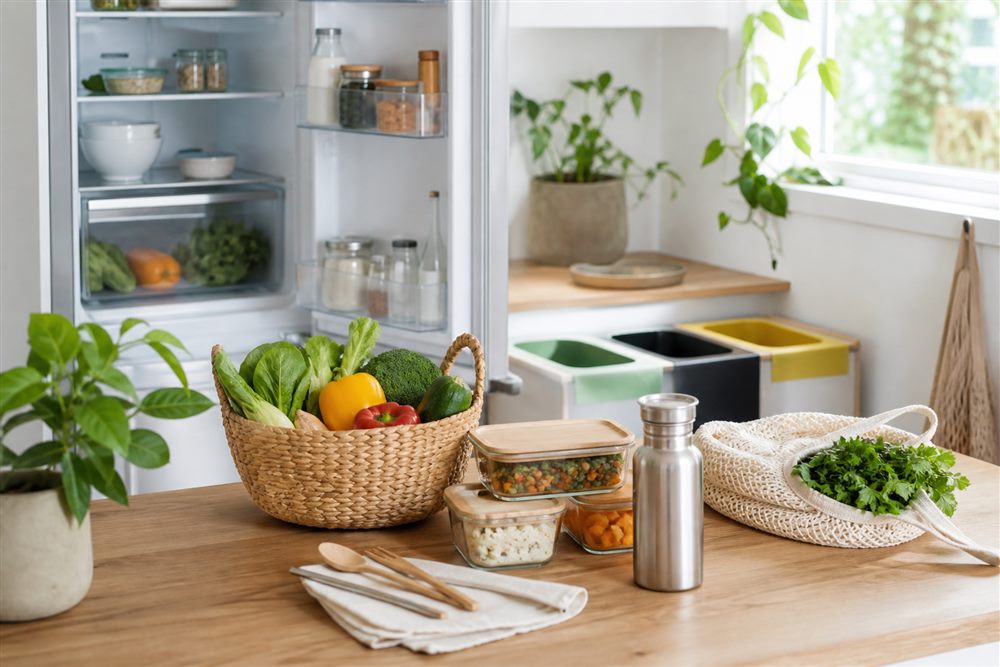

Choose one habit that fits a normal day.
How to use this
Pick one track first. Finish one useful task, repeat it for a week, then add another. The goal is steady progress, not perfection.
Use with the Companion
The online Sustainability Companion lets you save progress, take notes, and move through the guide stages over time.
Guidebook
Printable guidebook sections.
Use this page as Section 1, then print or save the next sections as needed. Each section works on its own and also fits into the larger ACC guide.
Start
Pick one thing you can do this week.
Do not start with a huge lifestyle overhaul. Choose one action, make it easy to repeat, and let that become your first win. Use what you already have first and adjust the setup when something causes friction.
Waste less food
Use what is already in the fridge, freeze leftovers early, and plan two meals before shopping.
Recycle by local rules
Find your city, county, waste authority, or hauler guide and keep problem items out of the bin.
Cut everyday power waste
Turn off unused lights, unplug rarely used electronics, and use smart strips where they help.
Replace one repeated disposable
Choose the single-use item you use most, such as a straw, cup, utensil, bottle, bag, or takeout container. Replace that routine with a reusable option you already own.
Turn private habits into local action
Share one useful resource, ask a local question, or connect with someone working on practical climate action.
Routine
Turn the action into a routine.
The point is not to do something once. The point is to make the better choice easier the next time it comes up.
Put the bin, bag, pouch, list, or power strip where you actually need it.
Repeat it. Repetition is where the change starts to count.
Add the next habit only after the first one feels easy enough to keep.
Recycling
Follow your local recycling program.
Recycling rules are not the same everywhere. Many cities, counties, waste authorities, and private haulers publish a local guide, flyer, calendar, accepted-materials page, or printable poster. Check that source first, because accepted items can change.
Save your local guide
Search your town, county, waste authority, or hauler plus "recycling guide." Save the page or screenshot.
Know the usual safe items
Cardboard, paper, metal cans, glass bottles and jars, and plastic bottles or jugs are commonly accepted, but confirm locally.
Keep bags out unless allowed
Loose plastic bags and film usually do not belong in curbside bins. Many stores or drop-off sites handle them separately.
Empty, dry, and flatten
Empty containers, keep paper dry, and flatten cardboard so recycling is cleaner and easier to sort.
Do not wish-cycle
If your program does not accept an item, putting it in the bin can contaminate the load or create sorting problems.
Special items need special paths
Batteries, electronics, paint, light bulbs, chemicals, and some textiles often need drop-off events or special collection.
Home
Small household choices add up.
These ordinary routines reduce waste and often save money. Pick the ones that fit your life and ignore the rest for now.
Buy less, repair more
Before replacing something, ask whether it can be repaired, borrowed, bought used, or skipped.
Keep reusables visible
Bags, bottles, cups, food containers, utensils, washable straws, and cloths work better when they live where you use them.
Lower standby power
Unplug rarely used electronics or group devices on a power strip you can switch off at night.
Wash smarter
Run full loads, use cold water when possible, clean lint filters, and air-dry what makes sense.
Plan before shopping
Check what you already have before buying more food, cleaners, or household supplies.
Share instead of buying
Borrow tools, give away usable items, and use local sharing groups when available.
Food
Food is one of the easiest places to start.
Most people can make progress here without a big purchase. Use what you already bought, waste less, compost if it is realistic, and grow something small if you want to.
Use older food first
Make an "eat first" spot in the fridge so older food is visible before it spoils.
Freeze leftovers early
Freeze bread, soups, sauces, cooked meals, and chopped produce before they become waste.
Plan two rescue meals
Keep one flexible meal, like soup, stir-fry, tacos, pasta, or bowls, for using odds and ends.
Grow something small
Herbs, containers, pollinator plants, or one raised bed can be enough to start.
Reuse first
Build the habit around what you already have.
Look around the kitchen, car, bag, closet, and laundry area first. Sustainable living does not require a new collection of products. Choose only the few reusable items that fit your actual routine and use them repeatedly.
Notice the repeat
Choose one disposable item that regularly enters your trash or recycling.
Set up the alternative
Keep the items that fit your routine, such as utensils, a napkin, bottle or cup, food container, bag, or washable straw, where you will remember them.
Repair, borrow, or share
Use community resources and simple repairs before replacing something that can still serve a purpose.
Check the result
After a few weeks, keep the routine if it works. If it does not, simplify it rather than adding more things.
Notes
Choose your first action.
Write what you will try first, where you will put the reminder or tool, and when you will check back in.