Start here

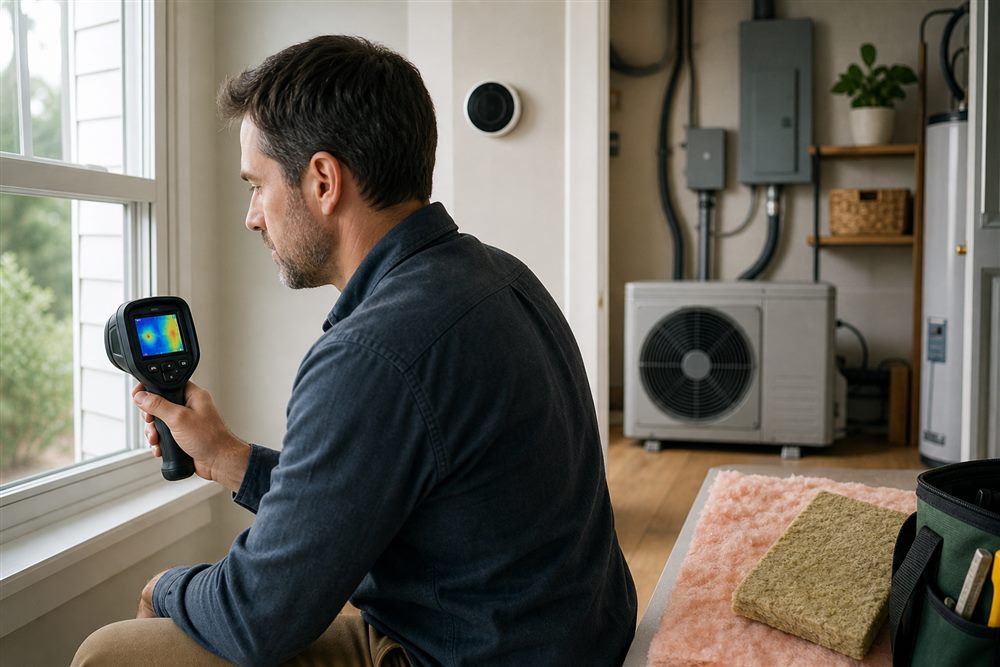
Do the simple energy walk-through.

Pick one room at a time. Look for energy leaving the house through air leaks, old lighting, always-on electronics, hot-water waste, and poor shade or insulation.

Find air leaks

Check door edges, window gaps, attic hatches, outlets on exterior walls, and places where pipes or cables enter the home.

  • Weatherstrip one drafty door.
  • Seal obvious gaps with safe, appropriate materials.
  • Keep a list of areas that need a larger repair.

Control heating and cooling

Small thermostat changes, shade, curtains, fans, and filter maintenance can reduce wasted energy without making the home uncomfortable.

  • Replace or clean HVAC filters on schedule.
  • Use shade on hot sunny windows.
  • Try a modest thermostat setback when away or asleep.

Cut plug and lighting waste

LED bulbs, smart strips, and unplugging rarely used devices are small changes that keep saving after they become normal.

  • Replace the most-used bulbs first.
  • Put entertainment or office devices on a power strip.
  • Unplug chargers and devices that stay warm.

Use hot water carefully

Water heating is often a major home-energy load. Laundry, showers, leaks, and water-heater settings are good places to start.

  • Wash laundry cold where it works.
  • Fix dripping hot-water faucets.
  • Use efficient showerheads when practical.
Upgrade planner

Choose upgrades by cost, comfort, and impact.

Do not buy everything at once. Start with the fixes that are cheap, visible, and repeatable. Then plan bigger upgrades with rebates, contractor quotes, and energy-bill data.

Upgrade Cost level Why it matters Good first step
Weatherstripping and air sealing Low to medium Reduces drafts, comfort problems, and heating or cooling waste. Fix one obvious draft, then add the rest to a project list.
LED lighting Low Uses far less electricity than old incandescent lighting. Replace lights that are used every day.
Insulation Medium to high Helps keep heated or cooled air where it belongs. Check attic or roofline insulation first if accessible.
Efficient appliances Medium to high Major appliances can shape electricity, water, and repair costs for years. Replace at the end of life, not as a rushed emergency purchase.
Heat pumps High Can provide efficient heating and cooling, especially when paired with cleaner electricity. Get quotes, check rebates, and ask about sizing and cold-weather performance.
Weekly rhythm

Keep it manageable.

Energy upgrades work best as a calm sequence, not a shopping spree. Use this routine for the first month.

Week 1: Observe

Walk the home, note drafts, hot rooms, cold rooms, bright lights, old appliances, and always-on electronics.

Week 2: Fix one thing

Weatherstrip one door, replace a bulb, use a power strip, or adjust one habit around heating, cooling, or laundry.

Week 3: Check bills

Look at electricity and gas use by month. Notice seasonal spikes and write down what may be causing them.

Week 4: Plan the bigger move

Choose one larger project, look for rebates, and decide whether it belongs before or after solar planning.

Notes

Home energy notes