Compost route
Use municipal collection, a verified drop-off, worm bin, tumbler, or managed pile that fits your home and local rules.
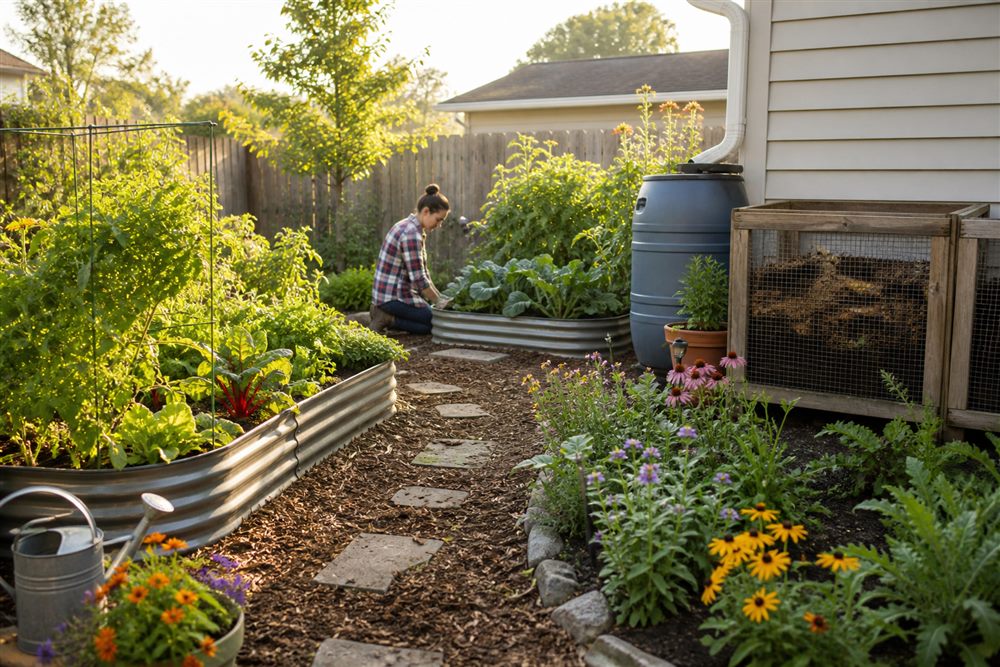

Build one small living system you can maintain. Start with a container, compost route, covered bed, water-smart project, or habitat planting, then use what you learn to prepare for full permaculture design.
Choose one project, establish a maintenance rhythm, and prepare the information Section 5 needs.
Keep the first project small enough to maintain for at least a month. A working system teaches more than six unfinished projects.
Use municipal collection, a verified drop-off, worm bin, tumbler, or managed pile that fits your home and local rules.
Grow one suitable food or herb plant with drainage, enough light, and a realistic watering plan.
Protect one small soil area with appropriate mulch or living cover.
Add one locally suitable native or pollinator plant and avoid unnecessary pesticide use.
Fix wasteful watering first, then consider site-safe capture or infiltration where legal.
Plan a shrub or tree for mature size, light, utilities, water, local climate, and maintenance.
Healthy soil benefits from cover, living roots, biological activity, diverse plants, and limited unnecessary disturbance. Compost only through a method you can maintain correctly.
| Action | What to check | Simple first step |
|---|---|---|
| Cover soil | Plant needs, mulch material, moisture, pests, and local conditions. | Cover one small bare area. |
| Compost | Accepted inputs, moisture, air, temperature, pests, and local rules. | Choose one legitimate route and use it for four weeks. |
| Grow food | Light, drainage, water, soil safety, season, and maintenance. | Start one suitable plant. |
| Test soil | Know whether you need fertility information, contaminant testing, or both. | Ask a local Extension office or qualified lab what test fits the question. |
Fix leaks and inefficient watering first. Match plants to the site. Place rain barrels, rain gardens, basins, and downspout changes only where they are legal and will not harm foundations, utilities, neighbors, or waterways.
Use targeted watering, appropriate timing, mulch, and plant choice to limit avoidable loss.
Match light, moisture, mature size, climate, and maintenance rather than buying only for appearance.
Use locally suitable native plants and varied bloom times where possible.
Check drainage, utilities, foundations, slopes, local rules, and soil safety before digging or redirecting water.
Complete five tasks in each stage. Use the Companion to save progress, undo accidental completions, and return when the system has had time to become routine.