
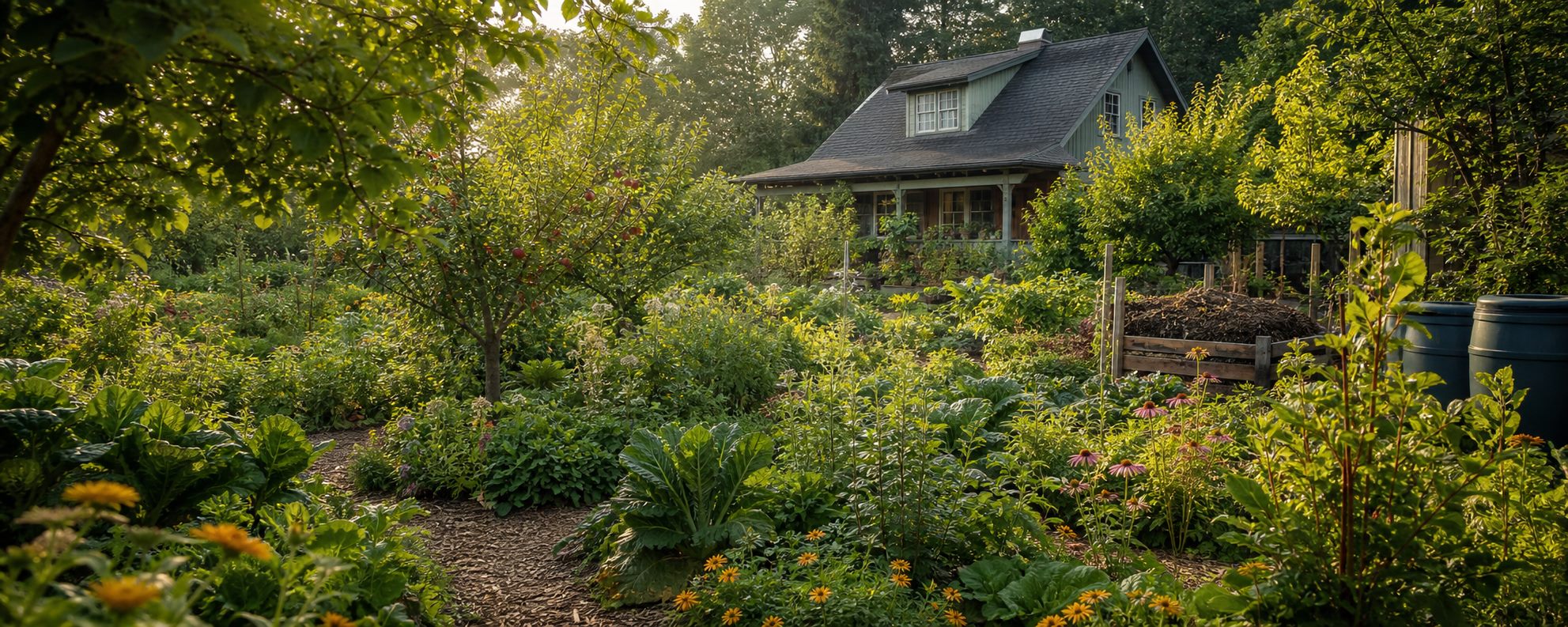
Permaculture is a design approach for land, gardens, and outdoor spaces. It starts with observing the site, reducing waste, and choosing features that serve more than one purpose. A good plan can grow food, cool a yard, hold water, build soil, support pollinators, and make a home or neighborhood more resilient.
 Design thinking
What permaculture means
Permaculture looks at a yard, garden, farm, or community space as a connected system. Sun, shade, water, soil, plants, people, tools, waste, and maintenance all matter. The goal is not a perfect-looking landscape. The goal is a useful landscape.
That can mean planting edible perennials, using mulch, composting food scraps, slowing stormwater, choosing native or climate-suitable plants, reducing mowing, creating shade, and placing features where they are easiest to use and maintain.
 Soil health
Soil comes first
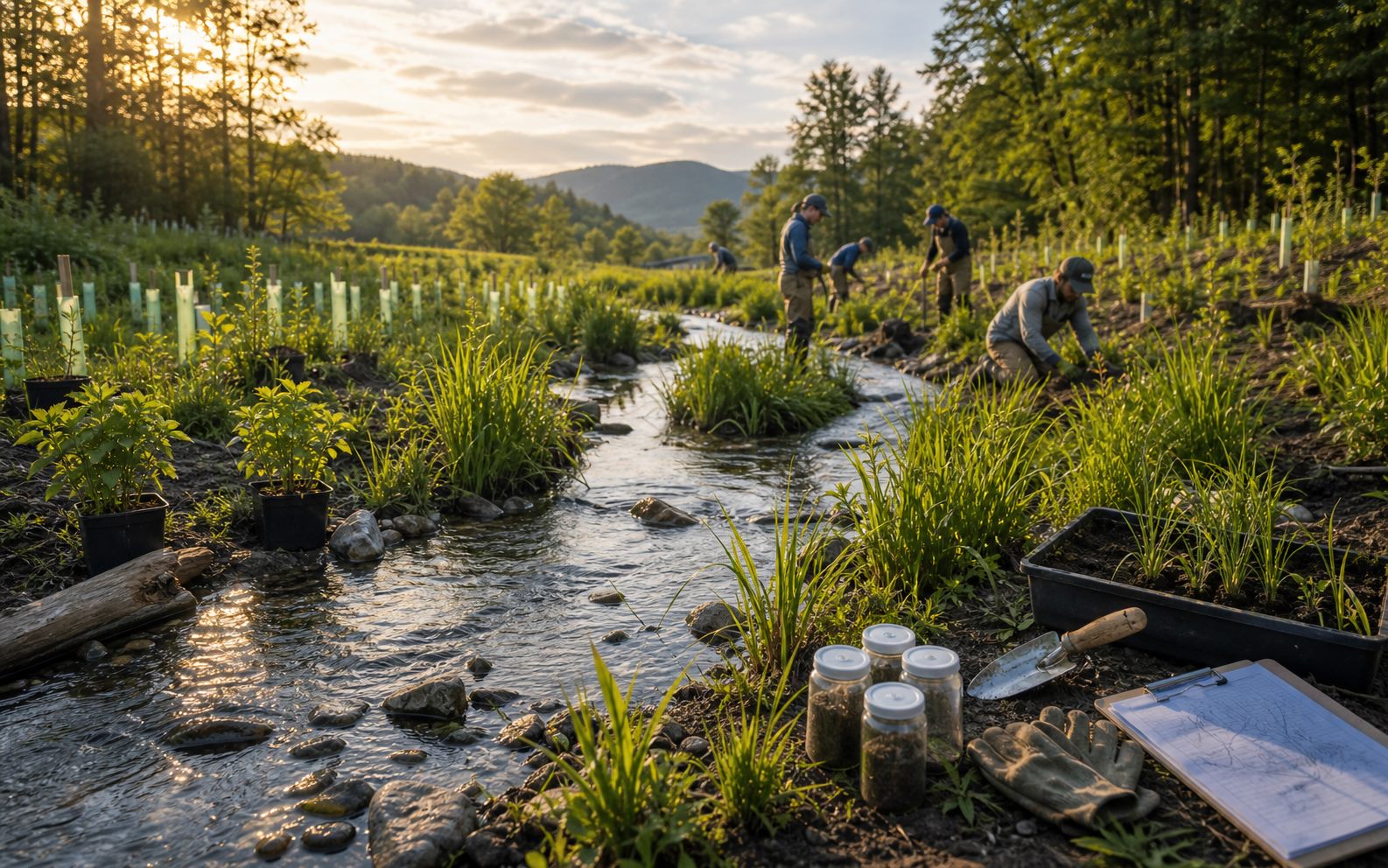
Healthy soil holds water, supports roots, cycles nutrients, stores carbon, and helps plants handle stress. Practical soil care is often simple: keep soil covered, add organic matter, avoid unnecessary disturbance, plant living roots, and use diverse plants where possible.
Compost, leaf mulch, cover crops, and perennial plantings can make a small landscape healthier over time. Soil is not just something plants sit in. It is one of the most important parts of the whole system.
 Water
WaterWater should stay useful
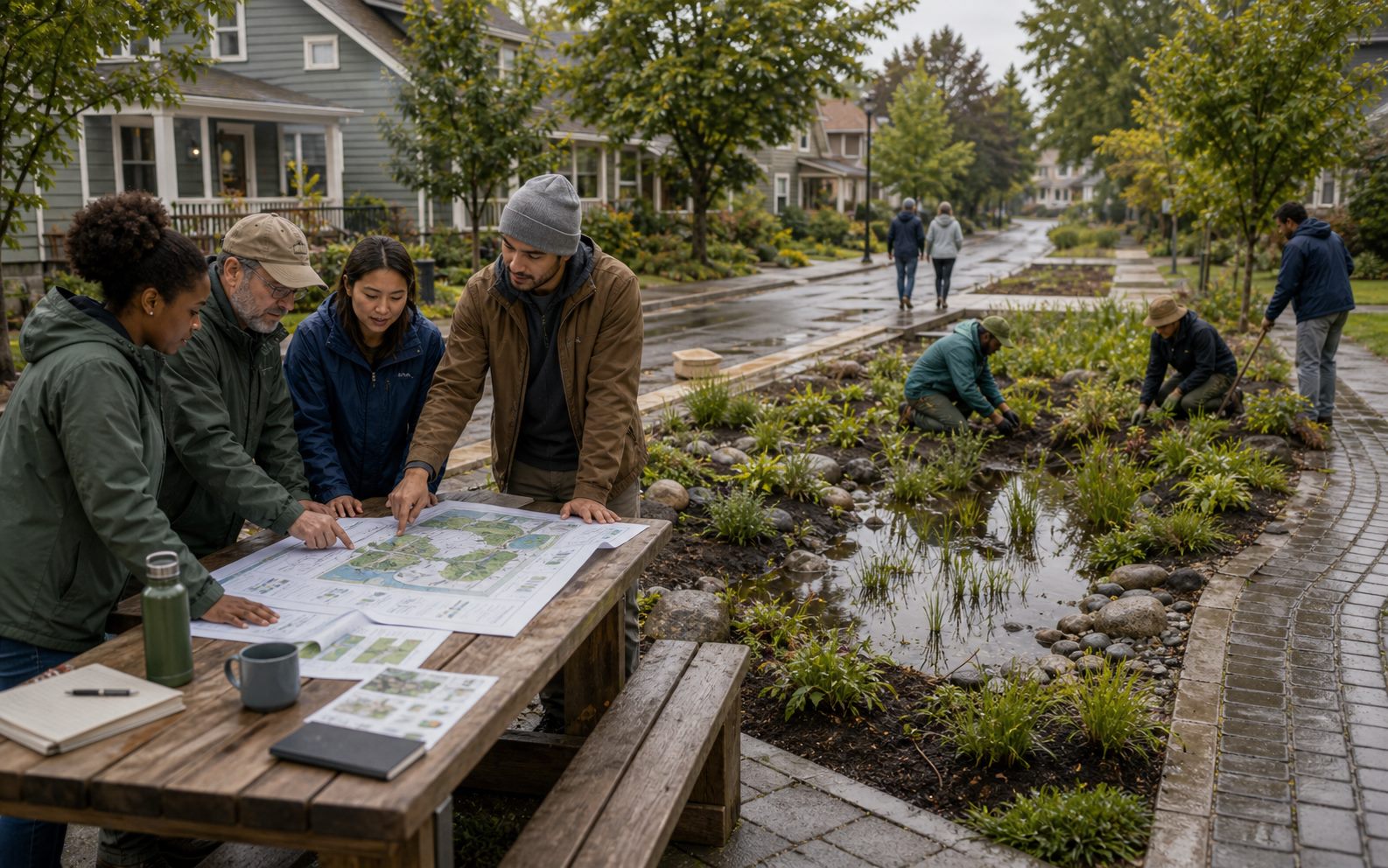
Permaculture often asks a simple question: where does water go when it rains? Instead of rushing water off the property, good design slows it, spreads it, stores it, and lets soil and plants use more of it.
Rain gardens, mulch, contour planting, barrels where allowed, swales where appropriate, permeable paths, and deep-rooted plants can reduce runoff and support healthier landscapes. Local rules and site conditions matter, especially near foundations, septic systems, slopes, and drainage structures.
 Food forests
Food forests and layers
A food forest uses layers: canopy trees, smaller fruit trees, shrubs, herbs, groundcovers, vines, roots, flowers, and fungi. The idea is to make a productive planting that behaves more like an ecosystem than a row of annual crops.
Not every yard needs a full food forest. Even a small version can combine shade, berries, herbs, pollinator plants, compost, and mulch. The best choices depend on climate, soil, water, local pests, sunlight, and how much maintenance the owner can actually keep up with.
 Start small
Start small and measure what works
The strongest permaculture projects usually start with observation. Watch the sun, shade, puddles, wind, foot traffic, weeds, pests, and maintenance habits. Then improve one area at a time.
A good first project might be a compost system, a mulched garden bed, a rain garden, a small herb strip, a shade tree, a berry patch, or replacing a hard-to-maintain lawn edge with useful plants. Small wins build skill and confidence.
 Starter path
A simple starter path
Permaculture is easier when it is treated as a sequence, not a full redesign all at once. First observe. Then reduce waste. Then improve soil and water. Then add plants that serve more than one purpose.
A practical first year might look like this: map sun and shade, start composting, mulch one bed, plant herbs or pollinator flowers, add a small food-growing area, and choose one larger improvement such as a shade tree, rain garden, berry patch, or native planting zone.
Apply it where you live
Permaculture can scale from a windowsill to a homestead.
The same design questions apply almost anywhere: what resources are already here, what is being wasted, what needs less friction, and what would make the place healthier over time?
Use a windowsill herb setup, balcony containers if allowed, a small worm bin or freezer compost routine, better food storage, reusable habits, and a local garden or compost drop-off. Keep it movable, low-mess, and landlord-safe.
- Herbs, microgreens, or one container crop
- Food-waste reduction and compost drop-off
- Balcony shade, pollinator pots, or shared planters
Start by watching sun, water, shade, foot traffic, and maintenance. Then add compost, mulch, a pollinator strip, a rain garden where appropriate, a shade tree, or a small food-growing area.
- Compost and mulch loops
- Shade, stormwater, and soil improvement
- Edible perennials, berry patches, or food forest corners
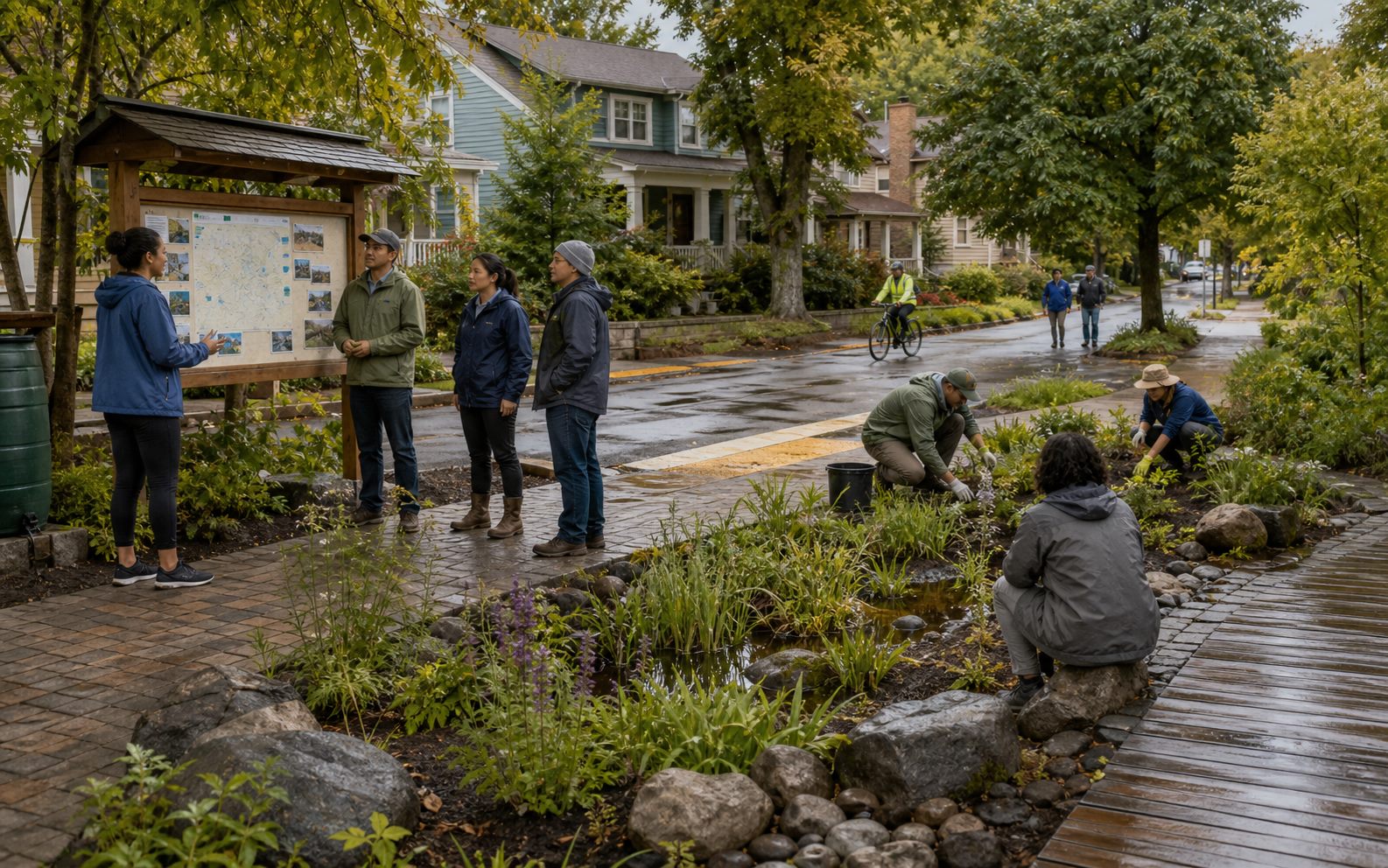
Community gardens, school beds, church grounds, neighborhood planters, and vacant-lot projects work best when the first version is simple, visible, and easy for other people to help maintain.
- Clear roles, water plan, and simple maintenance
- Pollinator beds, compost education, or food sharing
- Signage that explains what the project is doing
 Design uses
Other useful applications
Permaculture is not only about growing food. It can also help with heat, flooding, erosion, privacy, maintenance, habitat, neighborhood resilience, and lower household waste. A shade tree can reduce heat. A mulched bed can protect soil. A pollinator strip can support insects and make a hard edge more useful. A compost station can turn waste into a local resource.
The best projects usually solve more than one problem at once. That is the point: choose actions that make daily life easier while also improving soil, water, food, habitat, or community resilience.
What to build first
Choose one useful project, then learn from it.
Each starter project now opens into a fuller guide with placement tips, materials, simple steps, mistakes to avoid, and ways to build on the first version.
Soil buildingCompost stationTurn food scraps, leaves, and yard waste into soil support instead of sending everything away.
Open project guideGarden bedMulched bedStart with one garden bed that keeps soil covered, holds moisture, and reduces weeds.
Open project guideHabitatHerb or pollinator stripUse a small edge, patio, or border to grow useful plants and attract beneficial insects.
Open project guideWaterRain garden areaWhere appropriate, slow runoff and use plants that can handle wet and dry conditions.
Open project guide CoolingShade tree plan
Choose the right tree for the right place so it can cool the home, yard, or sidewalk over time.
Open project guideFood systemFood forest cornerLayer a small area with a fruit tree, berry shrubs, herbs, flowers, mulch, and groundcover.
Open project guideACC takeaway
Start with one useful improvement.
Soil, shade, water, compost, food, and habitat are connected. A small landscape does not need to do everything at once. It can start with one manageable project and improve over time.
References & further reading
Review the underlying resources.
- Permaculture Association: PrinciplesPlain-language overview of permaculture ethics and design principles.
- USDA NRCS: Soil HealthSoil health concepts and practices.
- EPA: Green InfrastructureStormwater, runoff, and nature-based water management basics.
- USDA National Agroforestry CenterAgroforestry practices such as alley cropping, forest farming, windbreaks, riparian buffers, and silvopasture.
- SARE: Building Soils for Better CropsPractical soil-building guide for resilient growing systems.