ACC News Brief
Solar Laboratory Research
Perovskite cells retained more than 95% of initial efficiency in a 1,000-hour lab test
What happened
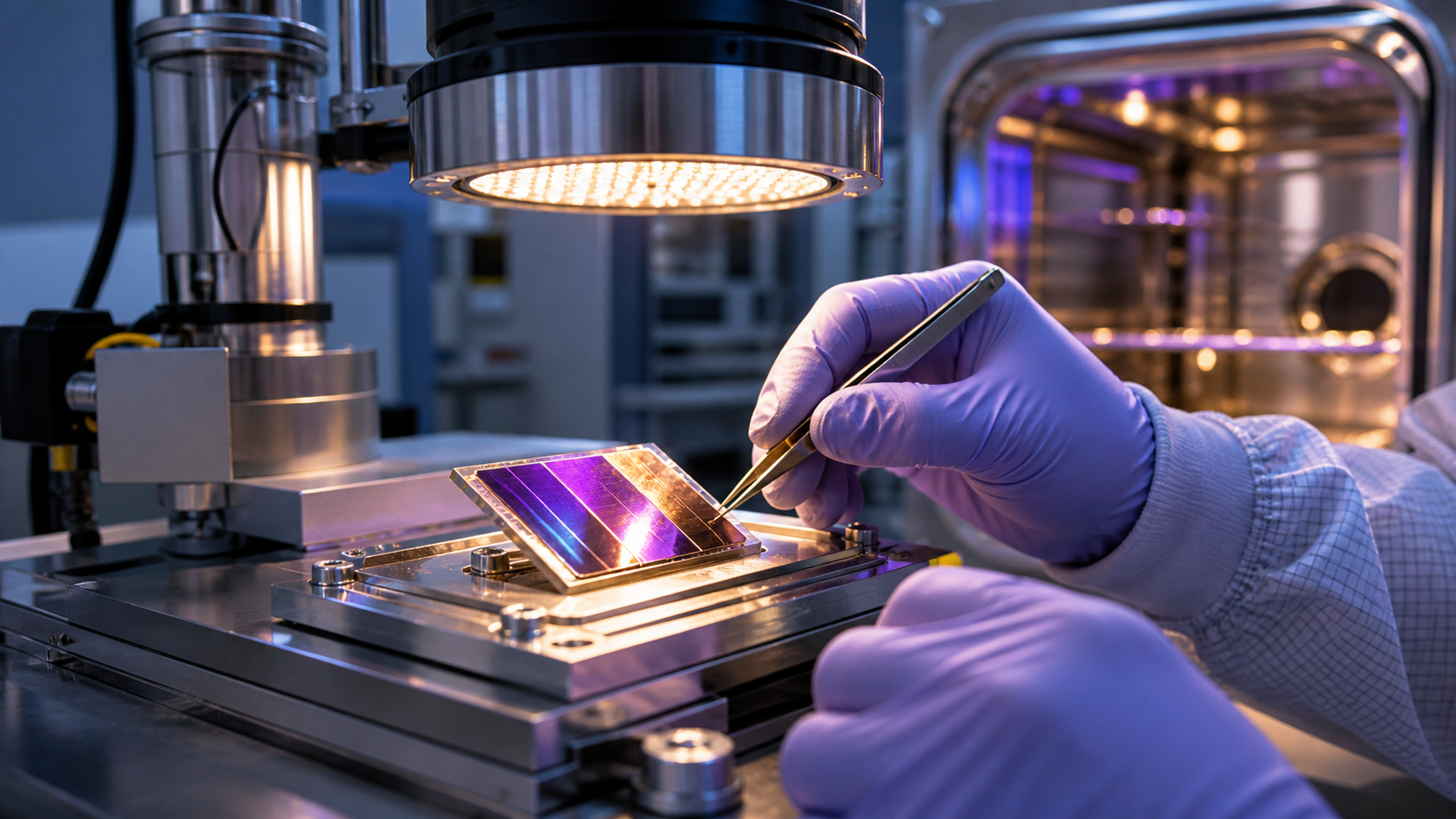
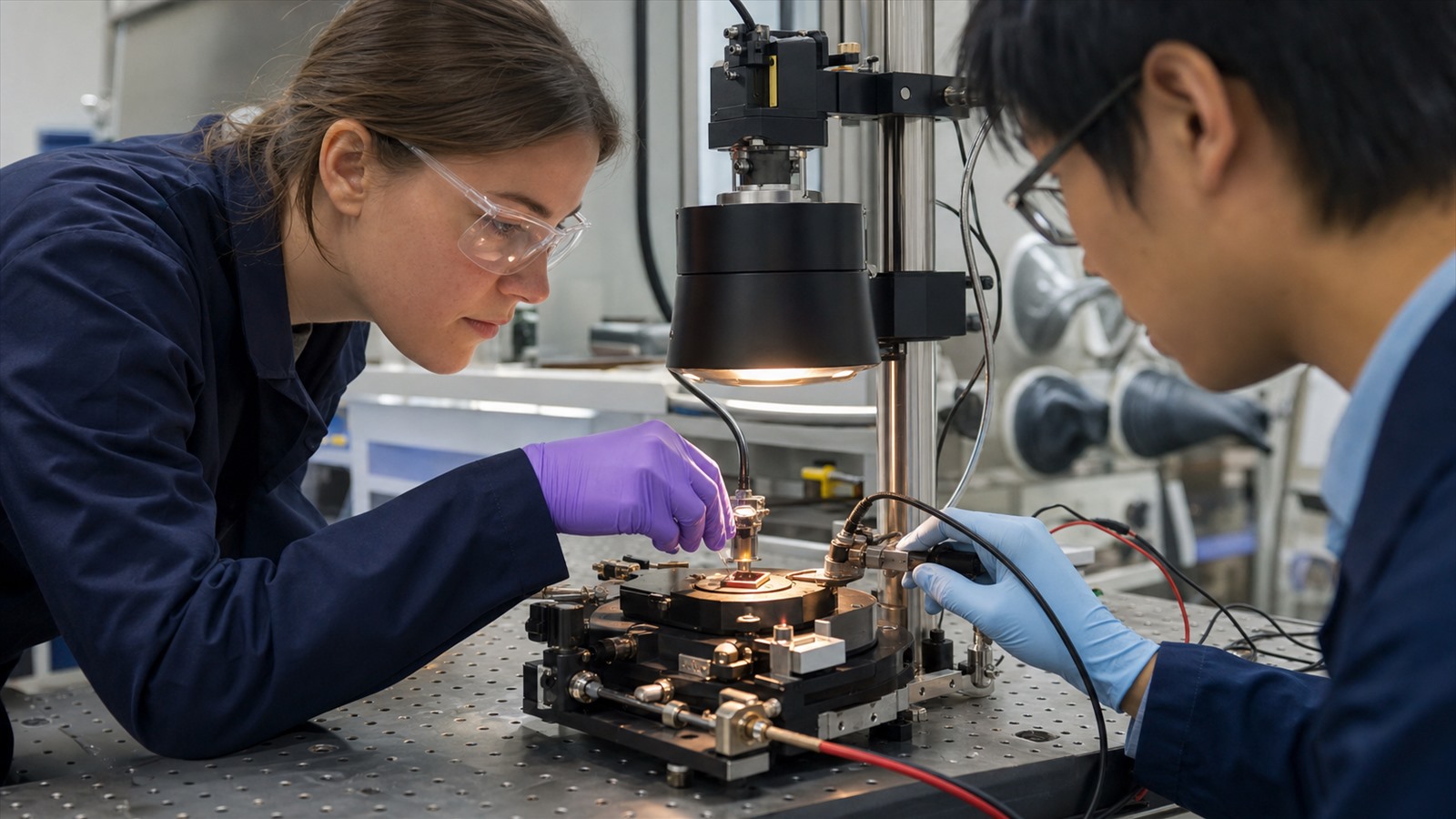
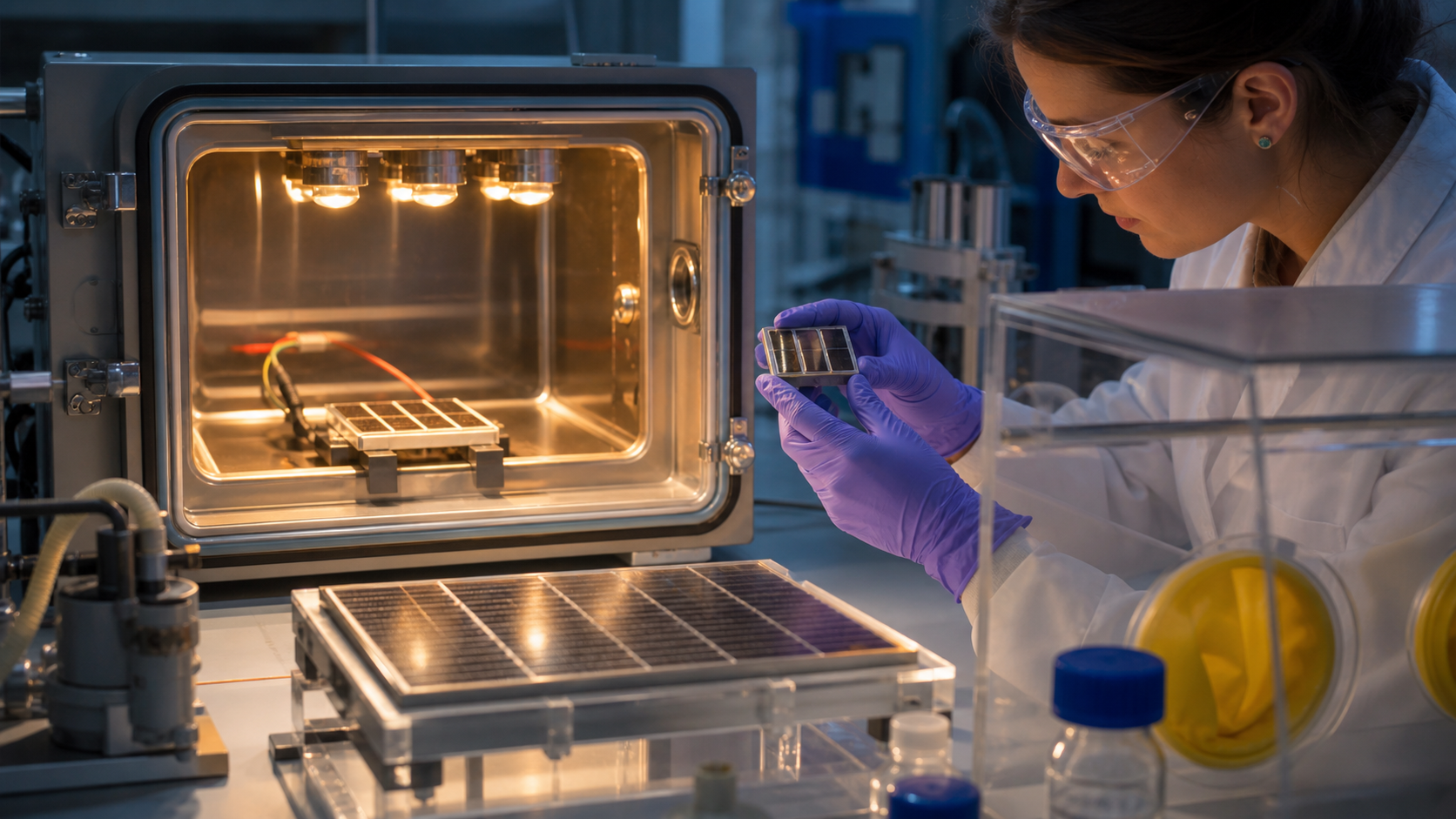
Researchers used a methylammonium-chloride-free precursor and an alpha-phase-assisted antisolvent method to make FAPbI3 perovskite photovoltaic devices. A laboratory cell reached 26.1 percent power-conversion efficiency, while a 20.8-square-centimeter-aperture module reached 22.1 percent. Under one-sun illumination at 55 degrees Celsius, the target cells retained more than 95 percent of their initial efficiency after 1,000 hours of maximum-power-point tracking; control cells fell to 60 percent within about 500 hours.
Why it matters
Perovskite solar cells have reached high laboratory efficiencies, but stability remains a central barrier to durable commercial products. This controlled result addresses one degradation pathway and extends the evidence for more stable devices, while stopping well short of proving multiyear outdoor performance, high-yield manufacturing, or safe commercial deployment.
What to watch
- Independent replication and standardized outdoor, damp-heat, ultraviolet, thermal-cycle, and mechanical-stress testing.
- Certified performance, manufacturing yield, encapsulation, and cost for much larger modules made on production equipment.
- Lead containment, worker safety, material recovery, and end-of-life systems across a complete product lifecycle.
Sources & evidence
- Mitigating residual MA+ for stable FAPbI3 perovskite photovoltaicsPeer-reviewed Nature Communications article published November 18, 2025, DOI 10.1038/s41467-025-65045-y. It reports laboratory cells and a 20.8-square-centimeter-aperture module under controlled testing, not a commercial panel or field deployment.
Continue learning with ACC
Explore how renewable generation, storage, and transmission work together