ACC News Brief
Clean Industry China
Sunlight-powered prototype coupled air carbon dioxide with ammonia to make urea
What happened
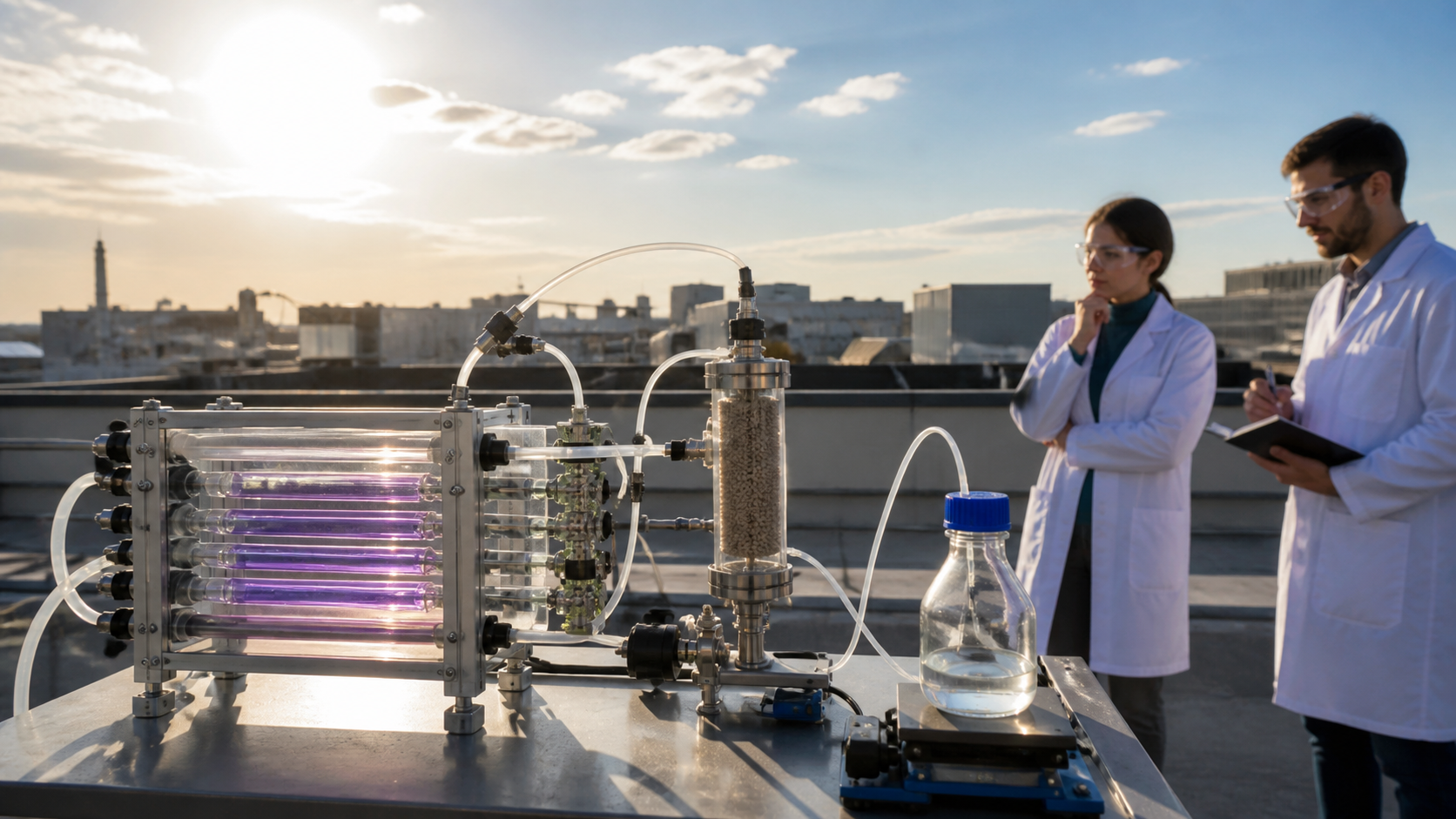
A Nature Communications study tested a catalyst that used sunlight to couple carbon dioxide from air with ammonia in a urea-making pathway. In a sealed experiment using 0.8 liters of air, the system generated carbon monoxide at 272.1 micromoles per gram per hour and reported 98 percent carbon-dioxide conversion after 10 hours. A larger research prototype operated under natural sunlight and open-air conditions and produced urea at 32.4 micromoles per gram per hour.
Why it matters
The prototype combined dilute-air carbon capture and solar conversion without first supplying purified carbon dioxide, potentially simplifying one difficult step in carbon-utilization research. Its output rates are catalyst-mass-normalized laboratory results, however, not industrial production or proof of a net climate benefit; ammonia sourcing, energy use, material impacts, and product fate remain essential parts of the accounting.
What to watch
- Long-duration catalyst stability, material availability, product purity, and performance in continuous-flow equipment.
- Lifecycle and economic assessments that include ammonia production, losses, separation, energy use, and equipment manufacture.
- Independent demonstrations at meaningful throughput before claims of industrial scale or climate benefit.
Sources & evidence
- Solar-driven direct coupling of atmospheric CO2 with ammonia for urea synthesisPeer-reviewed Nature Communications article published November 25, 2025, DOI 10.1038/s41467-025-65534-0. The open-air, natural-sunlight result came from a research prototype rather than a commercial fertilizer process.
- Solar-driven direct coupling of atmospheric CO2 with ammonia for urea synthesis — DOI recordStable DOI for the study. Reported production rates are normalized to catalyst mass and do not by themselves establish scale, cost, or lifecycle emissions.
Continue learning with ACC
Compare climate solutions by readiness, scale, cost, and safeguards