ACC News Brief
Oceans & Water Labrador Sea, North Atlantic
Six overlapping changes pushed Labrador Sea level to a regional record
What happened
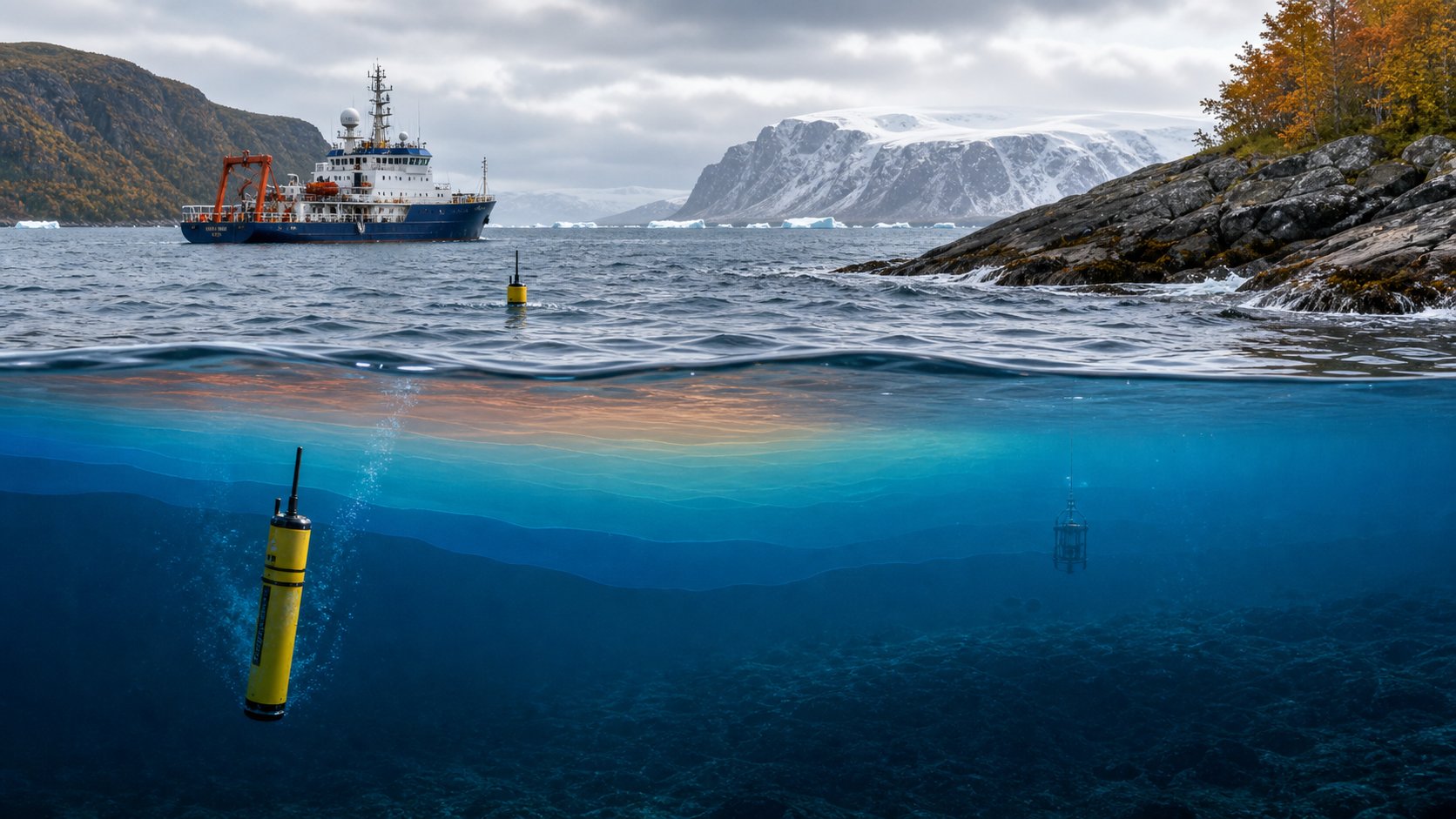
A Nature Communications study combining satellite altimetry, Argo floats, and ship observations found exceptionally fast sea-level rise in the central Labrador Sea from 2017 through 2025, culminating in a regional record. The researchers identified six concurrent contributors: weaker winter cooling, stronger summer warming, anomalous freshening, ceased deep convection, lower deep-water density, and a gain in water-column mass. Salinity shifted from offsetting the temperature effect before 2015 to reinforcing it during 2015–2023.
Why it matters
Regional sea level can change rapidly when heat, freshwater, circulation, density, and ocean mass shift together, making sustained ocean observations important for North Atlantic risk assessment. This result concerns dynamic and steric sea level in the Labrador Sea, not global mean sea level, and it does not by itself establish an Atlantic Meridional Overturning Circulation collapse or attribute every contributor solely to human-caused warming.
What to watch
- Whether deep convection resumes and whether the regional sea-level record persists beyond 2025.
- Changes in Arctic sea ice, Greenland freshwater input, ocean heat, and water-column mass across the Labrador Sea.
- Careful assessments of connections to broader North Atlantic circulation that preserve regional scope and attribution limits.
Sources & evidence
- Concurrent warming, freshening and cessation of deep convection in the Labrador Sea raised its sea level to a record highPeer-reviewed Nature Communications study published November 28, 2025, DOI 10.1038/s41467-025-65747-3, combining satellite, autonomous-float, and ship-based observations. The result is regional and should not be substituted for global mean sea level.
- Concurrent warming, freshening and cessation of deep convection in the Labrador Sea raised its sea level to a record high — DOI recordStable DOI for the observational synthesis. The paper identifies concurrent contributors but does not establish that every factor has the same cause or that the AMOC has collapsed.
Continue learning with ACC
Learn how oceans, ice, and circulation shape a changing climate