ACC News Brief
Climate Science Arctic
Atmospheric timing shift may help explain Barents Sea atlantification
What happened
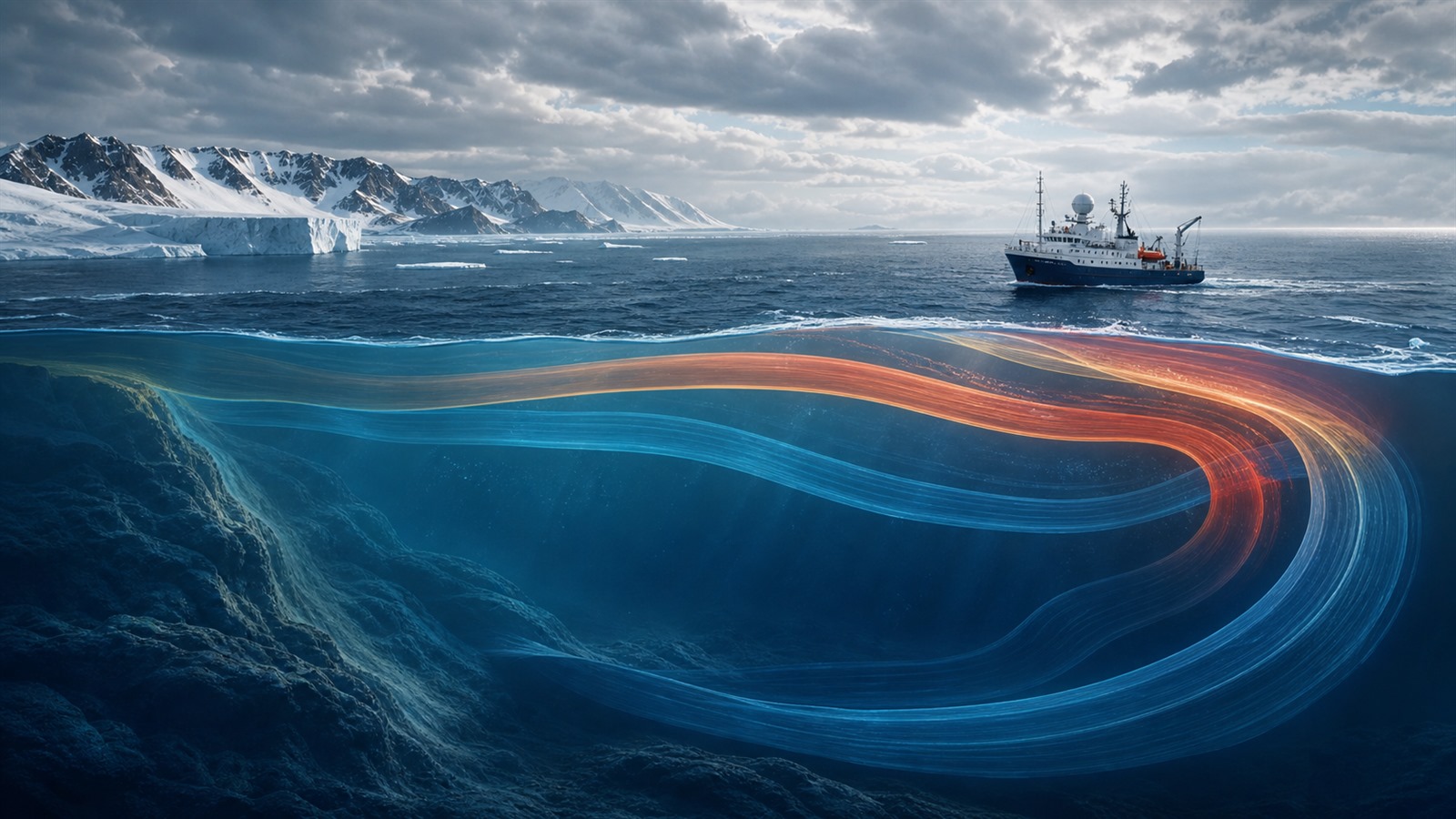
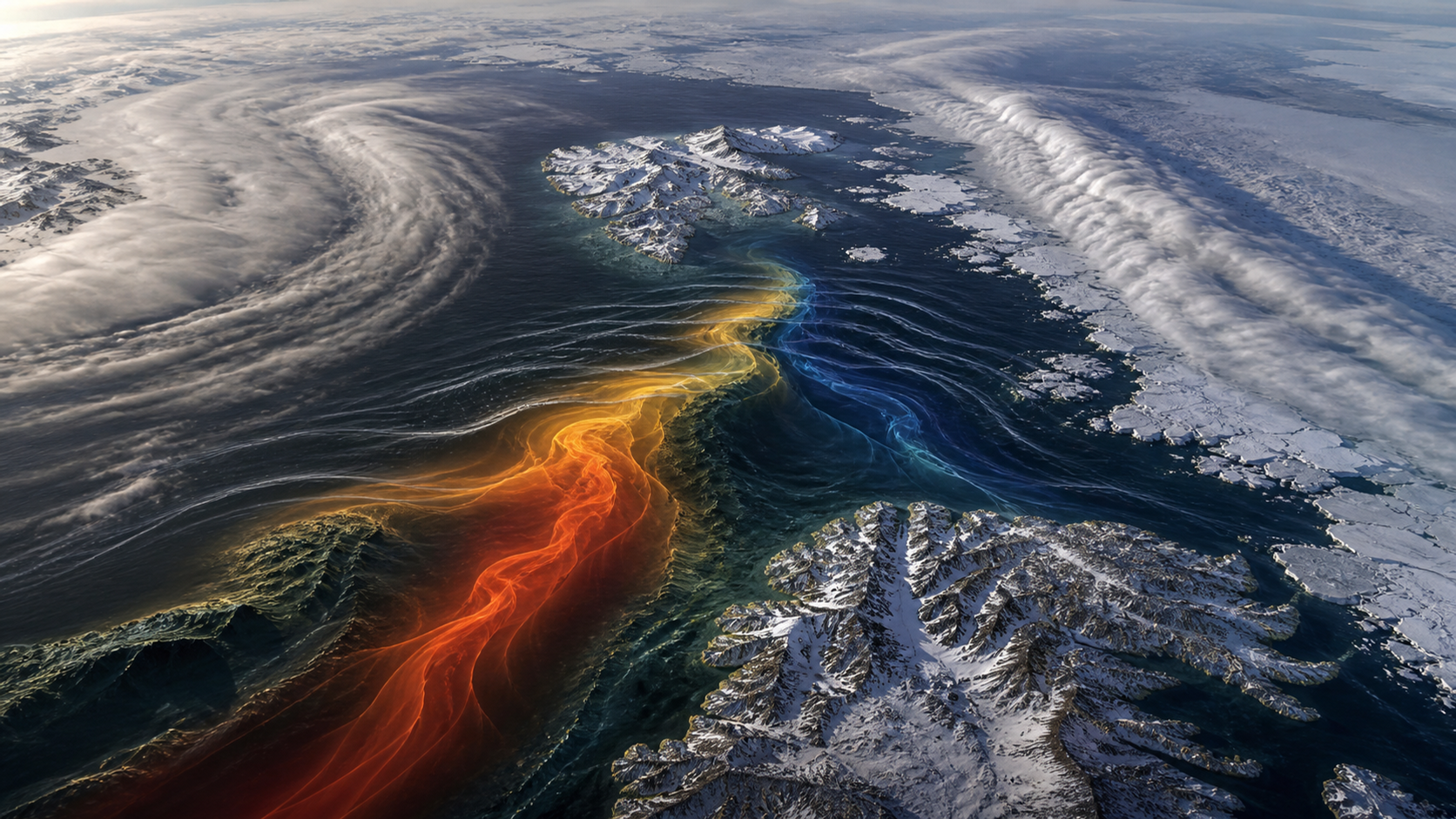
Researchers combined ocean evidence, temporal regression, deep-learning analysis, and idealized ocean simulations to link a shift in the timing of Nordic Seas weather systems with a long-term circulation change through the Barents Sea Opening. The proposed mechanism involves frequency-sensitive topographic Rossby waves and helps explain growing Atlantic influence in the Arctic, but the idealized model omits density stratification and does not resolve every contribution to heat transport, sea-ice loss, or ecosystem change.
Why it matters
The Barents Sea is a gateway for warm, salty Atlantic water into the Arctic. Better understanding why that gateway is changing can improve climate and sea-ice models, ecosystem planning, and regional risk assessment without treating one newly identified mechanism as a complete explanation of Arctic change.
What to watch
- Tests of the mechanism in fully stratified ocean models and against longer direct observations of currents, heat, salinity, atmosphere, and sea ice.
- Whether climate models reproduce the frequency shift in synoptic weather forcing and the circulation response through both northern and southern parts of the opening.
- How changing Atlantic-water transport affects Barents Sea heat content, winter ice, fisheries, food webs, and coastal communities.
Sources & evidence
- Barents Sea atlantification driven by a shift in atmospheric synoptic timescalePeer-reviewed open-access Article in Nature Climate Change, published January 2, 2026, DOI 10.1038/s41558-025-02535-3; led by Norway's Institute of Marine Research and Bjerknes Centre with Tallinn University of Technology, University of Oslo, the Norwegian Meteorological Institute, University of Kiel, and King's College London collaborators. The study proposes and models a circulation mechanism; it does not attribute every Barents Sea trend or quantify a complete ecosystem outcome.
- Data and code for the Barents Sea atlantification studyZenodo research record linked by the article for the data and code supporting its analysis.
Continue learning with ACC
Explore ACC's climate science guide