ACC News Brief
Water Security Eastern Uganda
Uganda survey maps household WASH vulnerability to floods and drought
What happened
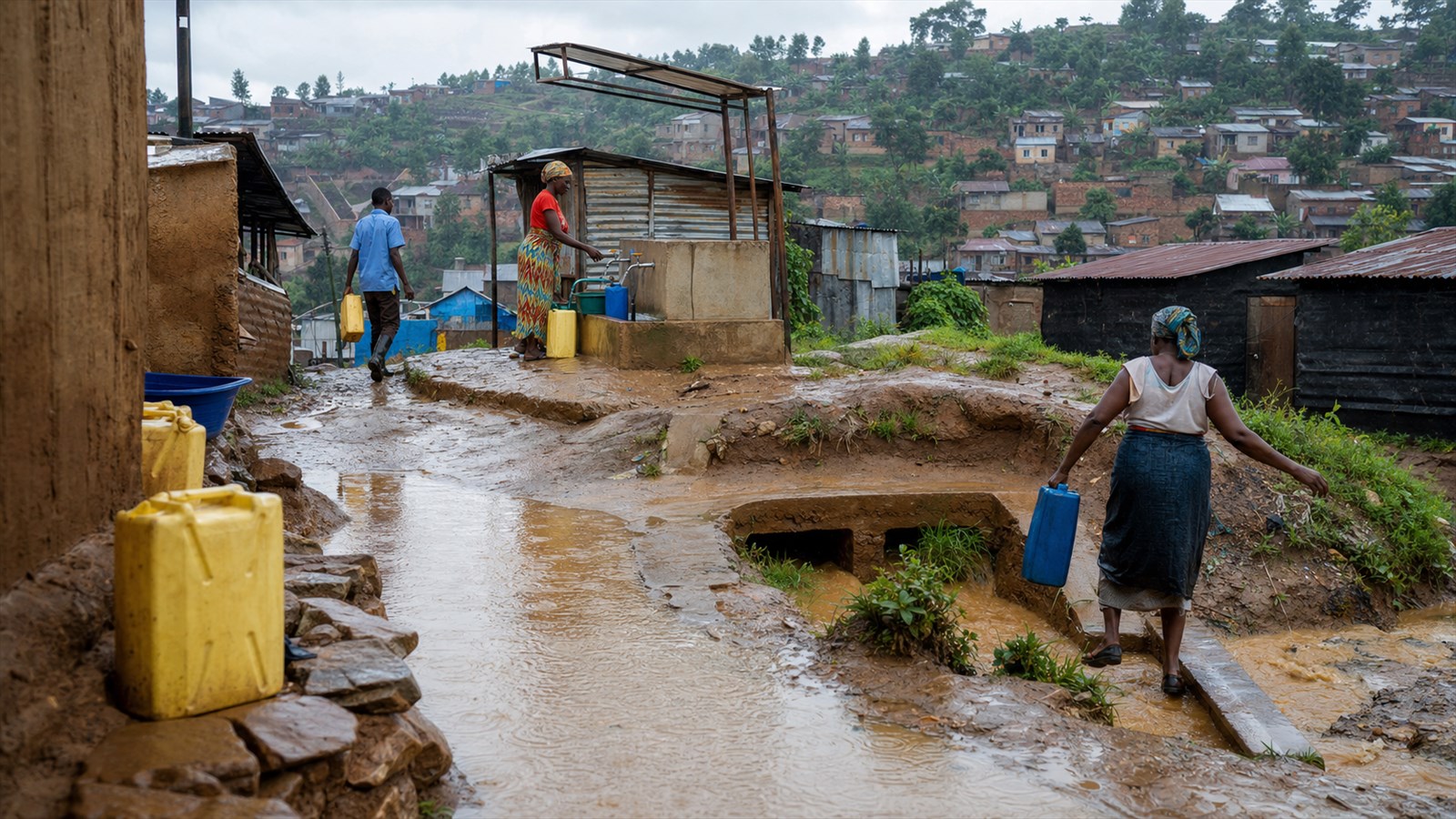
A cross-sectional survey of 589 households in informal settlements in eastern Uganda examined how housing, altitude, perceived social status, disability, floods, and drought shaped water, sanitation, and hygiene vulnerability. Among the reported impacts, 21.4% of households said contamination from animal feces and sewage increased their susceptibility to waterborne disease. Temporary housing and disability were associated with higher flood vulnerability, while higher elevation and social status were associated with lower vulnerability. The survey is observational and partly self-reported, so it identifies patterns rather than proving causes.
Why it matters
The same storm or dry spell does not create the same risk for every household. Drainage, accessible services, housing quality, safe water storage, disability-inclusive planning, and location can determine whether a climate hazard becomes a health emergency.
What to watch
- Targeted investments in drainage, protected water points, sanitation, accessible warning and response systems, and safer housing in the highest-risk settlements.
- Longitudinal monitoring that pairs household reports with water-quality, flood, drought, disease, and infrastructure data to test which interventions reduce risk.
Sources & evidence
- Household vulnerability to climate impacts on WASH and risk mitigation in informal settlements of Eastern UgandaOpen-access Scientific Reports cross-sectional study published May 8, 2026, DOI 10.1038/s41598-026-50977-2. The 589-household survey identifies associations and self-reported impacts, not causal effects.
Continue learning with ACC
Explore ACC's climate resilience guide