ACC News Brief
Climate Science Antarctica
Pine Island ice-shelf regrounding added little drag and may have aided calving
What happened
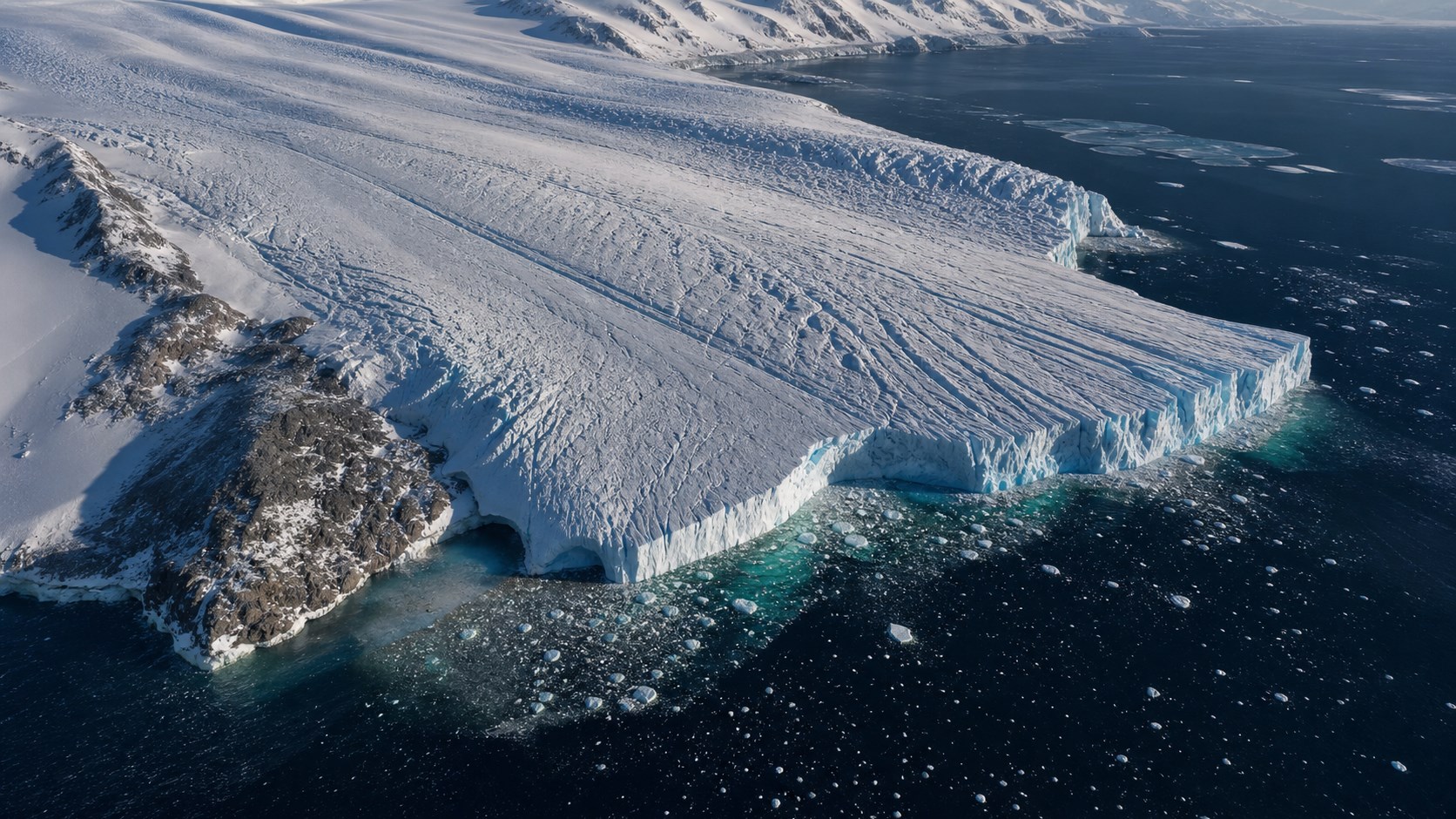
Satellite radar tracking and ice-sheet modeling reveal repeated contact between Pine Island Ice Shelf and shallow bedrock since 2009. The contacts added little extra resistance to ice flow, and the analysis indicates they may instead have helped promote calving between 2015 and 2020, contributing indirectly to the glacier's faster flow over the past decade.
Why it matters
Ice shelves slow the glaciers behind them, but small changes in contact, rifting, and calving can alter that support. Better representation of these mechanics can improve projections for one of Antarctica's closely watched glacier systems and future sea-level rise.
What to watch
- Whether continued satellite observations detect new regrounding, rifts, or calving changes.
- How ice-sheet models represent small bedrock contacts and their indirect effects.
- Whether the shelf's geometry continues to reduce resistance to the glacier upstream.
Sources & evidence
- The dynamic response of Pine Island Glacier to two decades of intermittent ice shelf regroundingOpen-access Nature Communications research article published July 29, 2026; CC BY 4.0.
Continue learning with ACC
Explore ACC's climate science guide