ACC News Brief
Climate Science North America and Europe
Wildfire smoke cut modeled solar output by 2.8% across two continents
What happened
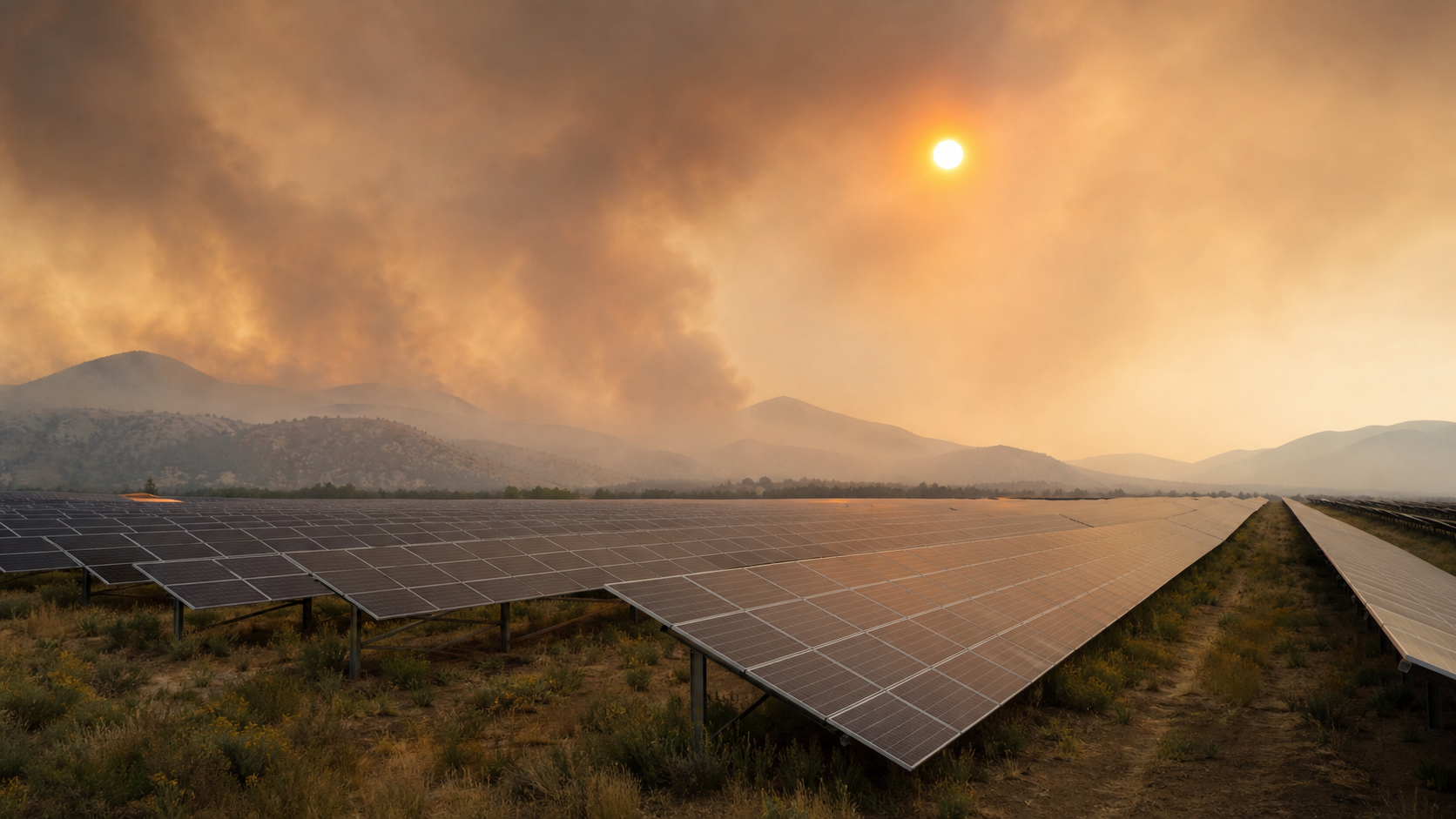
A new open-access study modeled how smoke from Canada's record 2023 wildfires affected photovoltaic generation across North America and Europe. For May through September, the researchers estimated a 6.38 terawatt-hour solar-production deficit, equal to 2.8% of modeled generation, with an estimated economic loss of about $1.88 billion.
Why it matters
Solar power remains essential, but a more volatile climate can affect the resource as well as the grid. The findings connect wildfire prevention, air-quality monitoring, geographic diversity, storage, and transmission planning to clean-energy reliability.
What to watch
- How grid planners incorporate continent-scale smoke events into solar forecasts and reliability studies.
- Whether storage and geographically diverse renewable portfolios reduce smoke-related production risk.
- How future work narrows the study's large uncertainty ranges and compares modeled losses with plant-level observations.
Sources & evidence
- Wildfire smoke cut modeled solar output by 2.8% across two continentsOpen-access research article published July 28, 2026; CC BY 4.0.
Continue learning with ACC
Explore ACC's climate science guide