
Propaganda Buster · Issue 003
When the comparison changes the story
This edition checks a heat-mortality estimate dismissed with the wrong metric, a false claim that building wind and solar creates more carbon pollution than the technologies prevent, a categorical warming-acceleration headline that omits the adjusted result, and a 2012 IPCC assessment presented as current.

- Issues available
- Issue 003
- Claims checked
- 4
- Scientific sources linked
- 14
- Publication status
- Published
Every claim is followed by the evidence that checks it.
The opening slide introduces the series and this issue. Slides 2, 4, 6, and 8 show the four claims with source provenance; slides 3, 5, 7, and 9 summarize what scientific evidence shows. Slide 10 directs readers to the complete record.
Slide 01 · Meet Propaganda Buster and the four claims examined in this issue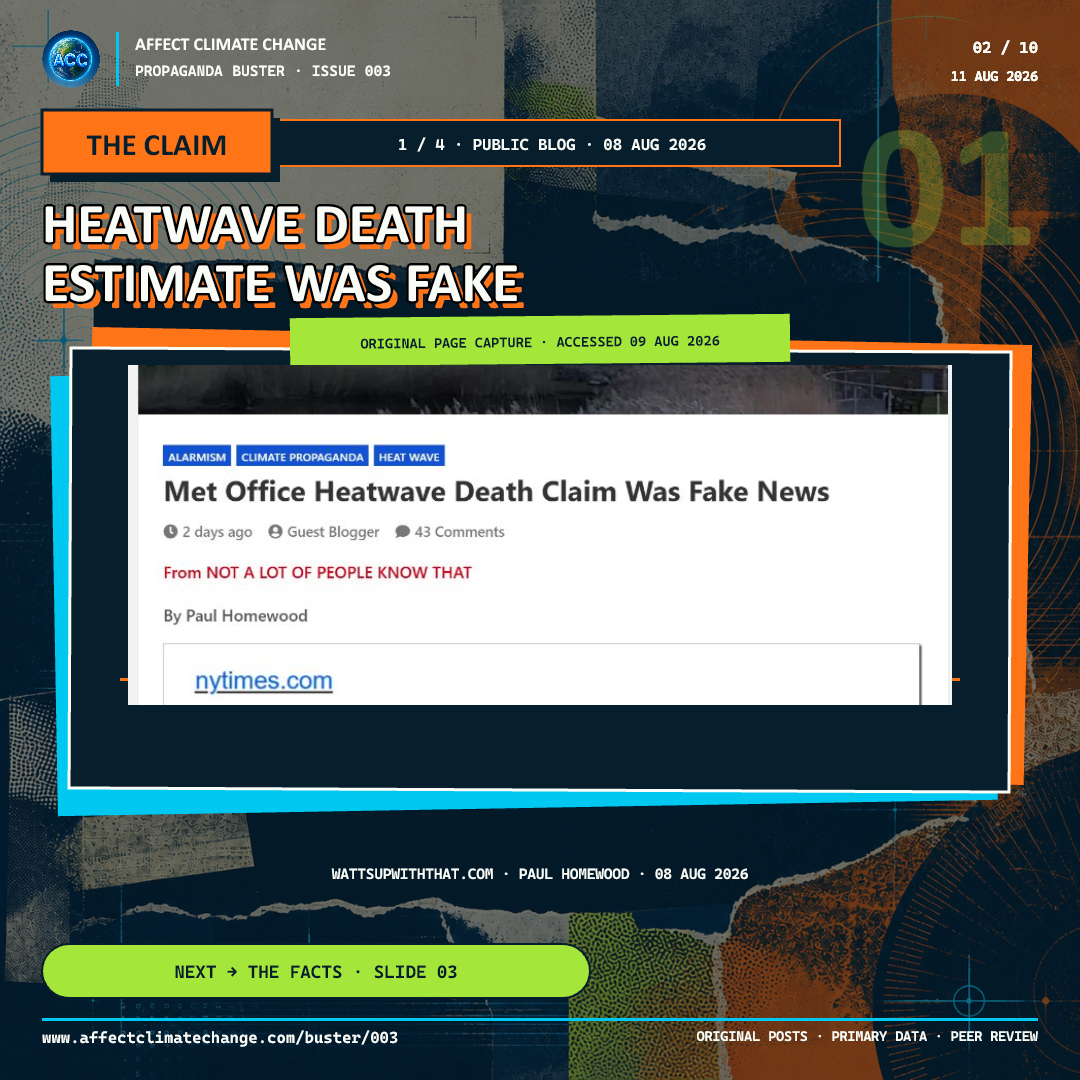 Slide 02 · Claim: A flat cumulative death-registration total shows the 2026 heatwave-death…
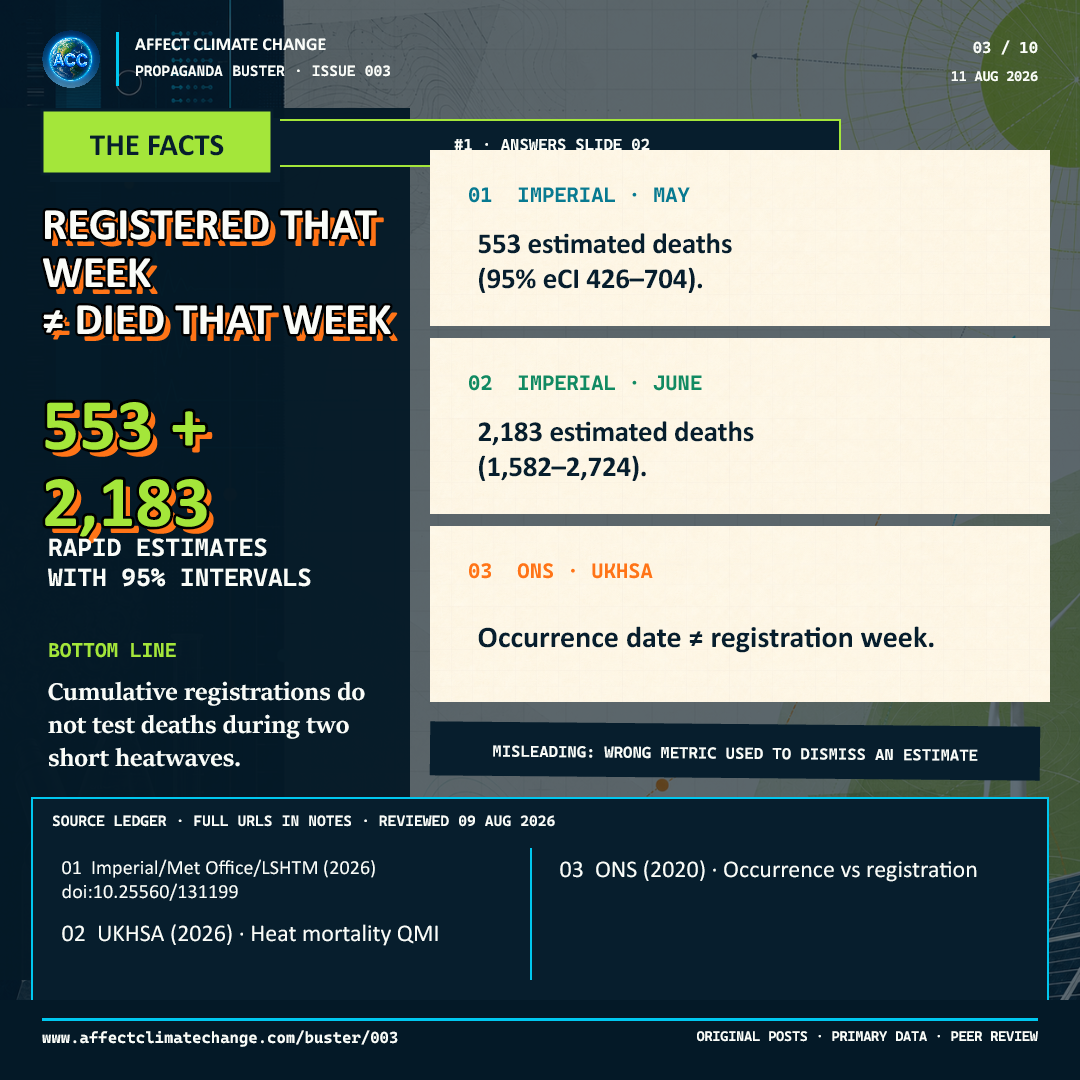 Slide 03 · What the evidence shows: Cumulative registration totals do not test deaths during two short heatwaves. The…
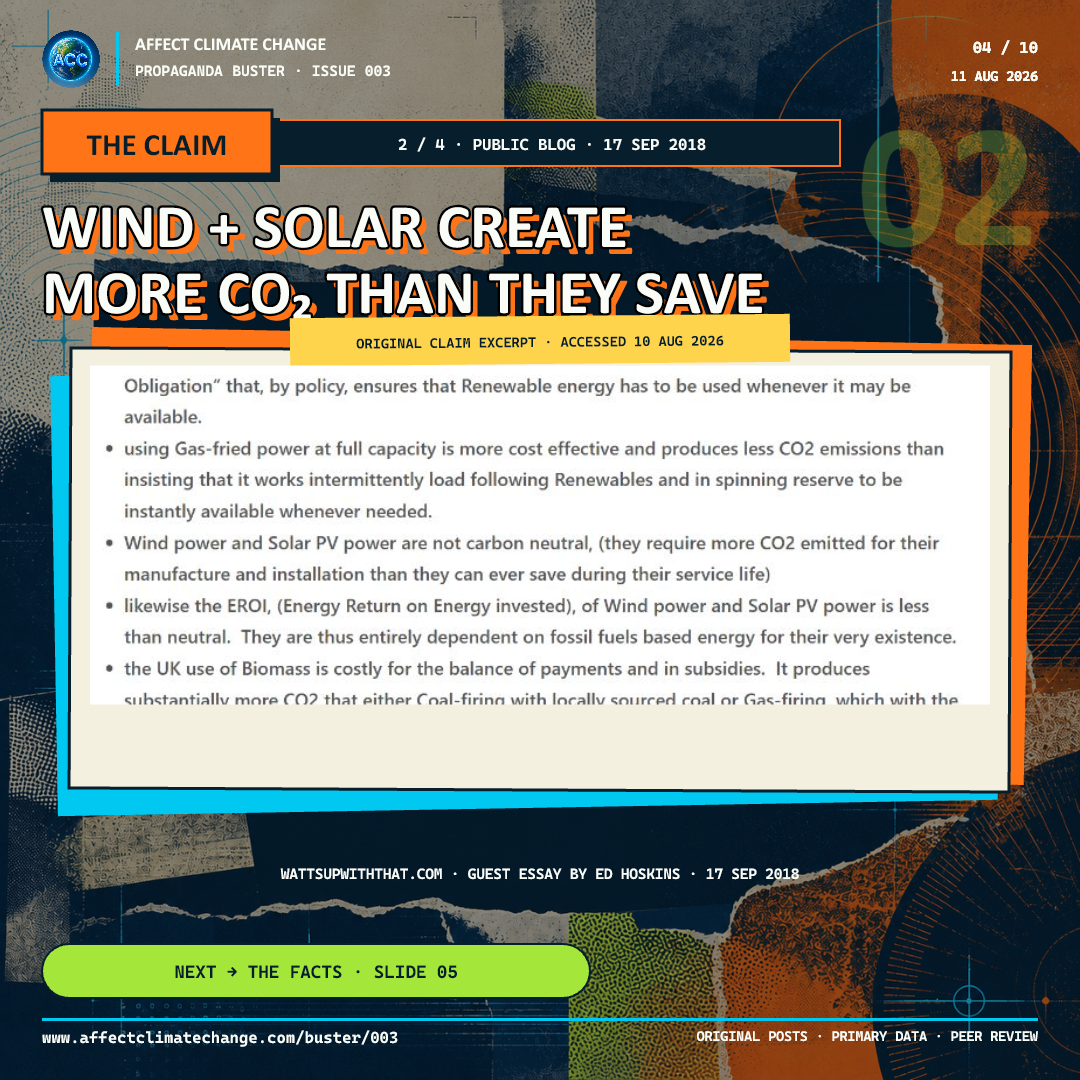 Slide 04 · Claim: Manufacturing and installing wind and solar produces more CO2 than the…
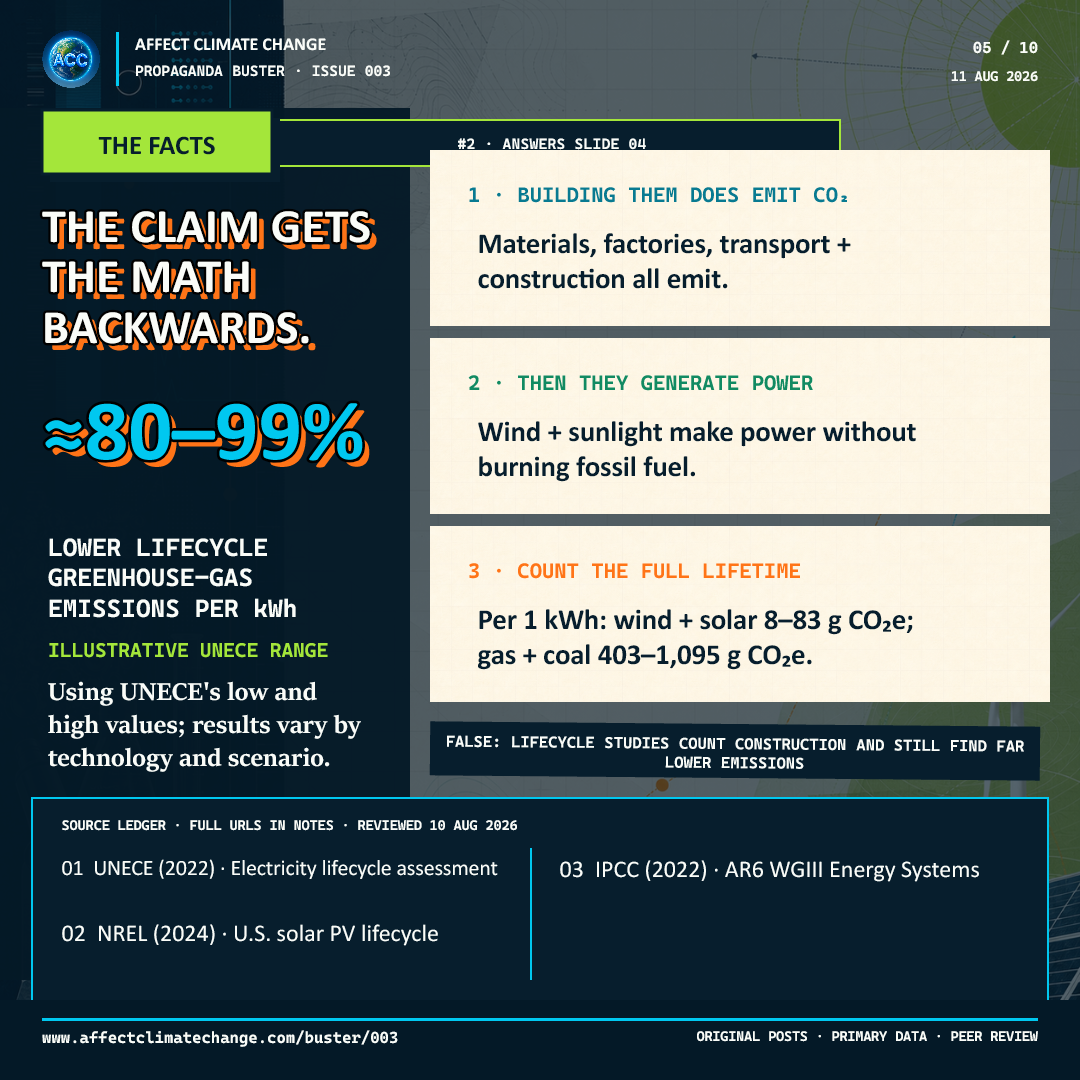 Slide 05 · What the evidence shows: Building turbines and panels creates emissions. But wind and solar then generate…
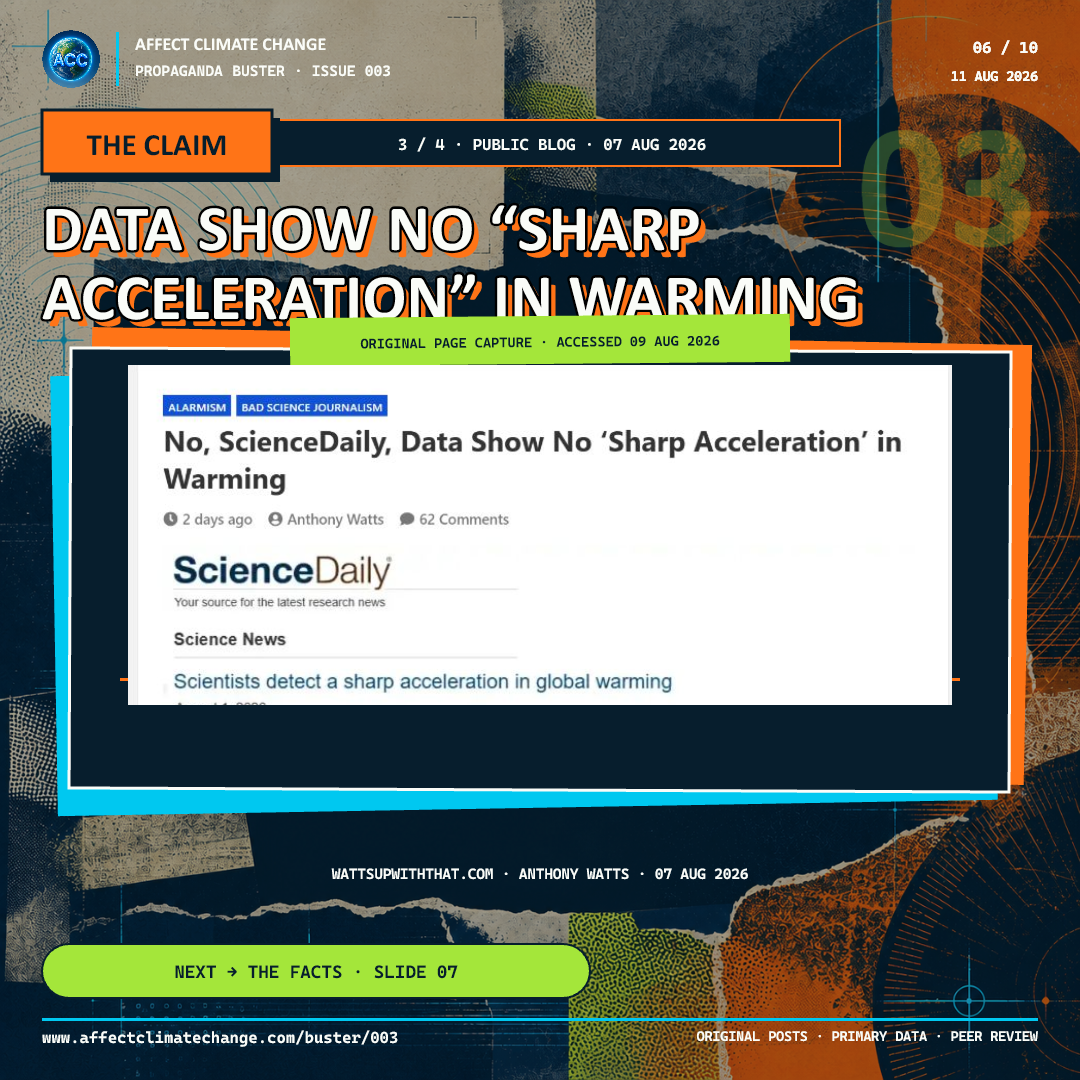 Slide 06 · Claim: Data show no ‘sharp acceleration’ in warming.
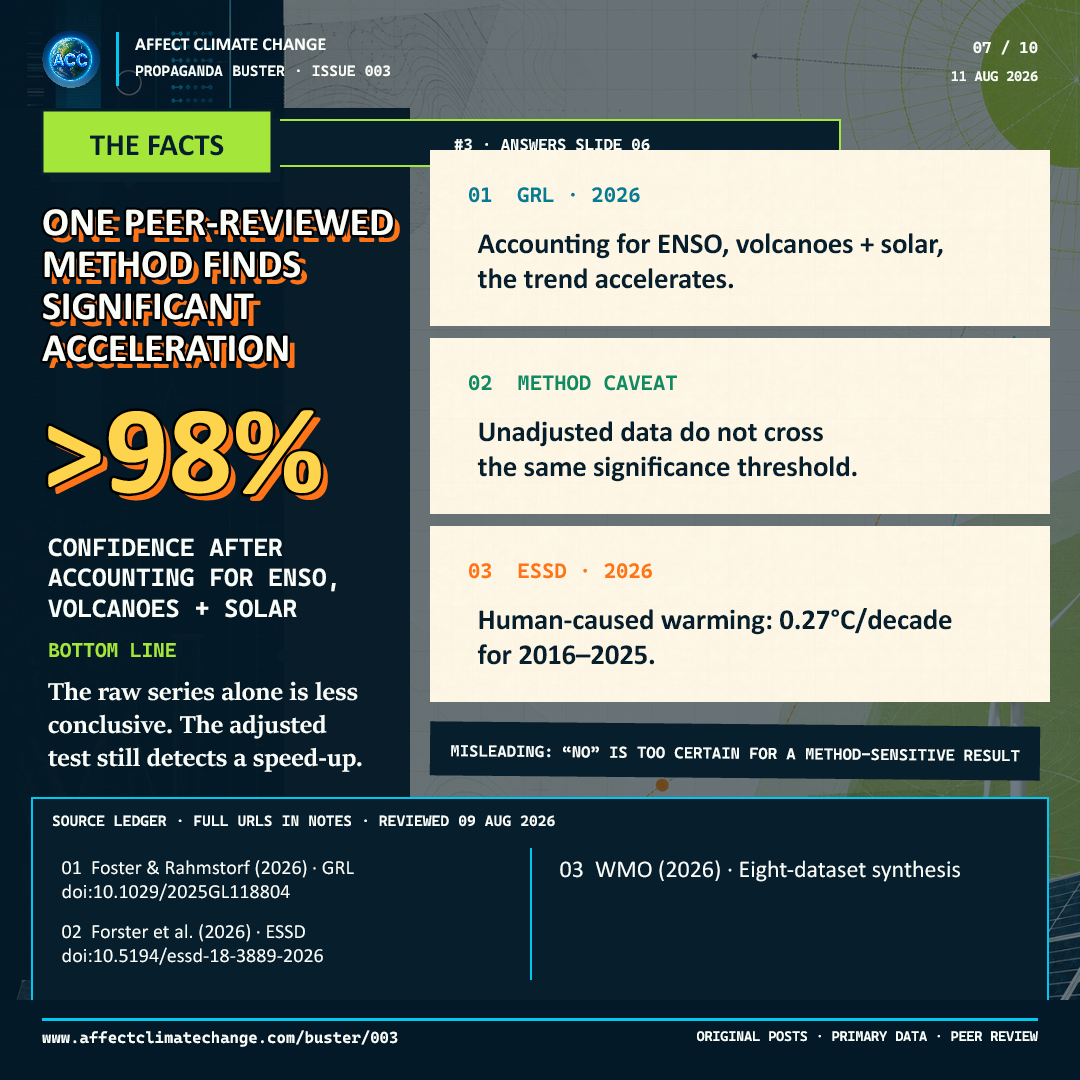 Slide 07 · What the evidence shows: The adjusted analysis finds acceleration above 98% confidence after accounting for…
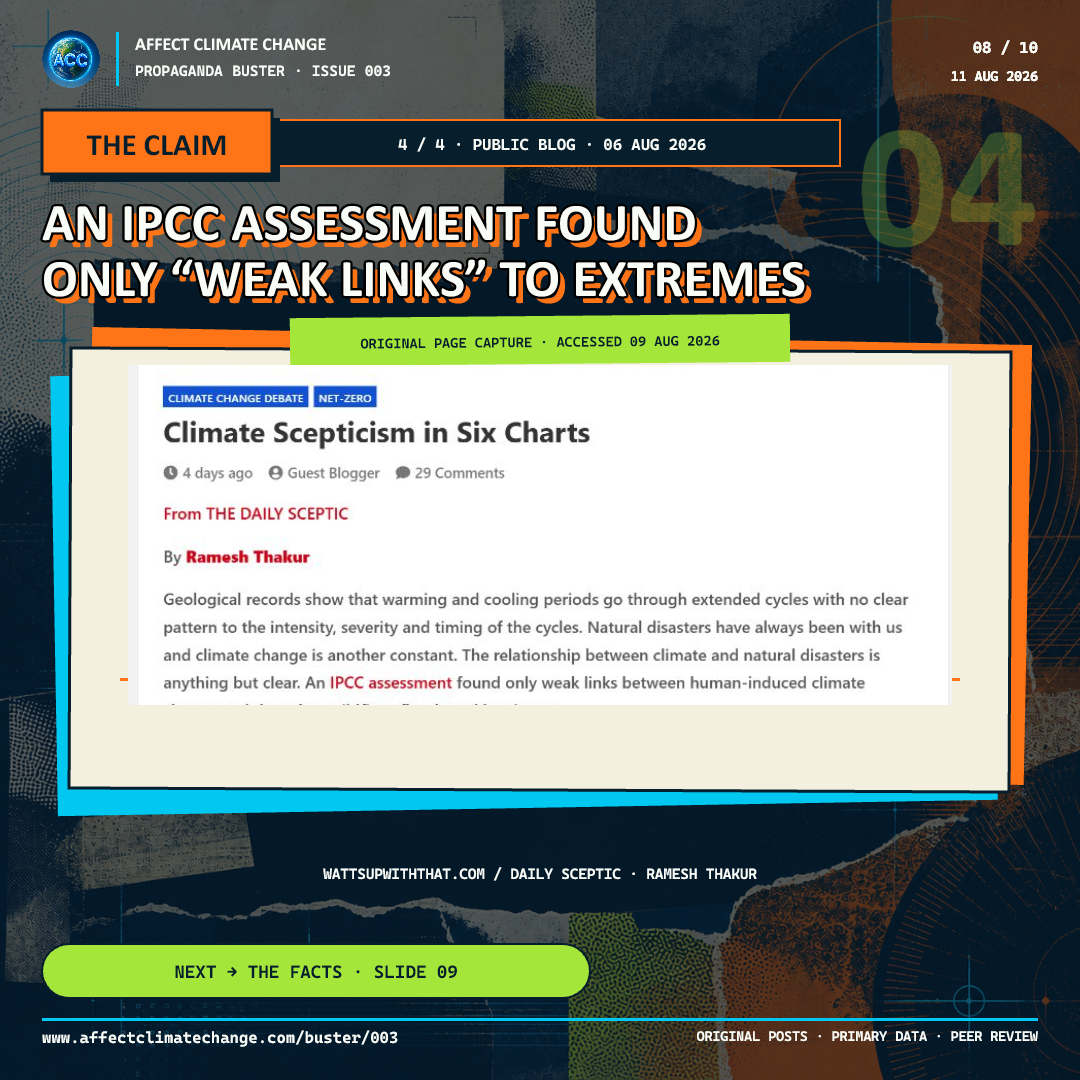 Slide 08 · Claim: An IPCC assessment found only weak links between human-caused climate change…
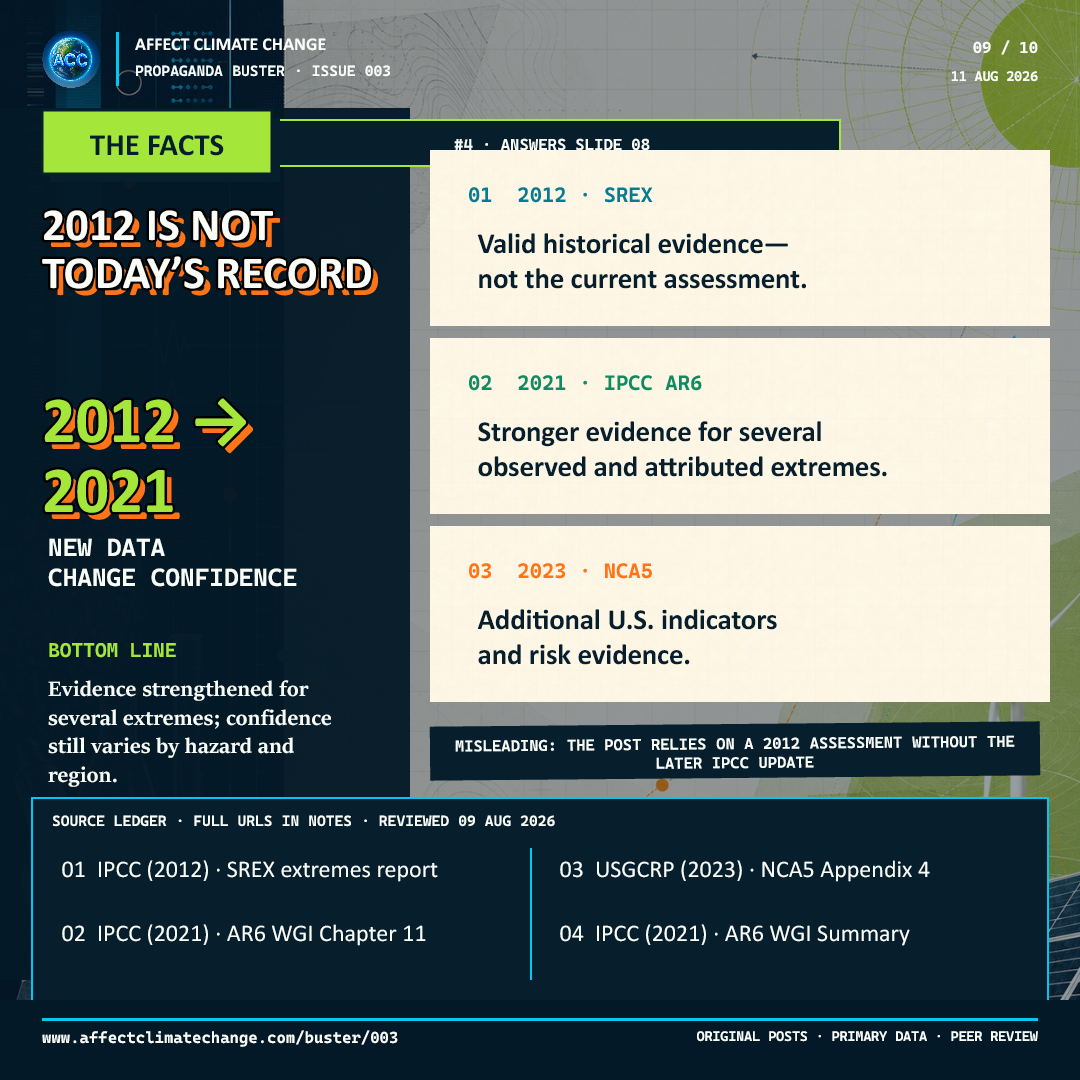 Slide 09 · What the evidence shows: The linked source is the IPCC's 2012 SREX report, not the current assessment. IPCC…
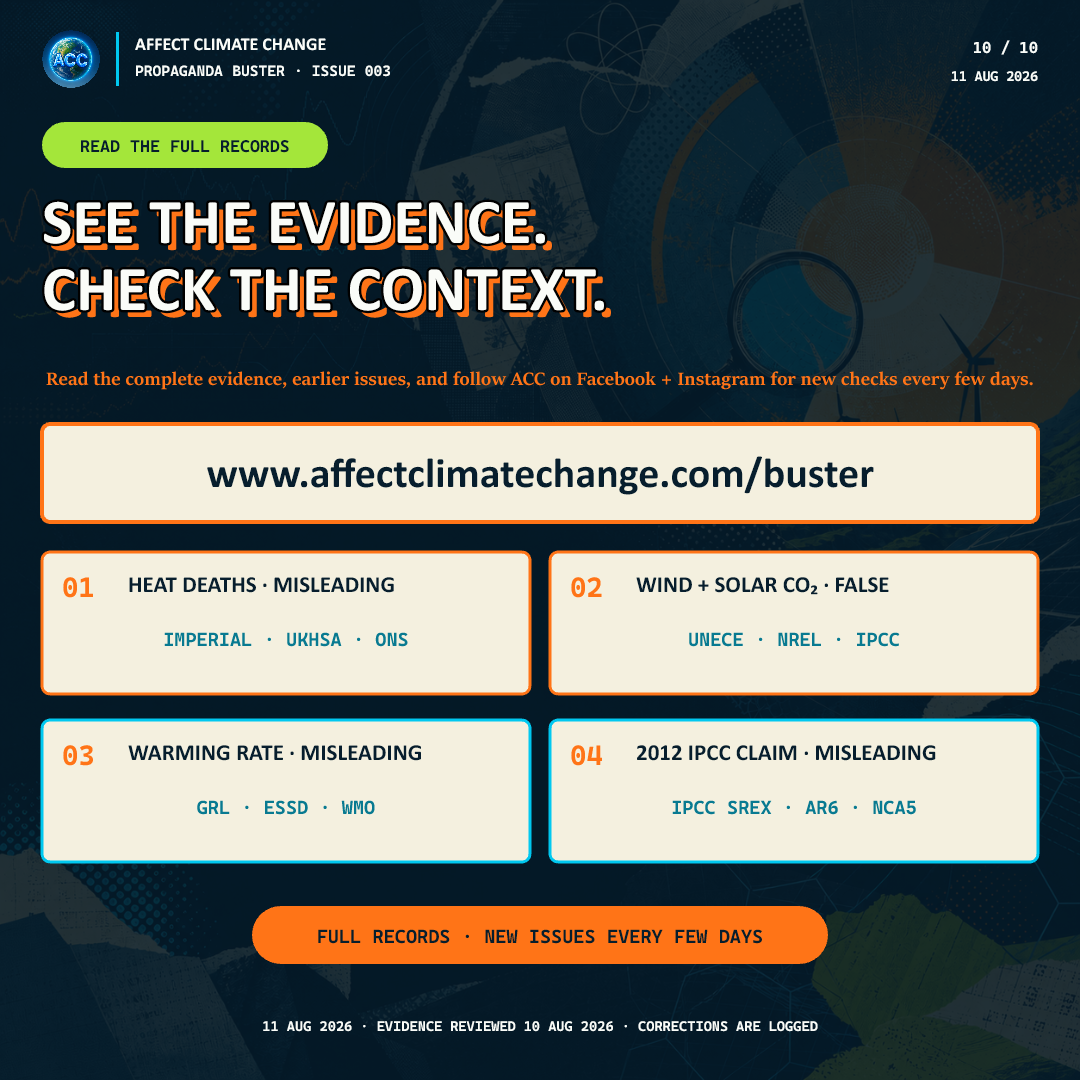 Slide 10 · Sources, methodology, and where to read the complete fact checks
Read the complete fact checks.
Each permanent page preserves the original claim and explains the verdict at greater depth than a social slide can carry.
A flat cumulative death-registration total shows the 2026 heatwave-death estimate was fake.
Cumulative registration totals do not test deaths during two short heatwaves. The 2,736 total is a rapid modelled estimate with uncertainty, not a final death-certificate count, but the registration comparison does not show it was fabricated.
02 False — Lifecycle Emissions Are Far LowerManufacturing and installing wind and solar produces more CO2 than the technologies save during their service lives.
Building turbines and panels creates emissions. But wind and solar then generate electricity without burning fuel, while coal and gas keep emitting whenever fuel is burned. Lifecycle studies count construction and still find much lower emissions per kilowatt-hour.
03 Misleading — Method OmittedData show no ‘sharp acceleration’ in warming.
The adjusted analysis finds acceleration above 98% confidence after accounting for natural influences. The unadjusted series is noisier and does not reach the same threshold—a real caveat—but the categorical headline omits the published adjusted result.
04 Misleading — Outdated AssessmentAn IPCC assessment found only weak links between human-caused climate change and droughts, wildfires, floods, and hurricanes.
The linked source is the IPCC's 2012 SREX report, not the current assessment. IPCC AR6 says observed and attributed evidence strengthened for several extremes, although confidence still differs by hazard and region.