
Propaganda Buster · Issue 006
Signal / Noise: four climate and energy claims checked
This issue checks claims about cool regions on a monthly map, wind and solar's share of energy, hurricane trends, and falling disaster deaths against temperature records, energy forecasts, tropical-cyclone assessments, and loss data.
- Issues available
- Issue 006
- Claims checked
- 4
- Scientific sources linked
- 10
- Publication status
- Published
Every claim is followed by the evidence that checks it.
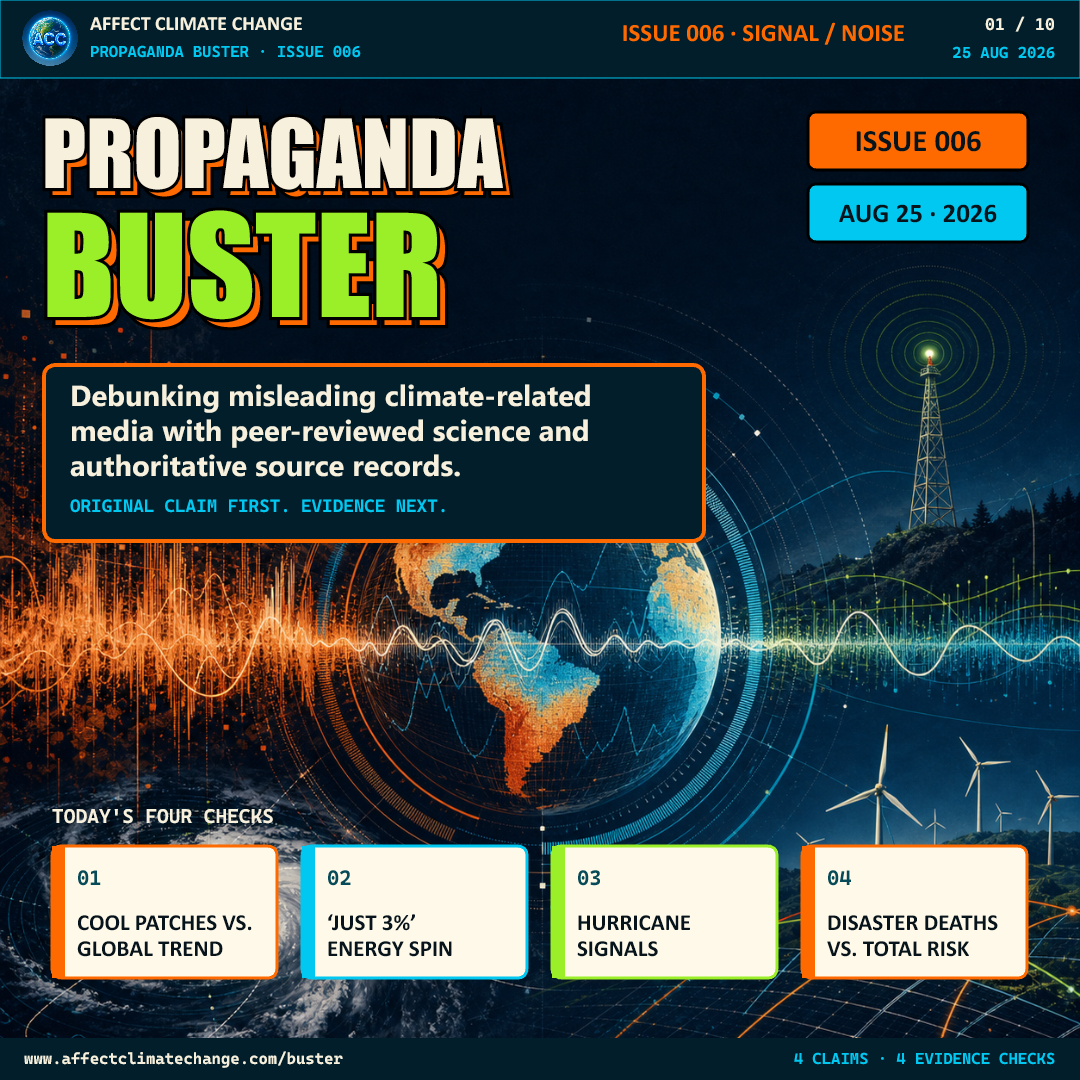
The opening slide introduces the series and this issue. Slides 2, 4, 6, and 8 show the four claims with source provenance; slides 3, 5, 7, and 9 summarize what scientific evidence shows. Slide 10 directs readers to the complete record.
Slide 01 · Meet Propaganda Buster and the four claims examined in this issue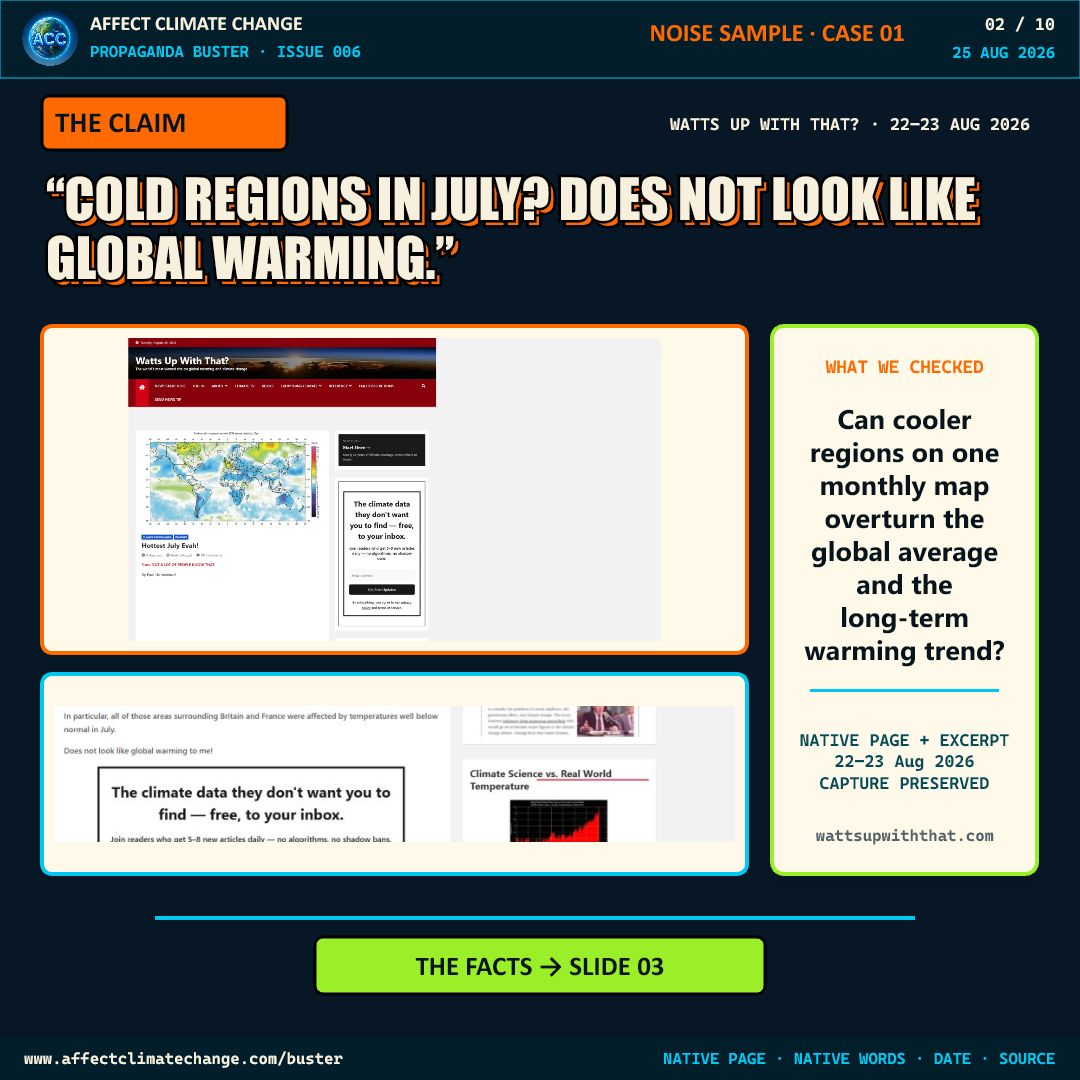 Slide 02 · Claim: Cold regions in July? Does not look like global warming.
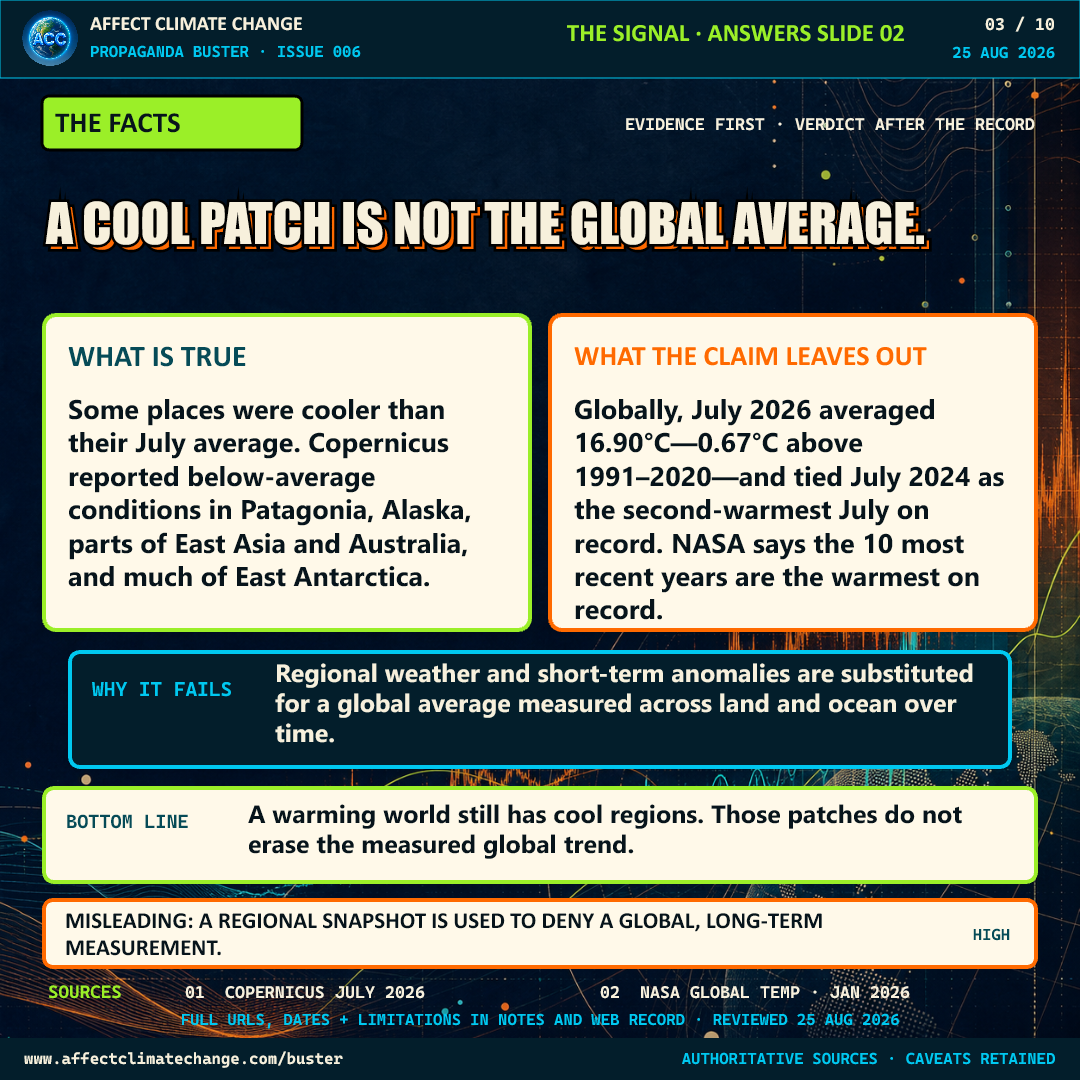 Slide 03 · What the evidence shows: Regional cold anomalies can occur during a very warm global month; they do not…
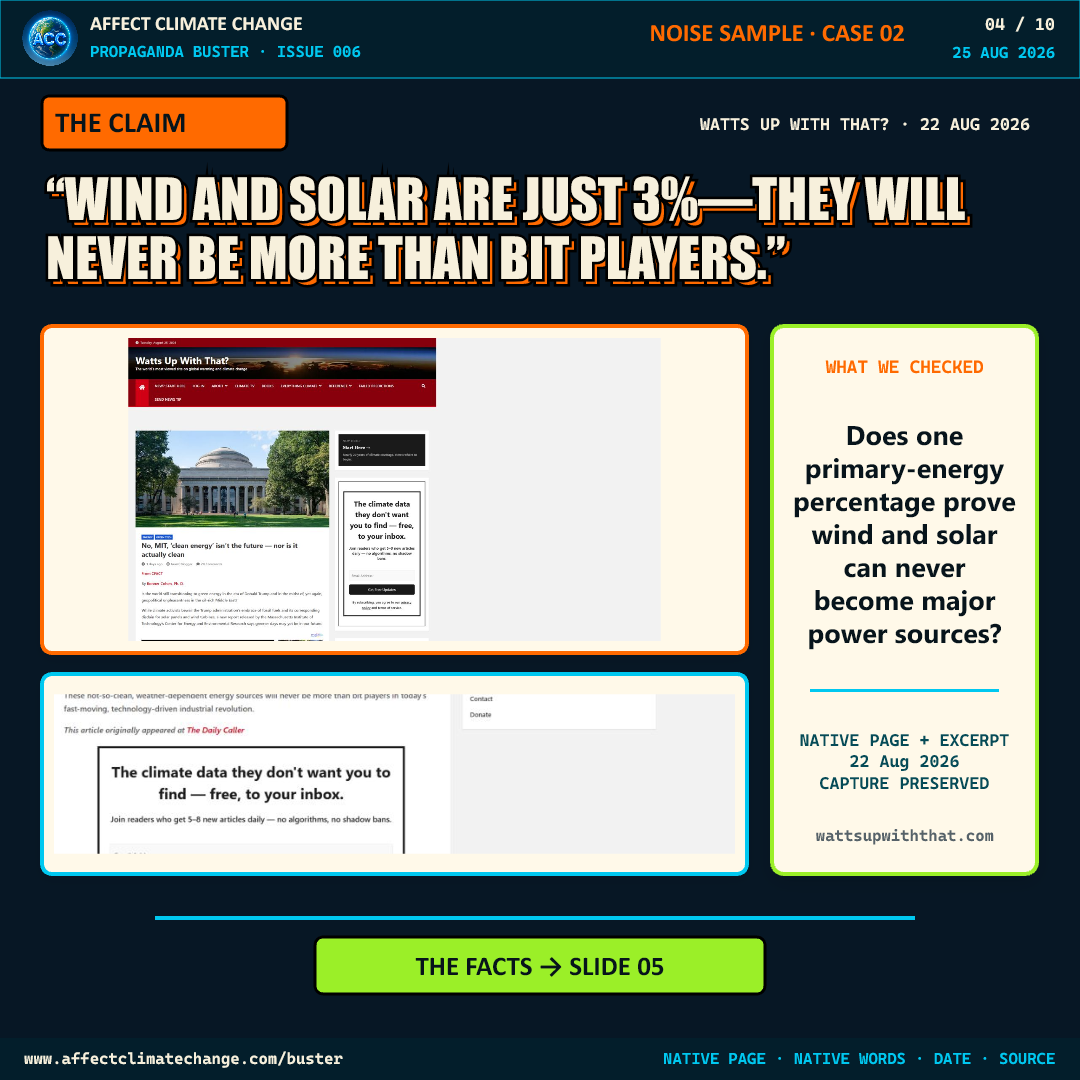 Slide 04 · Claim: Wind and solar are just 3%—they will never be more than bit players.
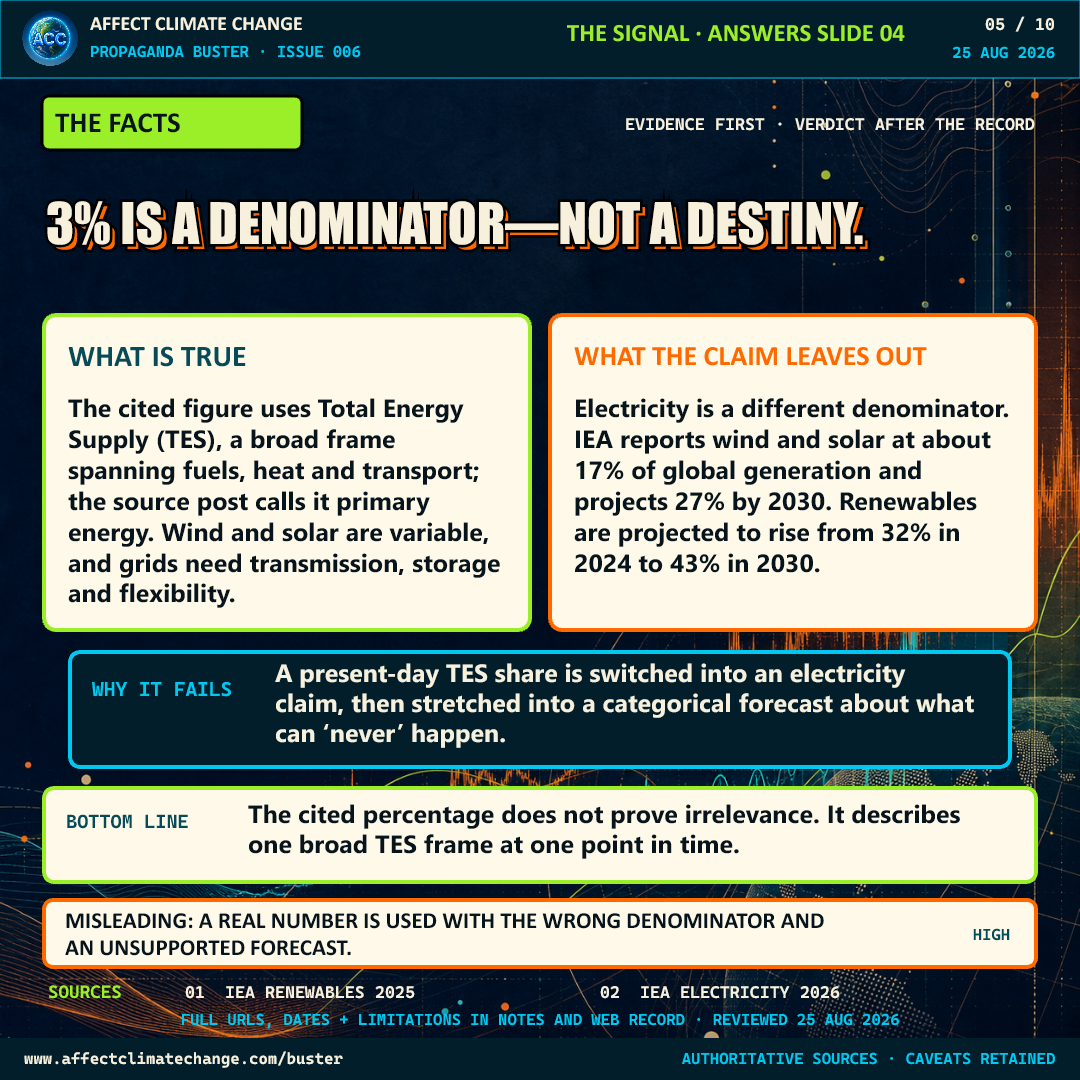 Slide 05 · What the evidence shows: The 3% figure uses a broad primary-energy denominator; electricity is different…
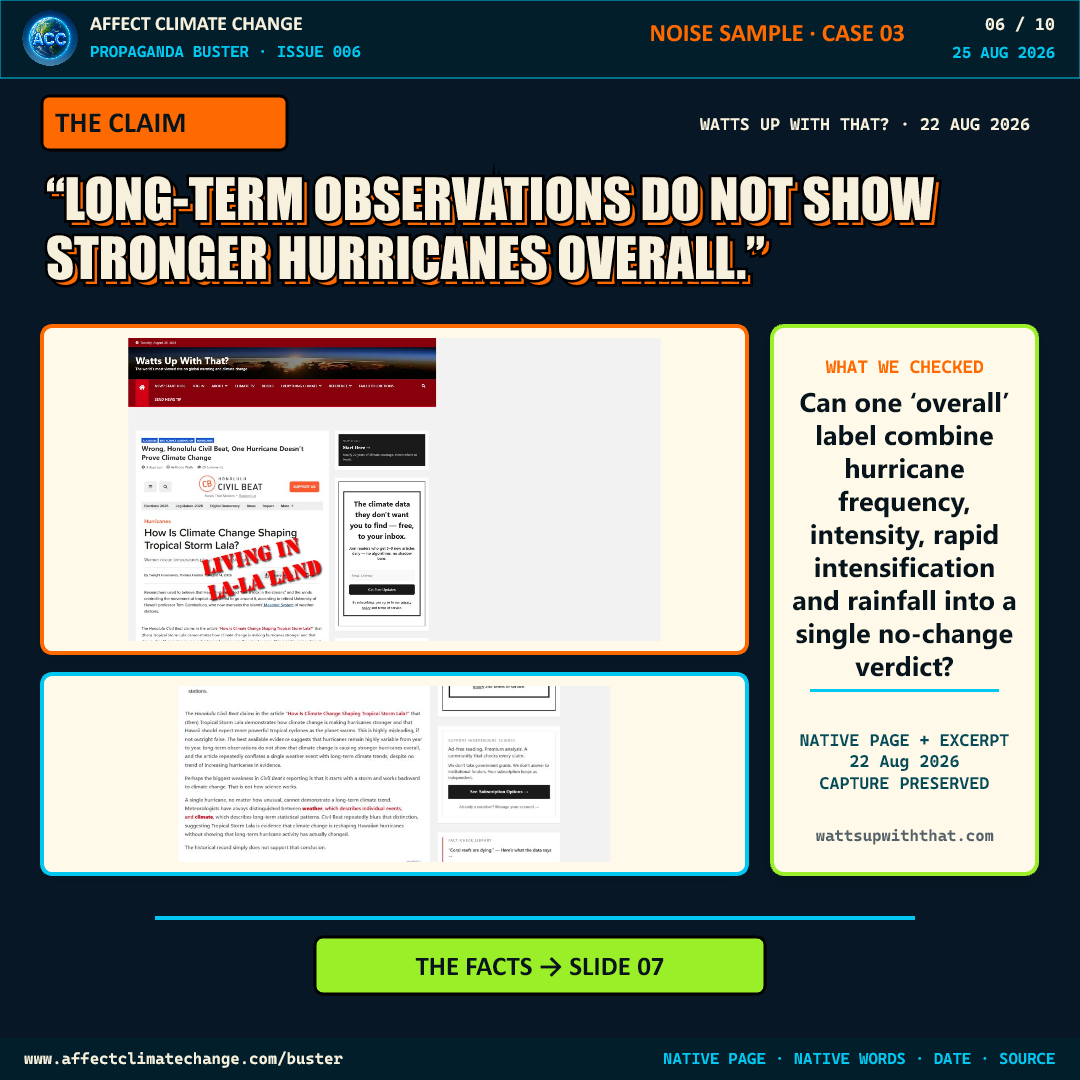 Slide 06 · Claim: Long-term observations do not show climate change causing stronger…
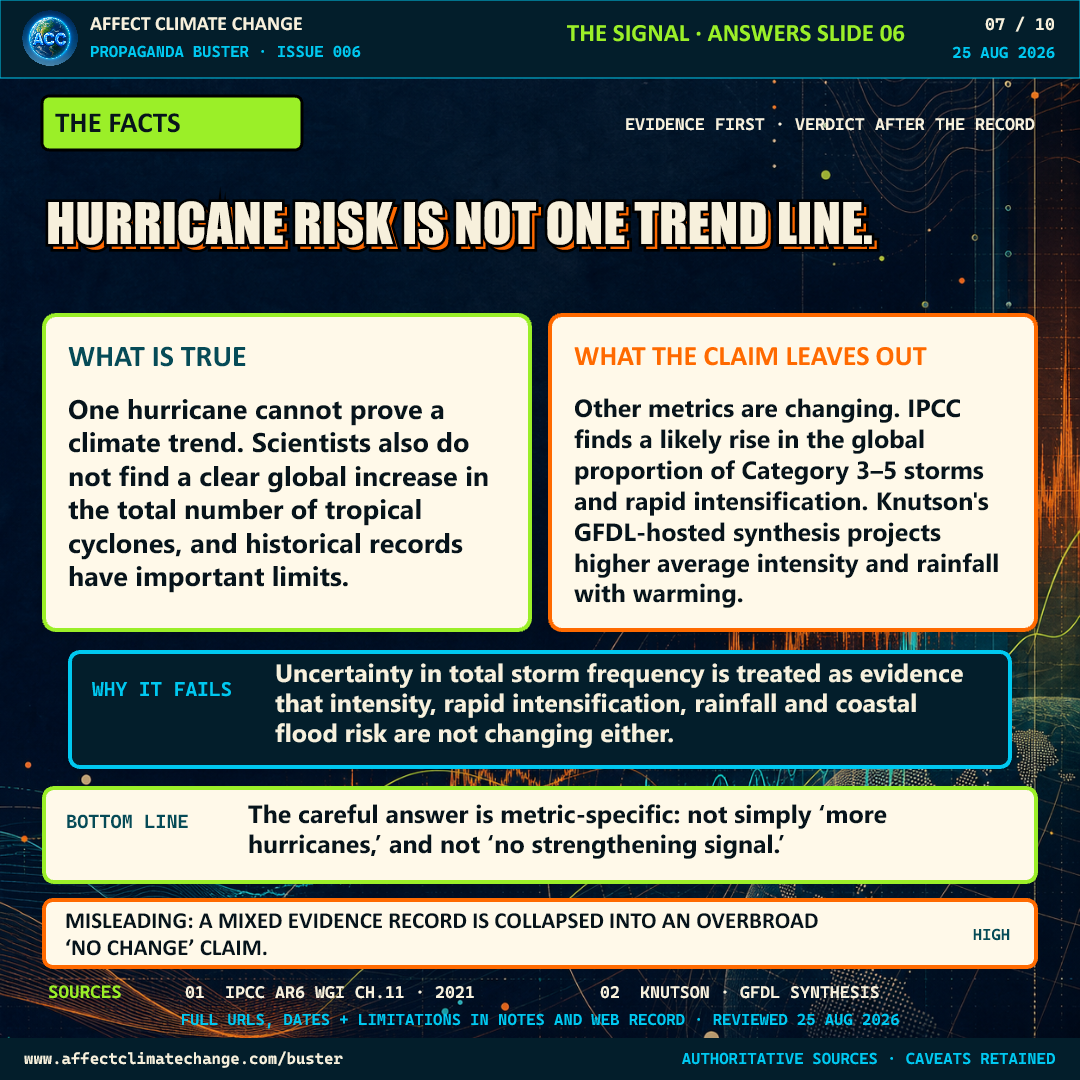 Slide 07 · What the evidence shows: Total storm counts, intensity, Category 3–5 share, rapid intensification, and…
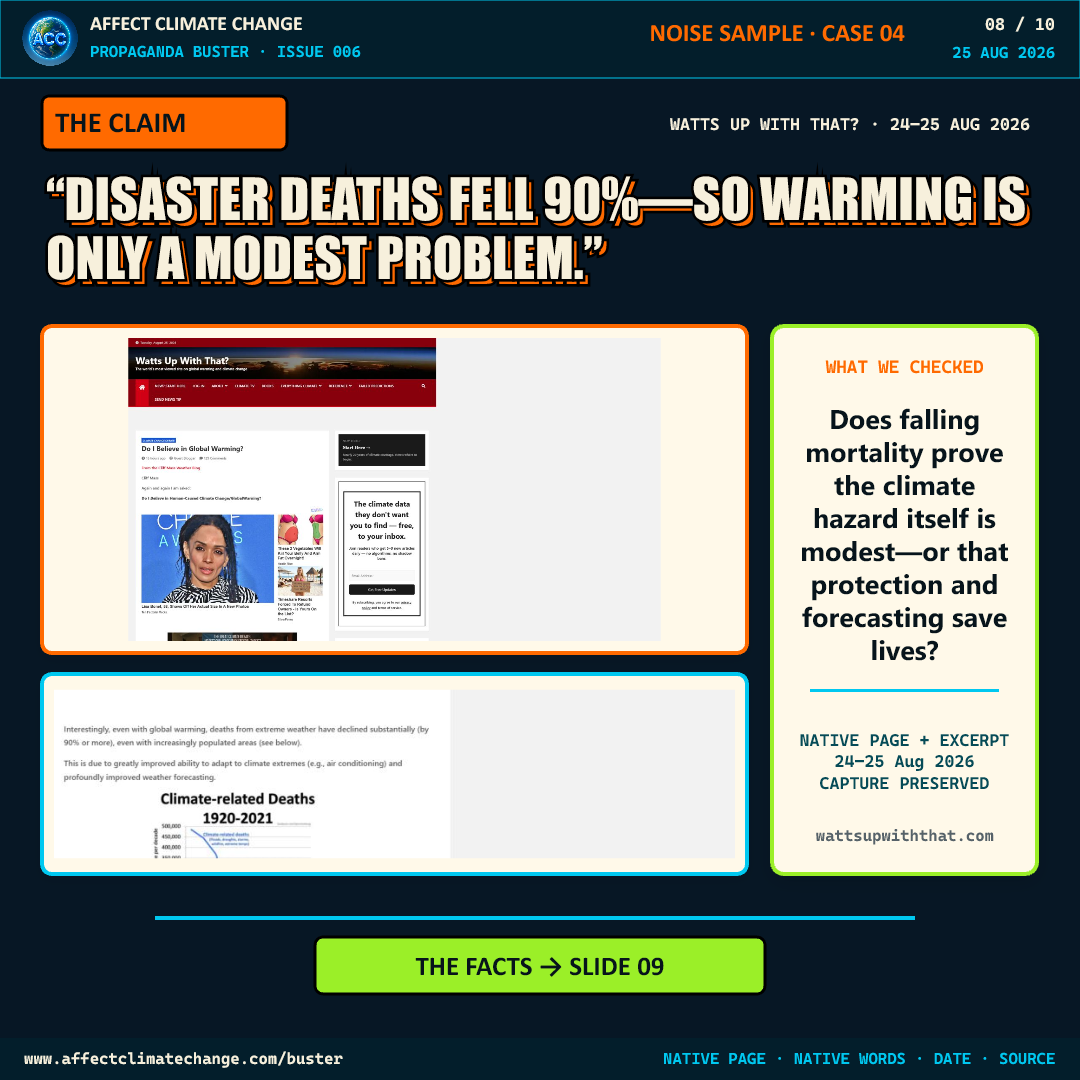 Slide 08 · Claim: Disaster deaths fell 90%—so warming is only a modest problem.
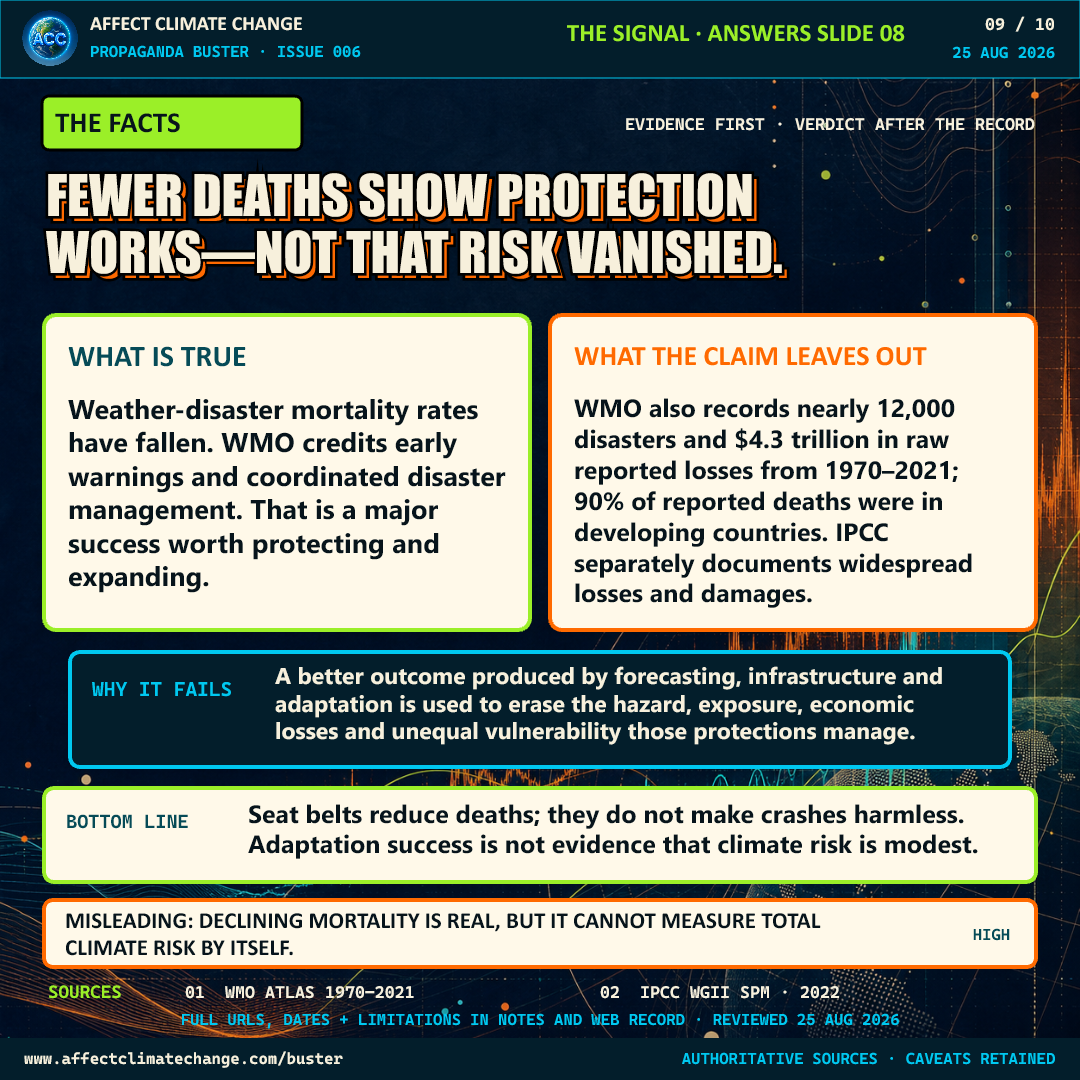 Slide 09 · What the evidence shows: Falling mortality shows that protection works; it does not measure total hazard…
 Slide 10 · Sources, methodology, and where to read the complete fact checks
Read the complete fact checks.
Each permanent page preserves the original claim and explains the verdict at greater depth than a social slide can carry.
Can cool regions on one monthly map overturn the global warming trend?
Regional cold anomalies can occur during a very warm global month; they do not overturn the measured global average or long-term trend.
02 MisleadingDoes a 3% energy share prove wind and solar will always be minor?
The 3% figure uses a broad primary-energy denominator; electricity is different, and a current share cannot prove what will never happen.
03 MisleadingCan hurricane risk be reduced to one no-change trend?
Total storm counts, intensity, Category 3–5 share, rapid intensification, and rainfall are different metrics with different assessed trends.
04 MisleadingDo falling disaster deaths prove total climate risk is modest?
Falling mortality shows that protection works; it does not measure total hazard, exposure, economic loss, displacement, ecosystem damage, or unequal vulnerability.