ACC News Brief
Climate Science Canadian Arctic
Most ancient Arctic carbon entering the sea stayed buried in seabed study
What happened
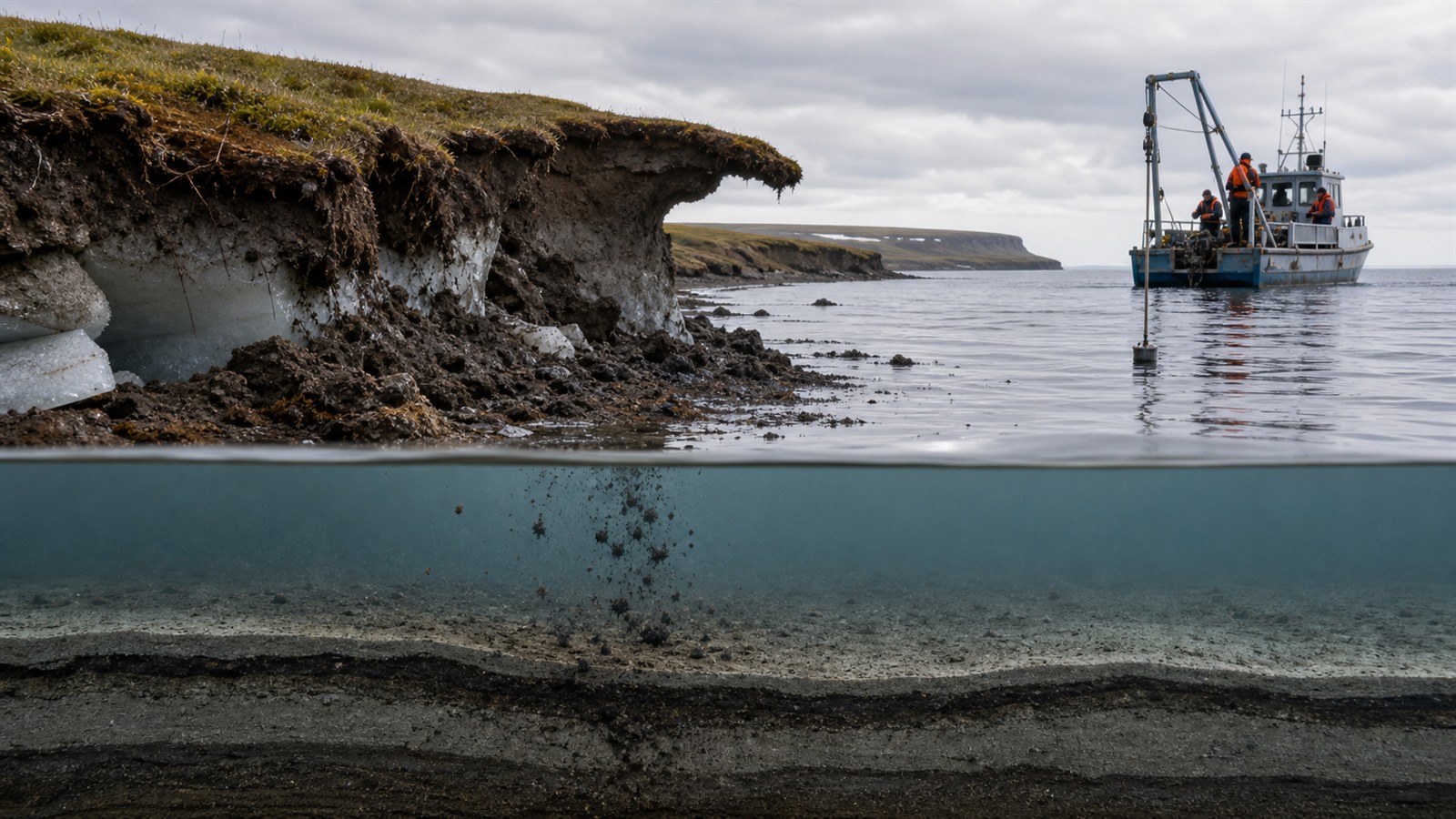
Sediment cores collected off Qikiqtaruk, or Herschel Island, indicate that most land-based organic carbon carried into the sea remained buried in the seabed. Researchers estimated that microorganisms converted about 10% of the sediment's organic carbon into gases, while tending to consume fresher marine carbon instead of older permafrost material.
Why it matters
Arctic permafrost stores enormous amounts of carbon, so its fate affects climate projections. The result suggests one coastal seabed can retain more eroded carbon than expected, but the researchers caution that some carbon may decompose before reaching the seafloor and that broader Arctic measurements are still needed.
What to watch
- Whether similar burial rates appear at other Arctic coasts and river deltas.
- How much permafrost carbon is transformed before it reaches marine sediments.
- How new measurements change permafrost feedback estimates in climate models.
Sources & evidence
- Ancient Arctic carbon is pouring into the sea, but the seabed captures most of itScienceDaily research release published August 3, 2026, sourced to the Alfred Wegener Institute and a Nature Geoscience study.
Continue learning with ACC
Explore ACC's climate science guide