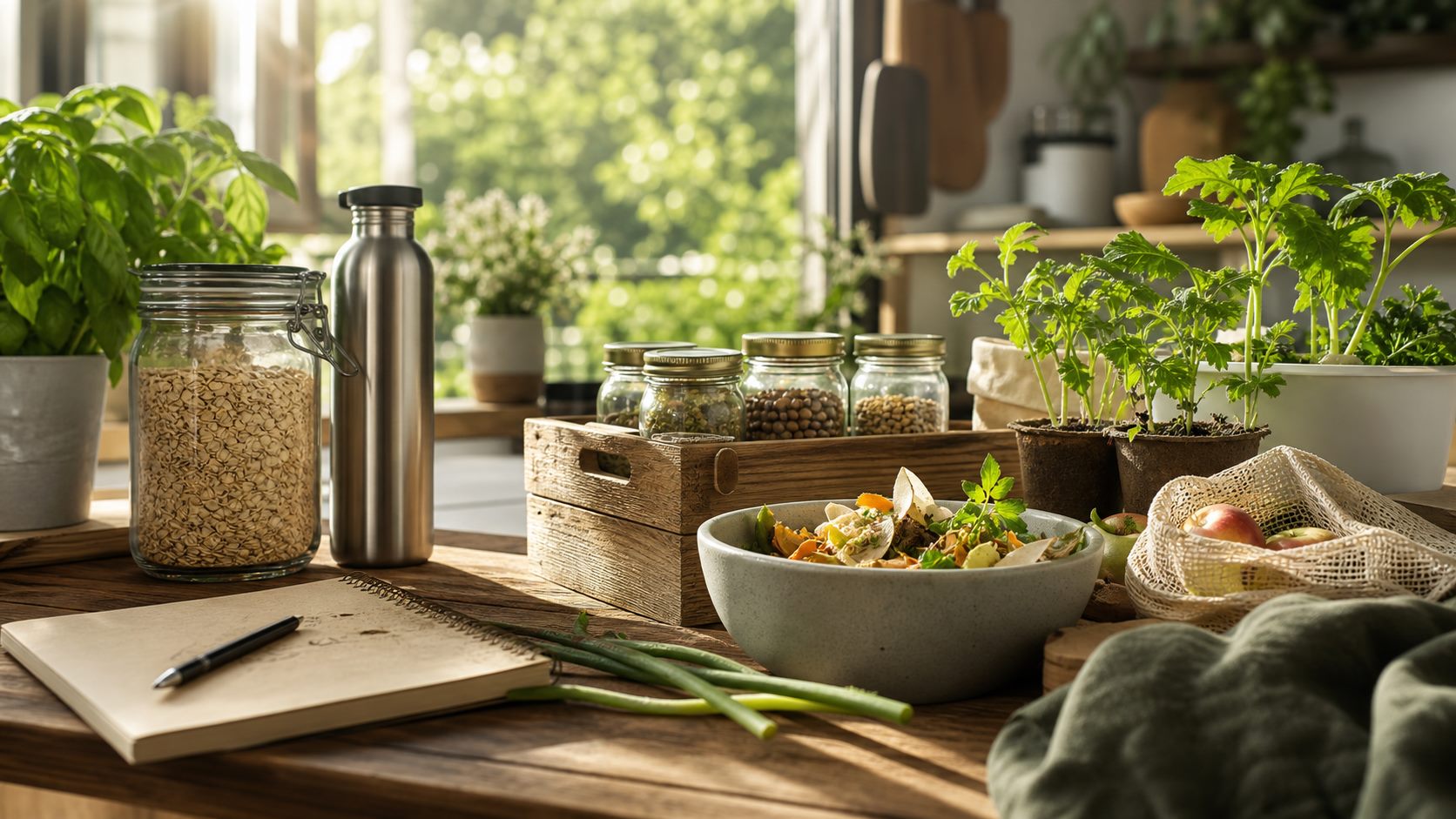
Move beyond basic household habits by building one small living
system you can maintain. Start with a container, compost route,
covered bed, water-smart project, or habitat planting, then use what
you learn to prepare for full permaculture design.
Build one useful system, keep it working, and learn from it.
Sections 1 through 3 establish repeatable habits, reduce home
energy demand, and clean up the power that remains. Section 4 adds
practical experience with plants, organic material, soil, water,
and habitat before Section 5 asks you to connect those pieces into
an integrated permaculture plan.
No yard required
Apartment, rental, house, or shared space.
A windowsill herb, balcony container, community-garden plot,
municipal compost program, neighborhood drop-off, or native plant
in a permitted shared area can all count. Choose the version that
fits your space, budget, local rules, and available time.
Start at the scale you can maintain.
Choose one first project
Do not build all six at once.
Pick one project that solves a real need. Keep it small enough to
maintain for at least a month. The goal is not a perfect garden;
it is a working system that teaches you what your home, schedule,
climate, and site can support.
Renters and apartment residents can focus on containers, indoor
herbs, worm composting where appropriate, community compost, or a
shared garden. Homeowners can begin with the same projects before
expanding into beds, water management, trees, or habitat areas.
Organic material
Choose a compost route
Use municipal collection, a verified drop-off, a worm bin, tumbler, or managed pile that fits your home and local rules.
Small-space food
Start a container garden
Grow one suitable herb, green, vegetable, or small fruit in a container with drainage, enough light, and a realistic watering plan.
Soil protection
Build one mulched bed
Keep a small area covered with appropriate mulch or living plants to reduce bare soil, moderate moisture loss, and limit weeds.
Habitat
Add a native or pollinator strip
Use locally suitable plants, avoid unnecessary pesticides, and choose a location where the plants can be maintained.
Water
Improve one water pathway
Fix wasteful watering first. Where legal and site-safe, consider a rain barrel, rain garden, basin, or corrected downspout route.
Long-term shade
Plan one useful perennial
Choose the right native shrub, berry, small tree, or shade tree for the available space, utilities, mature size, and maintenance.
Soil and compost
Feed soil carefully instead of treating it like an empty container.
Healthy soil depends on cover, living roots, biological activity,
diverse plants, and limited unnecessary disturbance. Compost can
return food scraps and yard material to the soil, but the method
must fit the site and exclude unsafe or locally prohibited inputs.
Keep soil covered
Use mulch, leaves where appropriate, cover crops, or living plants so bare soil is not left exposed unnecessarily.
Use the right compost route
Learn what the municipal program, drop-off, worm bin, tumbler, or pile accepts. A working route is better than a neglected system.
Test when safety is uncertain
A fertility test and a contaminant test answer different questions. Use qualified local guidance before growing edible crops in uncertain soil.
Add only what the soil needs
Avoid automatic fertilizer or amendment routines. Observe plants, use credible testing where needed, and follow product and local guidance.
Water stays useful
Slow it, direct it safely, and water only where needed.
Start by fixing leaks, watering near the root zone, choosing the
right time, and using mulch or plant cover. Rain gardens and other
green-infrastructure features can collect and filter runoff, but
placement must protect foundations, utilities, neighboring
property, and local waterways.
Habitat belongs in the plan
Choose plants for food, shade, soil, and wildlife together.
Native and locally suitable plants can support pollinators and
other wildlife while reducing avoidable maintenance. Match every
plant to light, moisture, mature size, local climate, and the care
you can actually provide.
The complete Section 4 pathway
Fifteen tasks turn one small project into real experience.
Each stage contains five tasks. Complete them gradually in the
Sustainability Companion. Section 4 prepares a working garden,
compost, soil, water, and habitat foundation; Section 5 is where
those systems are designed to work together.