Propaganda Buster · Issue 008
The missing context: four climate claims checked against the complete record
This issue checks a precise AI-water comparison, a claim that the Fifth National Climate Assessment relies on failed models, reassuring framing of Antarctic snow gains, and the categorical claim that coral recovery means climate change is not a threat.
- Issues available
- Issue 008
- Claims checked
- 4
- Scientific sources linked
- 9
- Publication status
- Published
Every claim is followed by the evidence that checks it.
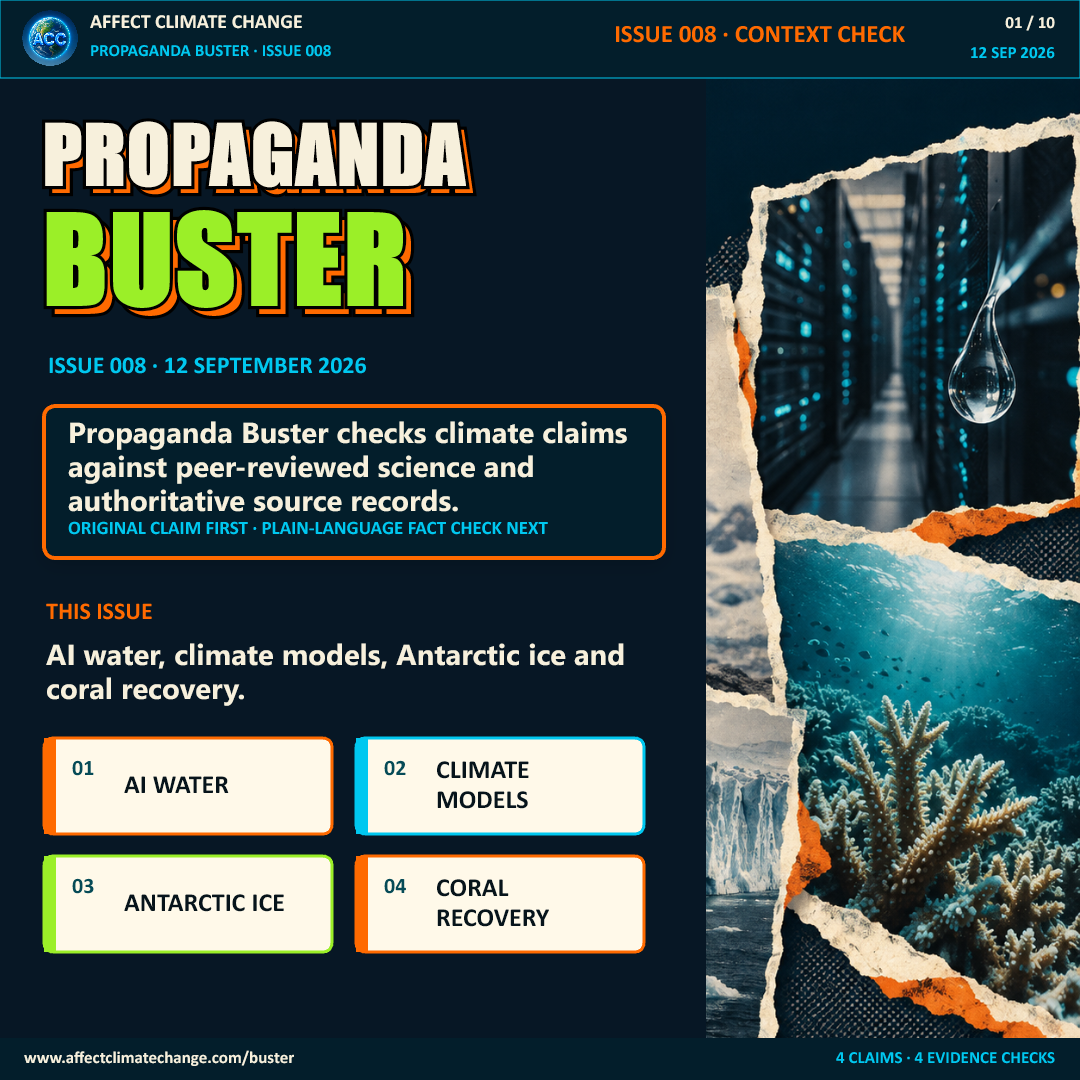
The opening slide introduces the series and this issue. Slides 2, 4, 6, and 8 show the four claims with source provenance; slides 3, 5, 7, and 9 summarize what scientific evidence shows. Slide 10 directs readers to the complete record.
Slide 01 · Meet Propaganda Buster and the four claims examined in this issue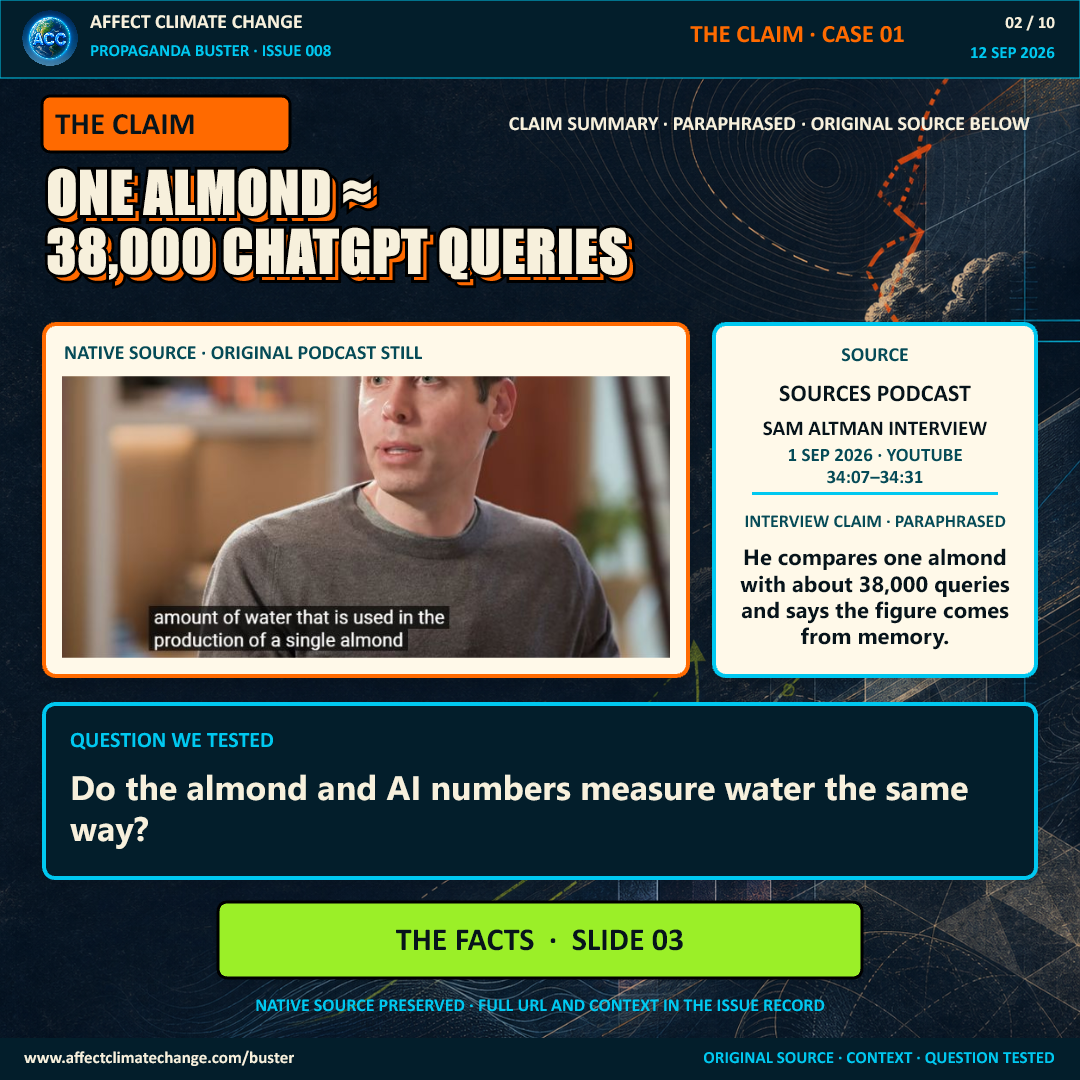 Slide 02 · Claim: One California almond uses about as much water as 38,000 ChatGPT queries.
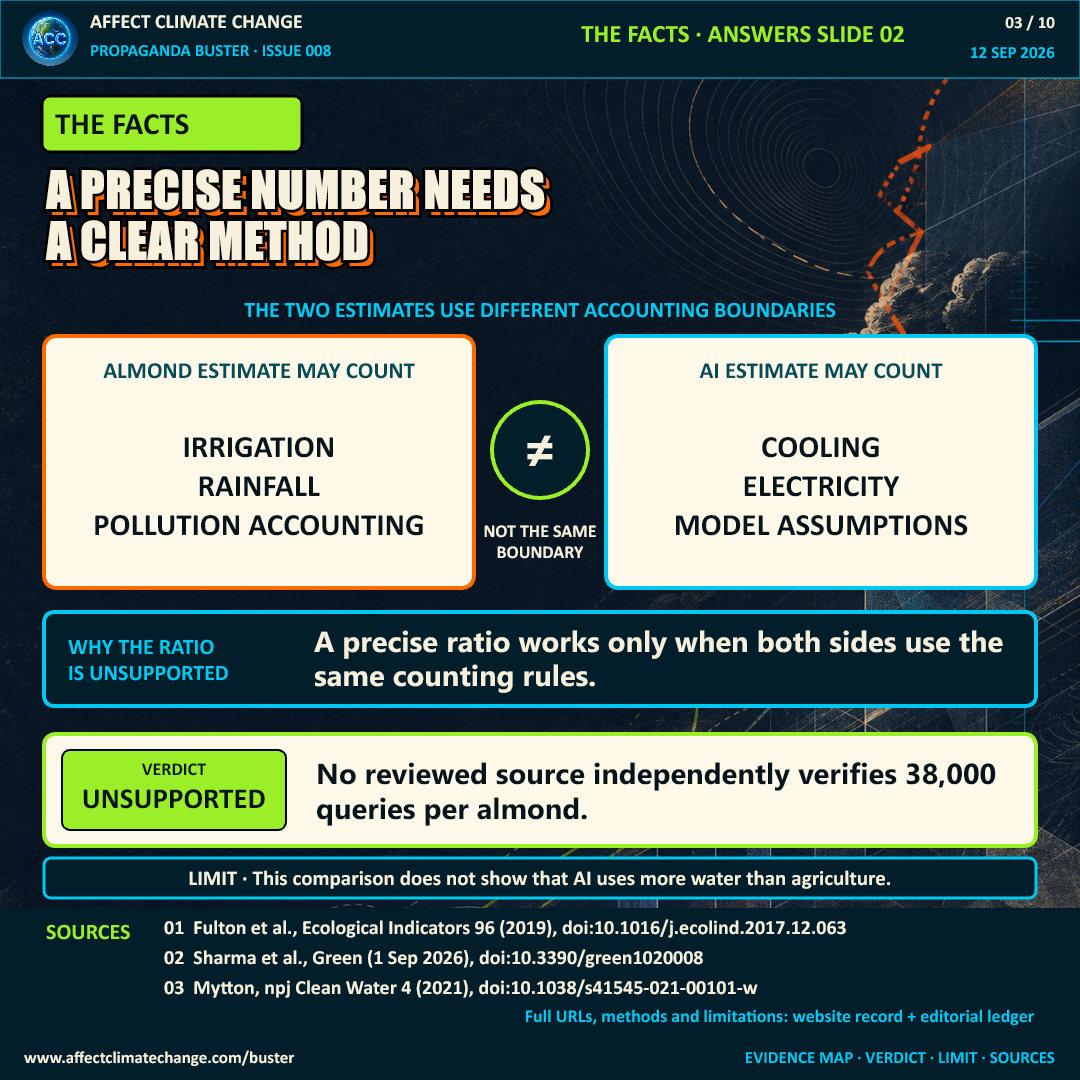 Slide 03 · What the evidence shows: The reviewed public sources do not independently validate the exact ratio using…
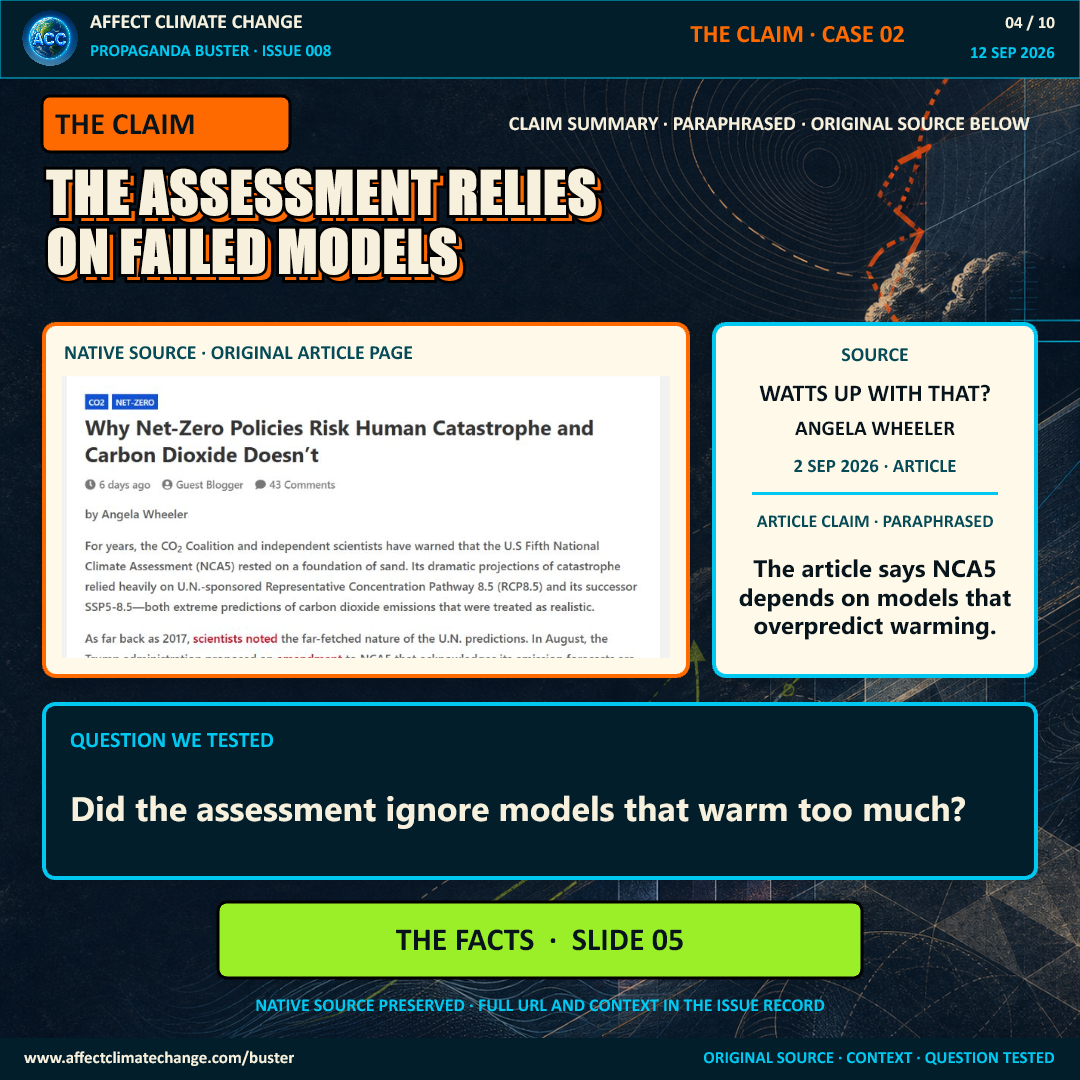 Slide 04 · Claim: The Fifth National Climate Assessment relies on models that overpredict…
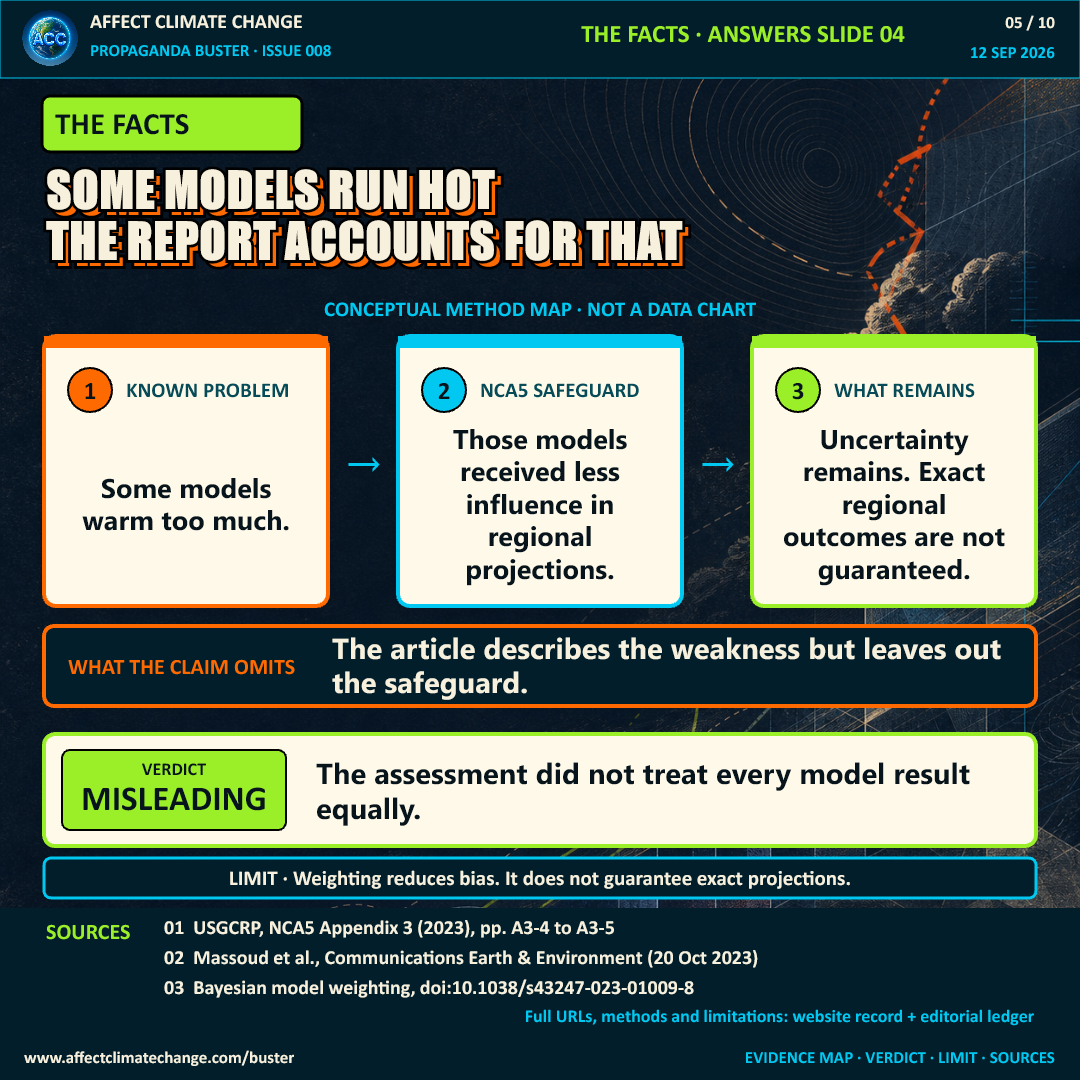 Slide 05 · What the evidence shows: Some models do run too hot, but the article omits that NCA5 reduced their…
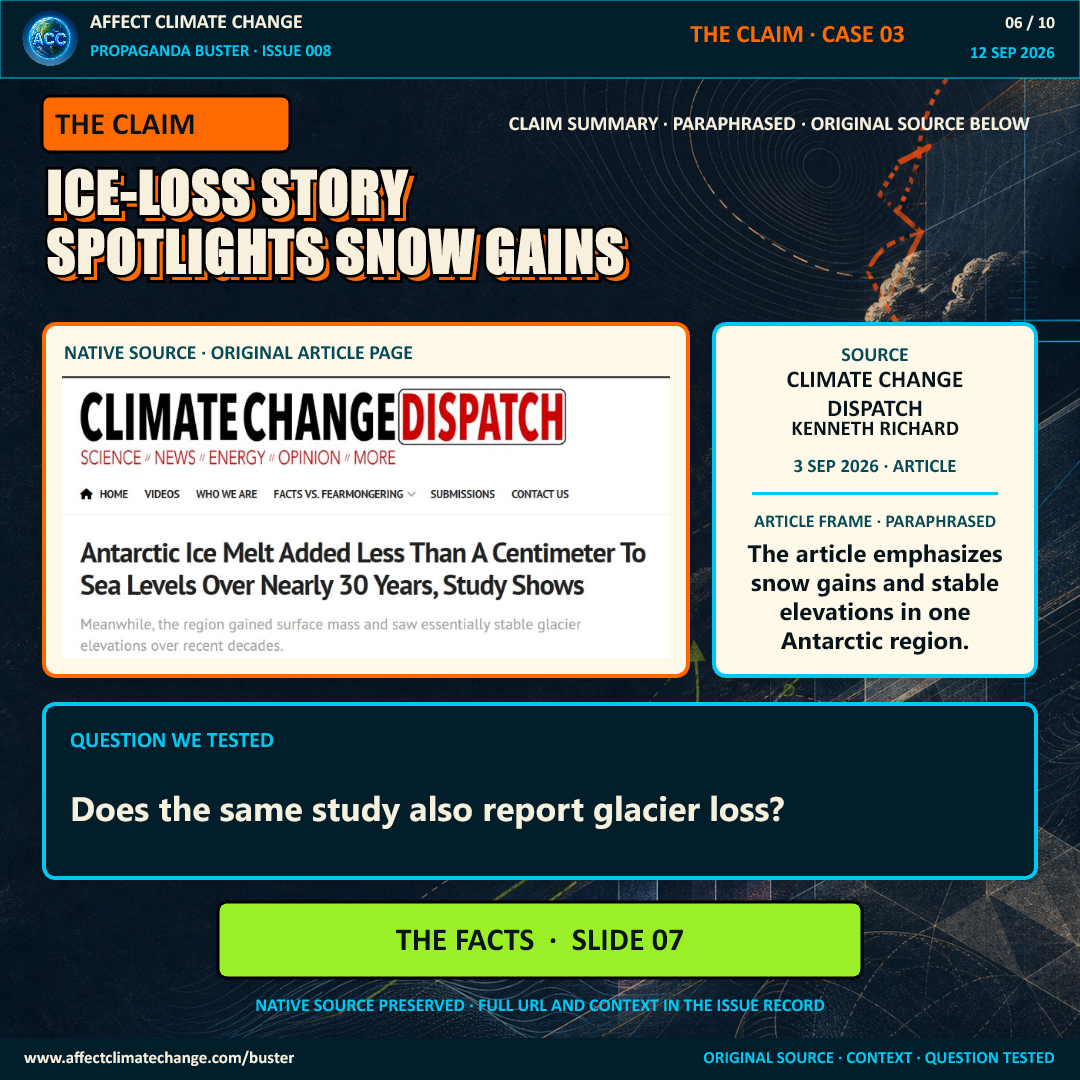 Slide 06 · Claim: Surface gains in a western Antarctic Peninsula study show the region storing…
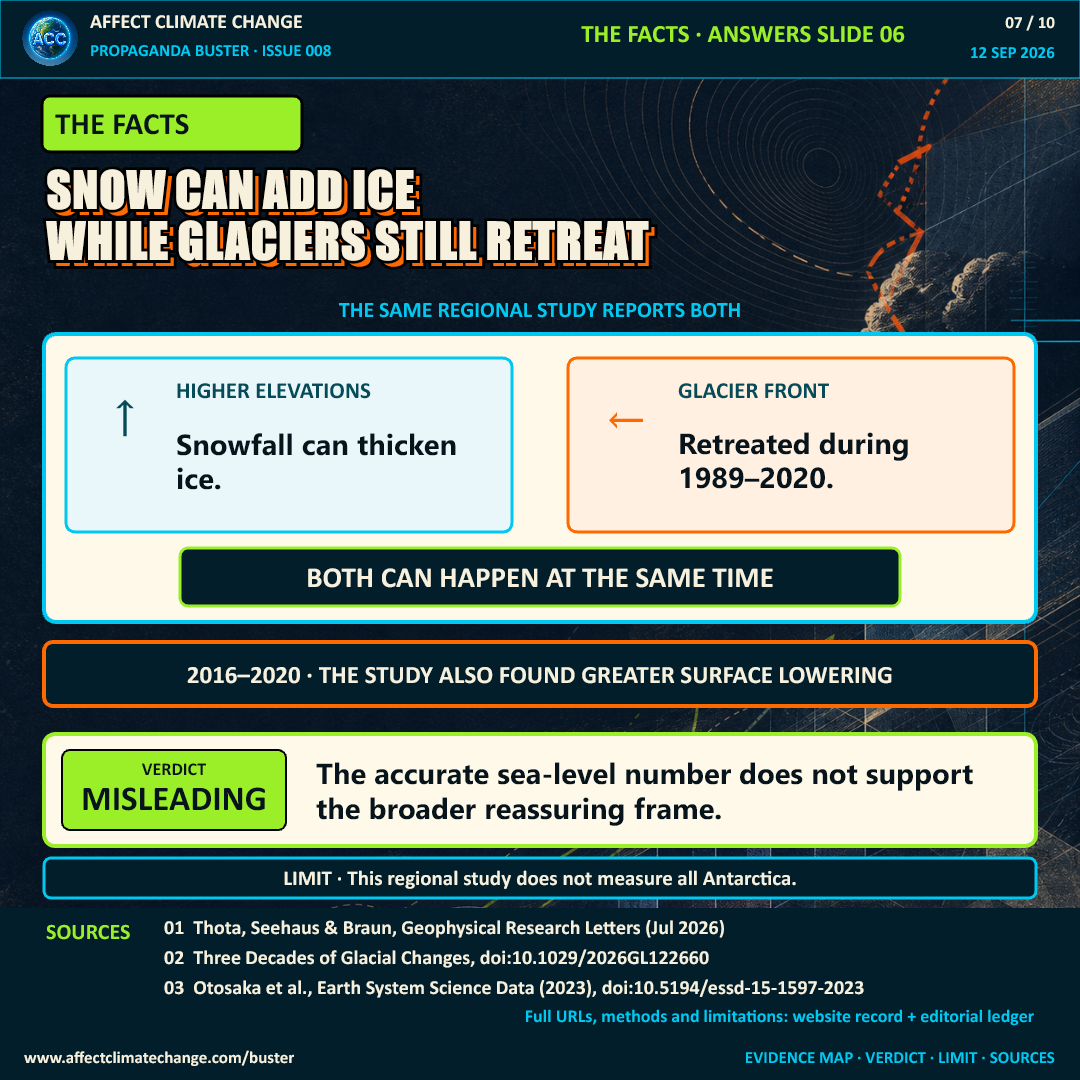 Slide 07 · What the evidence shows: Snowfall and upper-glacier thickening are real, but the reassuring frame omits…
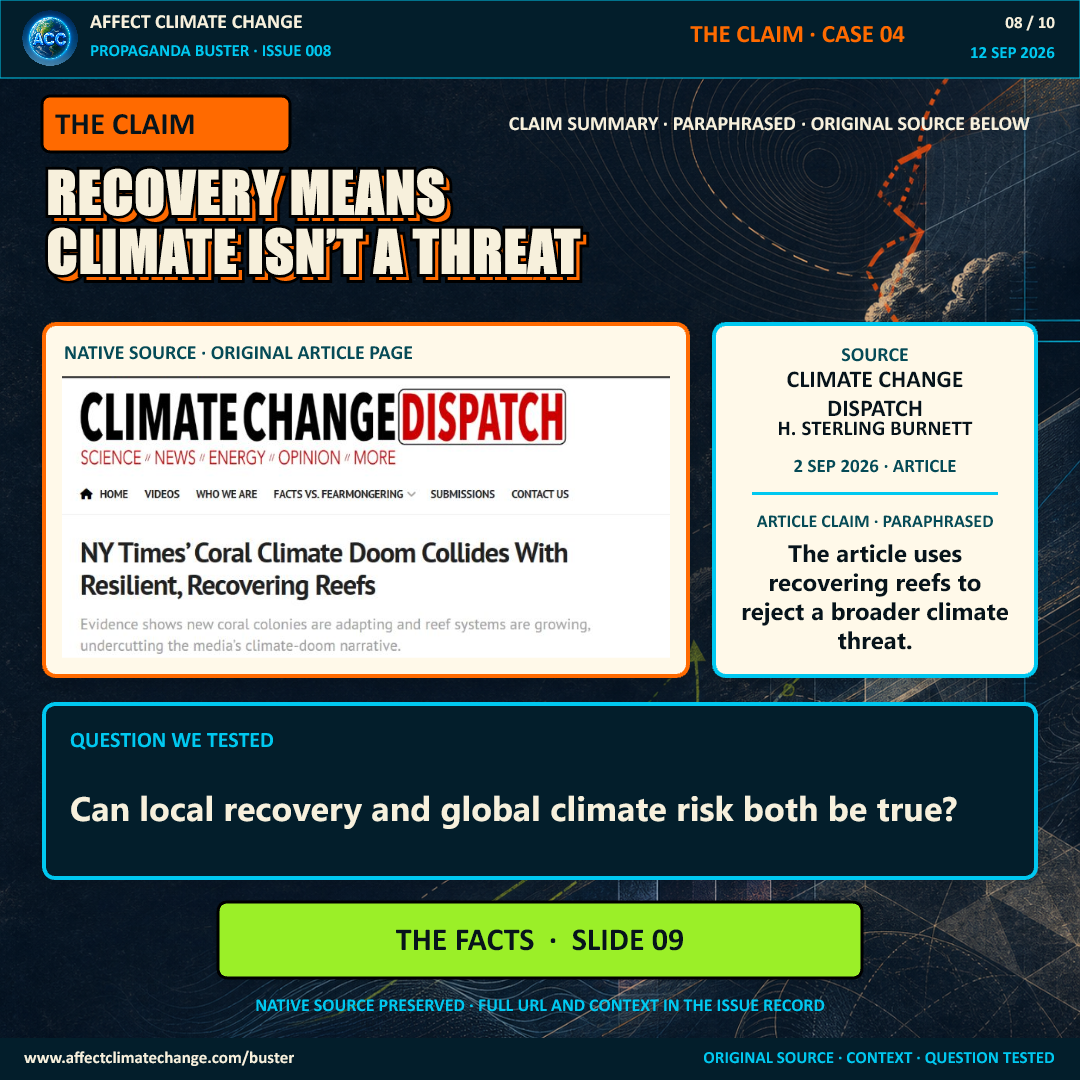 Slide 08 · Claim: Coral recovery and newly found reefs show that climate change does not…
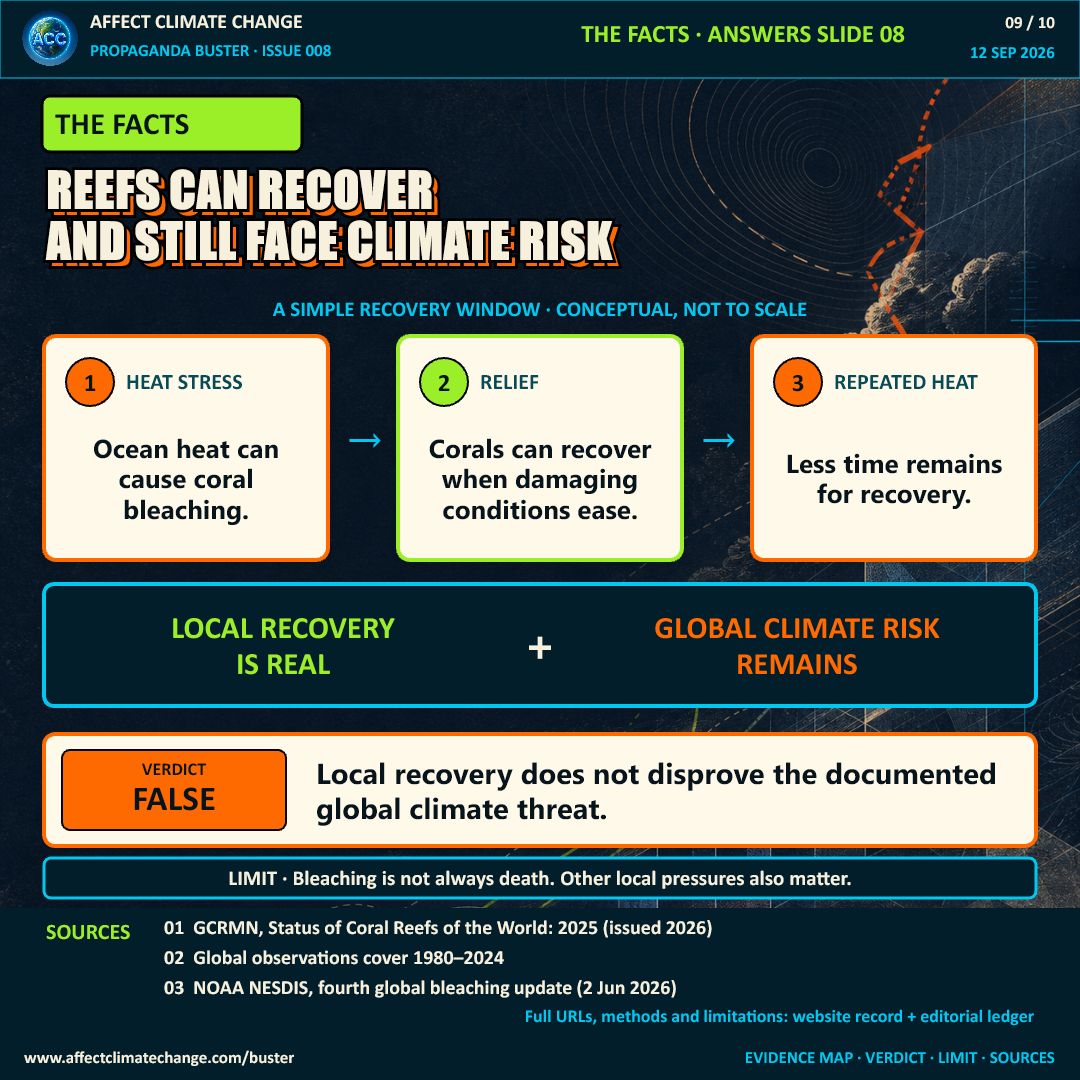 Slide 09 · What the evidence shows: Global assessment and monitoring evidence identifies climate-driven heat stress as…
 Slide 10 · Sources, methodology, and where to read the complete fact checks
Catch the claim. See the facts. Follow the next issue.
We publish new Propaganda Buster visual issues on Instagram and Facebook several times a week—usually every two or three days, between ACC's climate news updates. Each one checks four circulating claims and points back to the complete evidence here.
Read the complete fact checks.
Each permanent page preserves the original claim and explains the verdict at greater depth than a social slide can carry.
Does one almond equal 38,000 ChatGPT queries in water use?
The reviewed public sources do not independently validate the exact ratio using matched definitions, system boundaries and current measured ChatGPT data.
02 MisleadingDid NCA5 ignore climate models that run too hot?
Some models do run too hot, but the article omits that NCA5 reduced their influence in downscaled regional projections through documented climate-sensitivity weighting.
03 MisleadingDo Antarctic snow gains cancel the glacier losses in the same study?
Snowfall and upper-glacier thickening are real, but the reassuring frame omits retreat-driven loss and increased 2016-to-2020 surface lowering reported by the same regional study.
04 ContradictedDoes local coral recovery mean climate change is not a reef threat?
Global assessment and monitoring evidence identifies climate-driven heat stress as a major reef threat; local recovery during relief from disturbance does not contradict that risk.