Evidence and observation

Climate Science & Data news and updates.

Research, observations, temperature records, attribution studies, oceans, ice, and the evidence used to understand a changing climate.

ACC News Briefs

Latest Climate Science reporting.

Each brief identifies the original source and links to the reporting or evidence behind it.

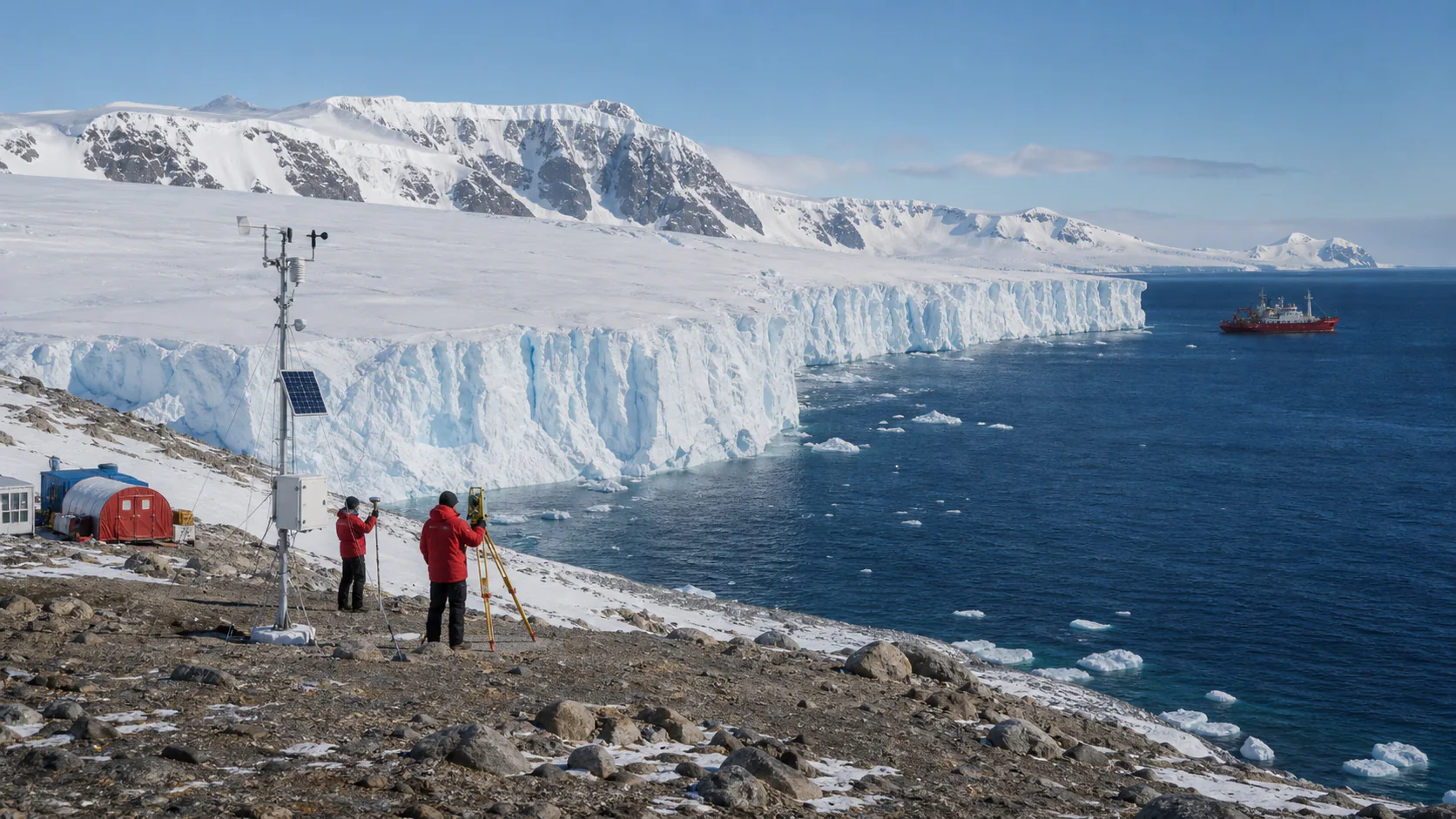
Researchers monitor an Antarctic coastal glacier with field instruments while a research vessel waits offshore.

Antarctic ice models may offer decades of sea-level planning time

Monash University researchers report in Nature that Antarctica's contribution to sea-level rise can remain strongly predictable to mid-century when models reproduce present-day ice loss. The ScienceDaily summary says this could provide a roughly 30- to 50-year window for coastal planning, while predictability declines later as unstable retreat and feedbacks grow more important. The result is about the useful horizon of calibrated models, not evidence that long-term sea-level risk is smaller.

Original reporting: Monash University via ScienceDaily

Read the ACC brief
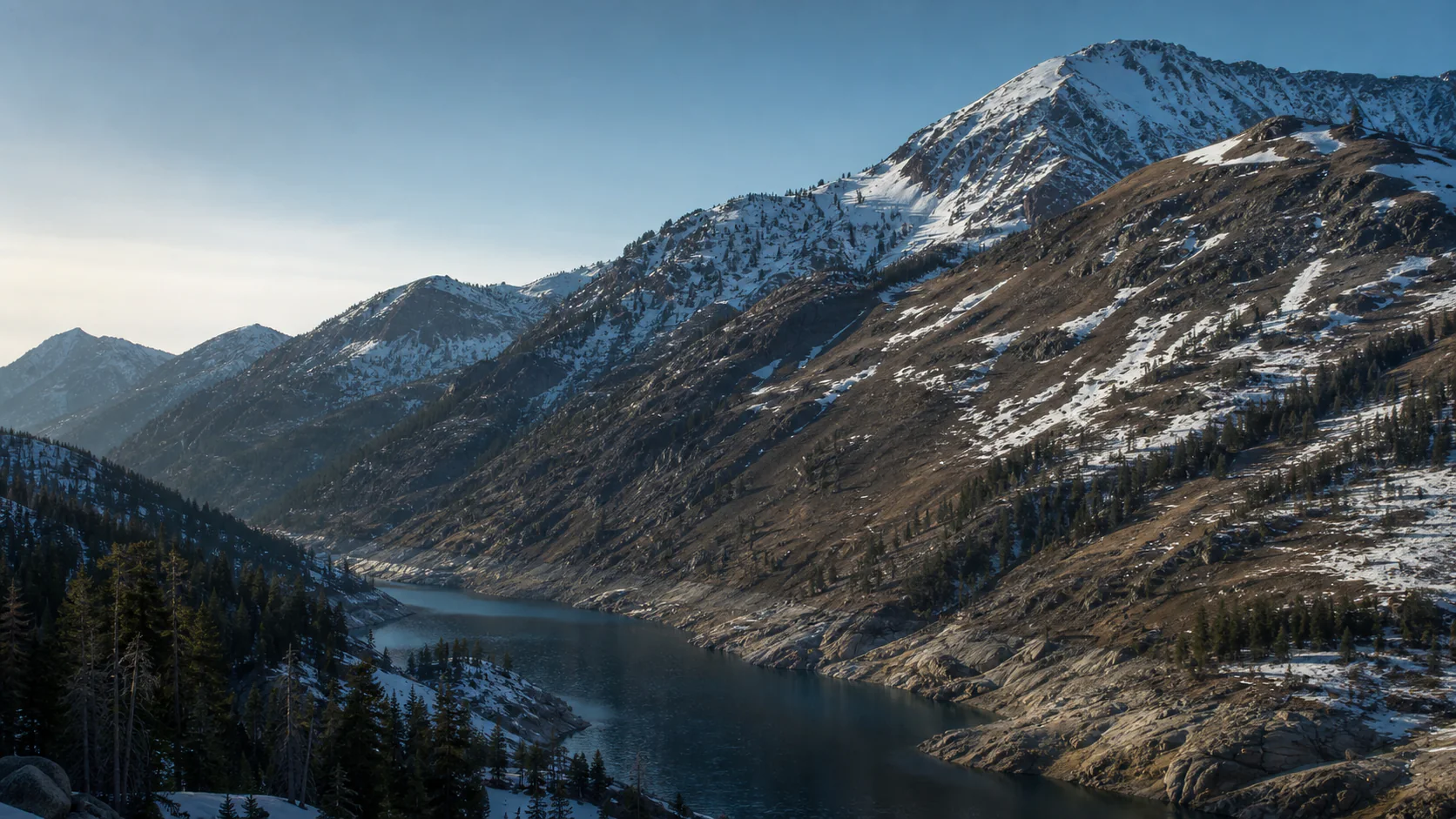
Sparse snow covers a western U.S. mountain watershed above a narrow reservoir, illustrating reduced seasonal water storage.

Global warming is turning western snow droughts into a recurring risk

Inside Climate News reported on a new Proceedings of the National Academy of Sciences attribution study finding that human-caused warming made the 2025-2026 western U.S. snow drought far more likely. The report says the event affected much of the mountain West, disrupting water supplies, reservoirs, recreation, and wildfire risk. ACC treats this as a water-planning story: the key issue is not only low snow, but whether managers can adapt to snowpack behaving less like a reliable seasonal reservoir.

Original reporting: Inside Climate News

Read the ACC brief
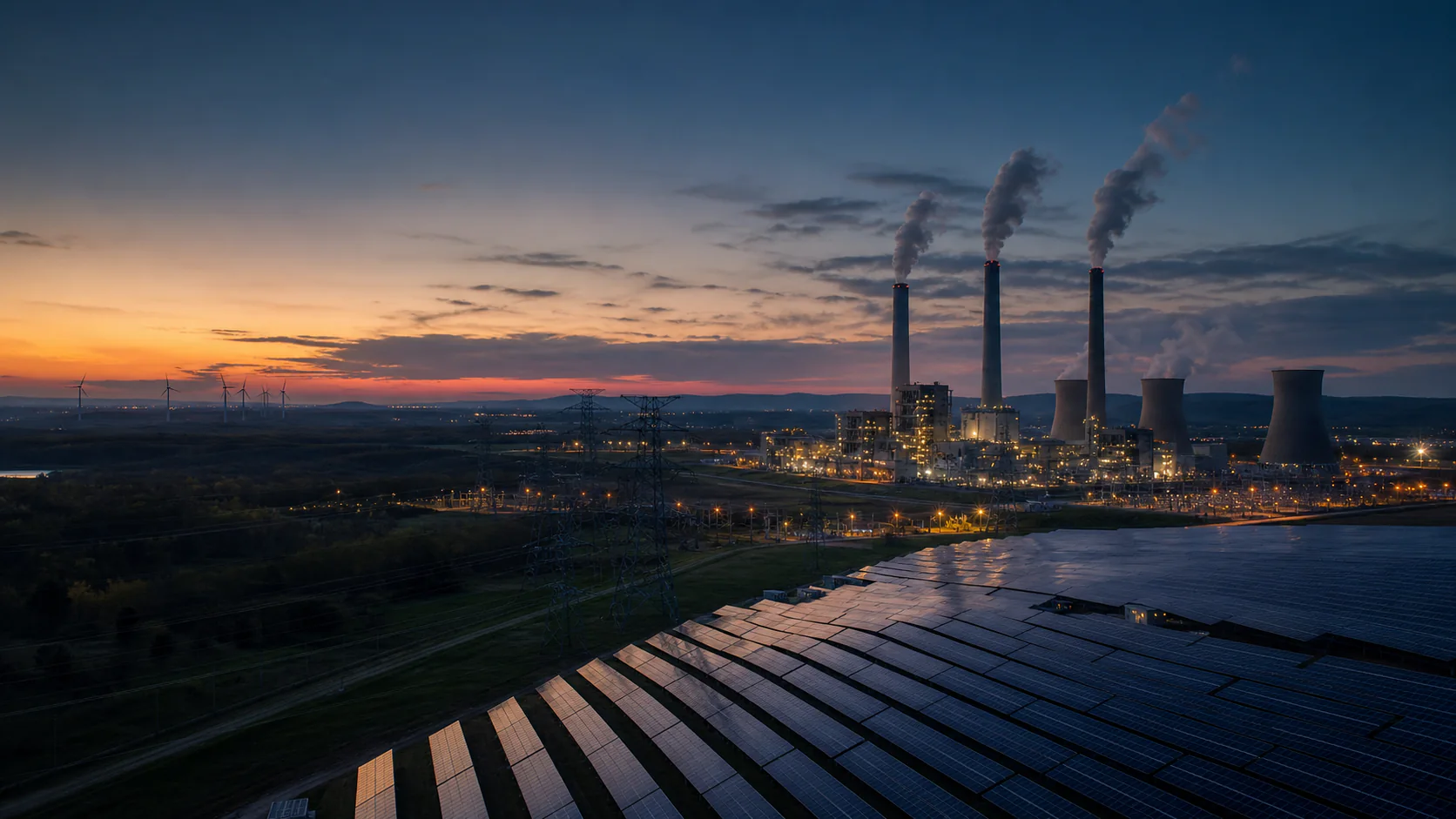
A U.S. power plant, transmission grid, and solar farm at dusk illustrate changing electricity emissions.

EIA says U.S. energy CO2 rose 2 percent in 2025

The U.S. Energy Information Administration released its 2025 energy-related carbon dioxide emissions report on July 21. EIA estimated that U.S. energy CO2 emissions increased by 2 percent, or about 115 million metric tons, in 2025, with the electric power sector rising 4 percent as electricity demand grew and coal generation increased. EIA also reported that wind generation rose 3 percent and solar generation rose 34 percent, which curbed some of the increase from power generation.

Original reporting: U.S. Energy Information Administration

Read the ACC brief
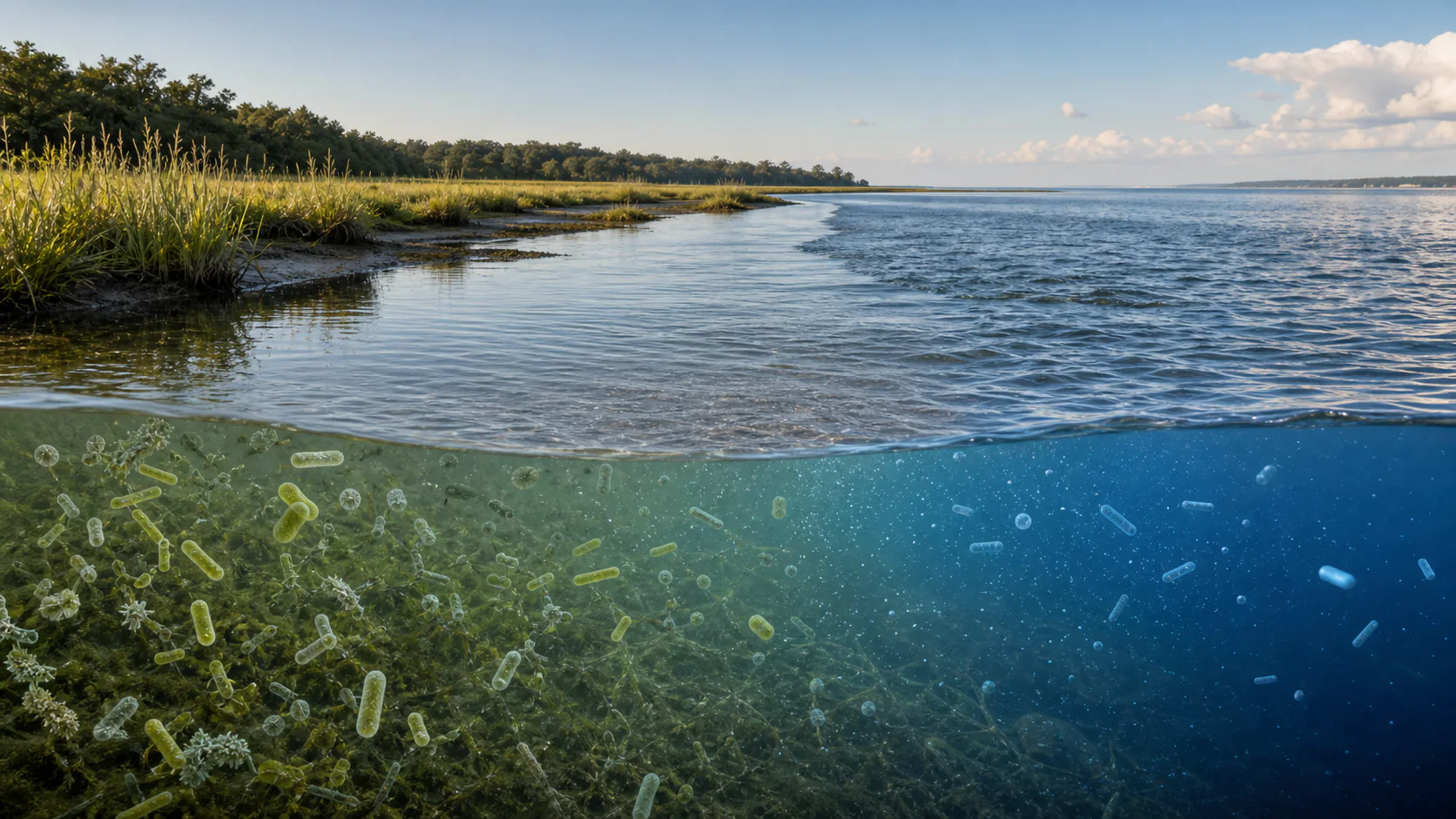
An estuary transitions from freshwater marsh to saltier coastal water while a subtle underwater view shows microbial diversity thinning along the salinity gradient.

Saltier waters can preserve microbial growth while eroding diversity

A Nature Microbiology study propagated natural aquatic communities at multiple salinities, measured performance curves for more than 80 bacterial isolates, and checked the pattern against estuarine datasets. As salinity rose, communities shifted toward faster-growing species; overall community growth proved more robust than individual species' growth even as richness and diversity declined.

Original reporting: Nature Microbiology

Read the ACC brief
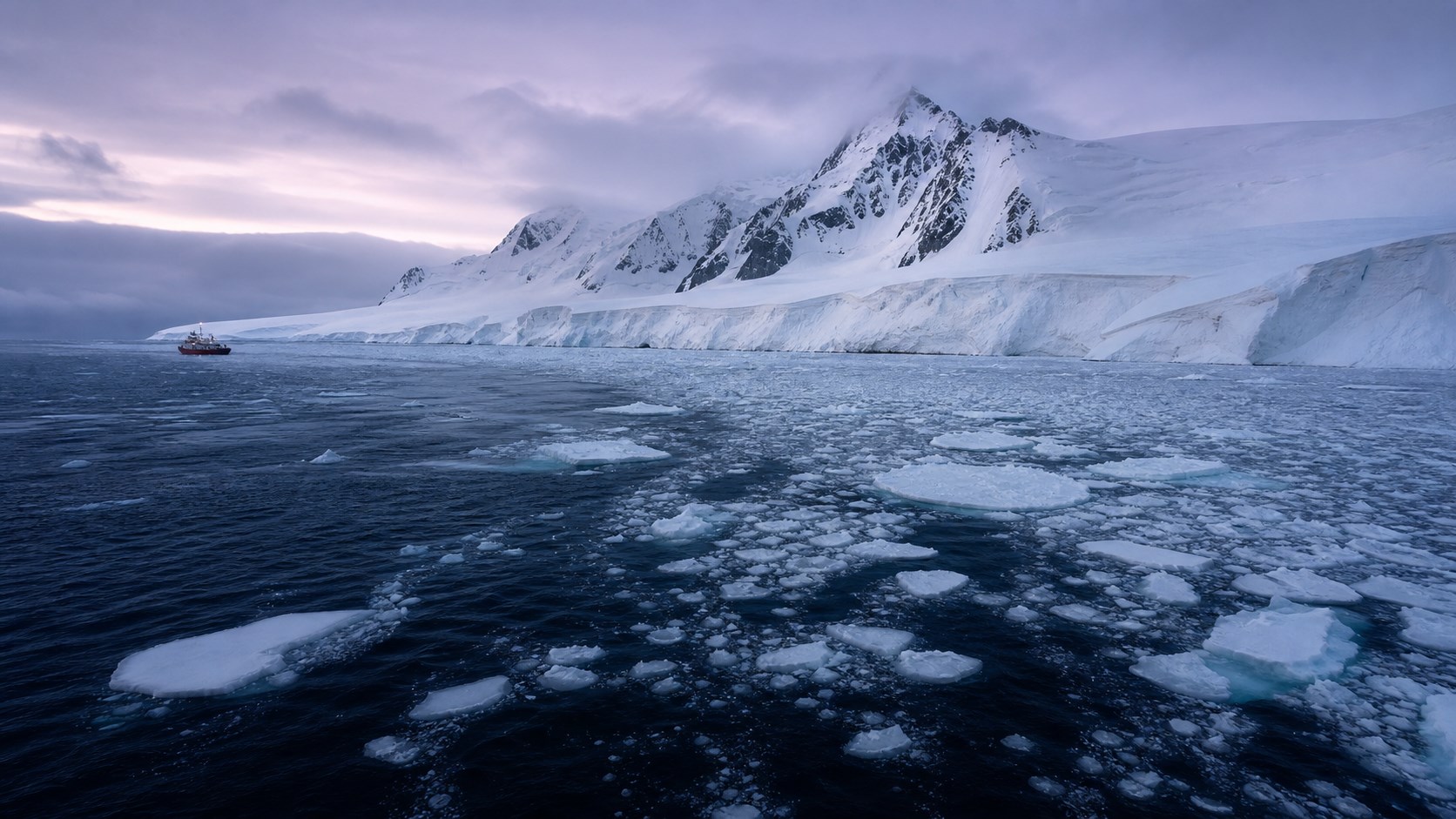
Dark Southern Ocean water and scattered sea ice stretch toward the West Antarctic coast.

Antarctica's west coast was missing France-sized sea ice

Inside Climate News, republishing a Living on Earth interview, reported that scientists found a France-sized area of missing sea ice along Antarctica's west coast during June, a period when winter sea ice normally expands sharply.

Original reporting: Inside Climate News

Read the ACC brief
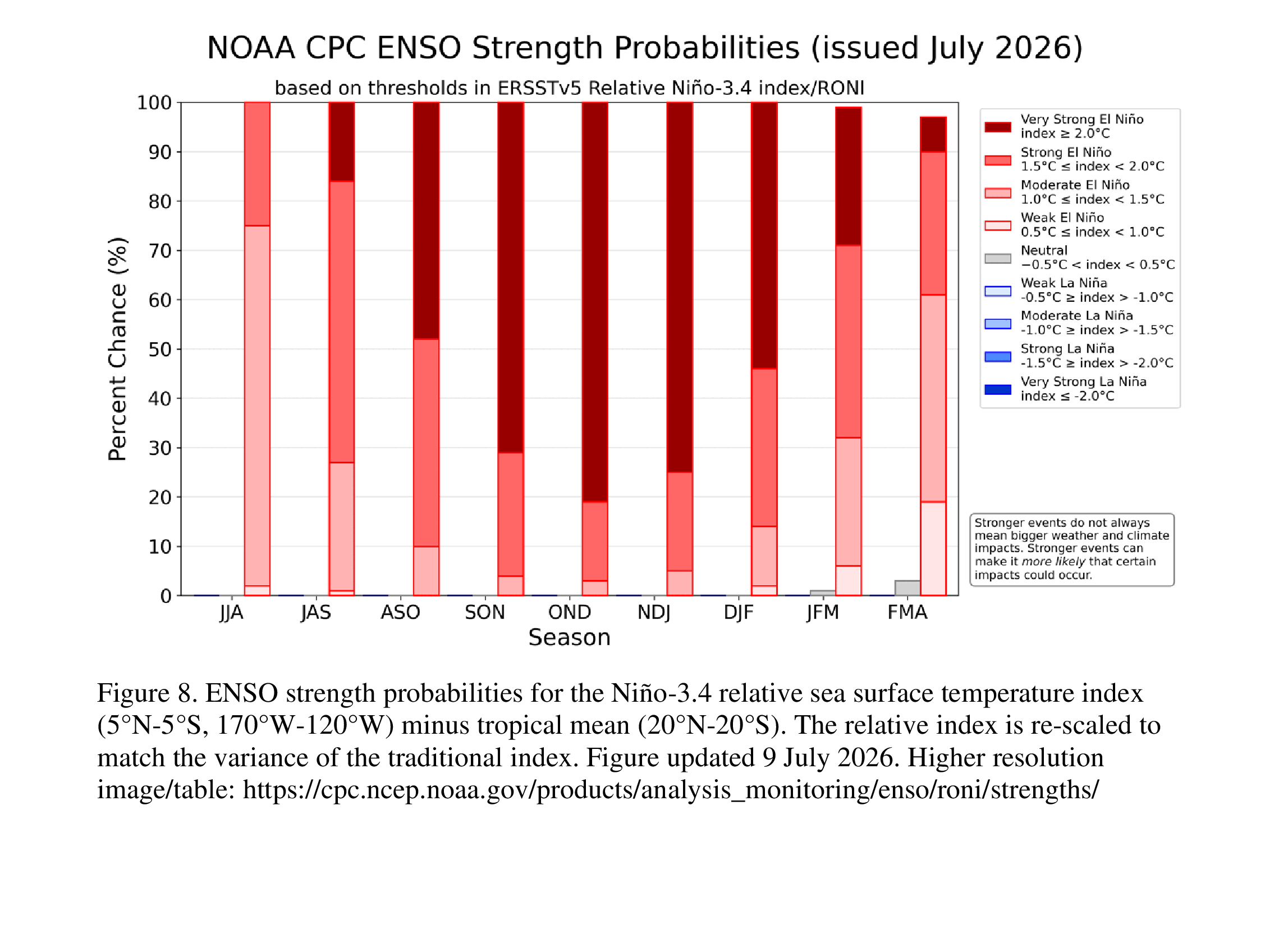
NOAA chart showing July 2026 probabilities for El Nino strength by season.

NOAA raises odds of a very strong El Nino

NOAA's Climate Prediction Center said the coupled ocean-atmosphere system now reflects a strengthening El Nino, with high confidence it will continue into early 2027 and an 81 percent chance it becomes very strong during October through December.

Original reporting: NOAA Climate Prediction Center

Read the ACC brief
Low-lying tropical island and turquoise ocean in the South-West Pacific.

WMO warns South-West Pacific ocean risks are rising

The World Meteorological Organization's new regional climate report found that 2025 was the South-West Pacific's second-warmest year on record, with marine heatwaves, ocean acidification, rising seas, coral bleaching, cyclone damage, and rapid tropical glacier loss all increasing pressure on island and coastal communities.

Original reporting: World Meteorological Organization

Read the ACC brief
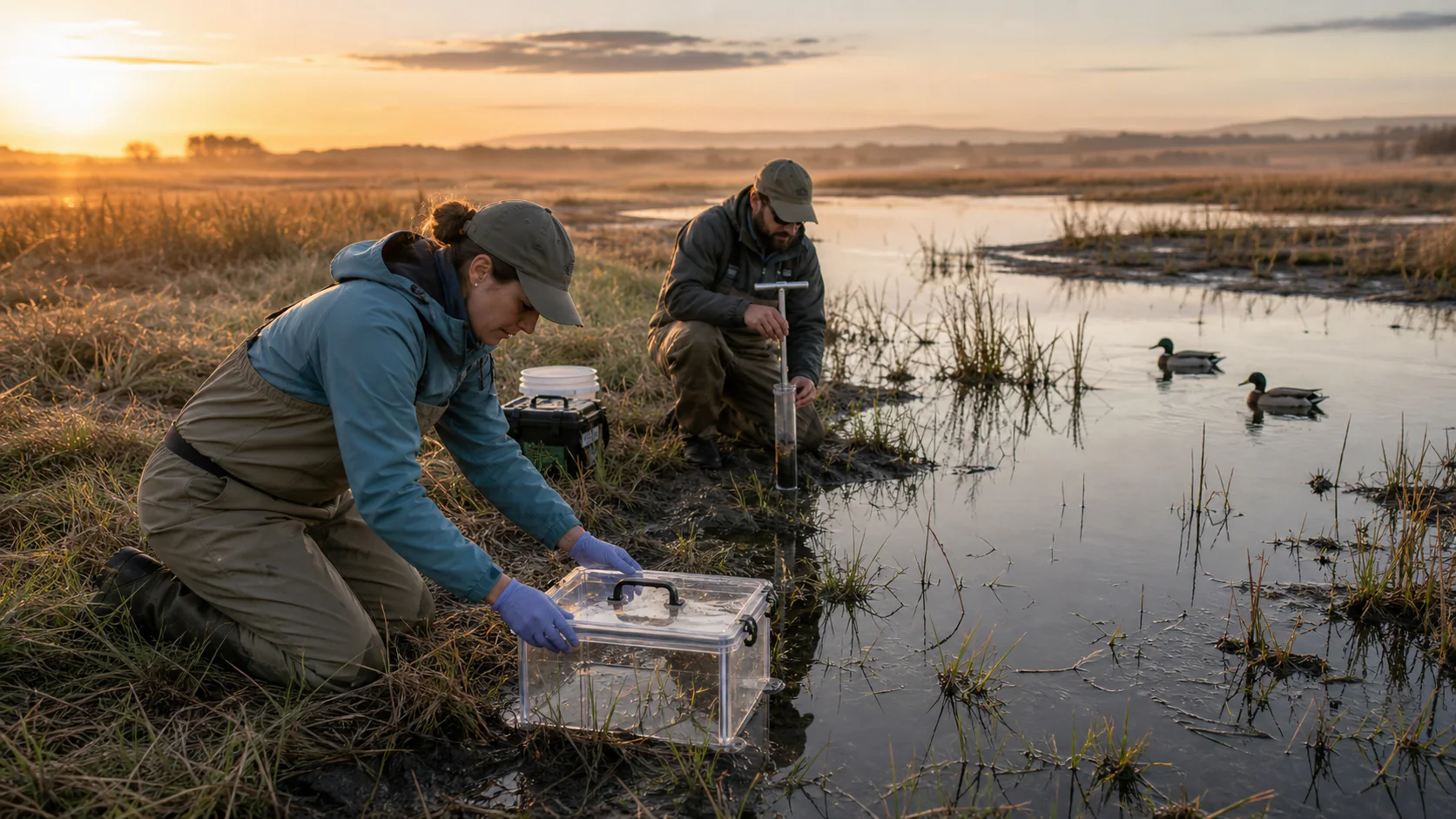
Field researchers use a transparent methane chamber and sediment corer at dawn beside a Prairie Pothole wetland with waterfowl habitat.

Warming weakens the long-term climate benefit of temperate wetlands

Researchers combined more than 19,000 methane-chamber measurements from 202 wetlands with 16 dated sediment cores across North America's Prairie Pothole Region. Under a high-forcing scenario, they project methane emissions approaching 950 kilograms per hectare per year by 2100 while carbon-dioxide sequestration weakens, potentially shifting the regional long-term greenhouse-gas balance; the result is regional and scenario-dependent, not a claim that all wetlands are currently climate sources.

Original reporting: Nature Communications

Read the ACC brief
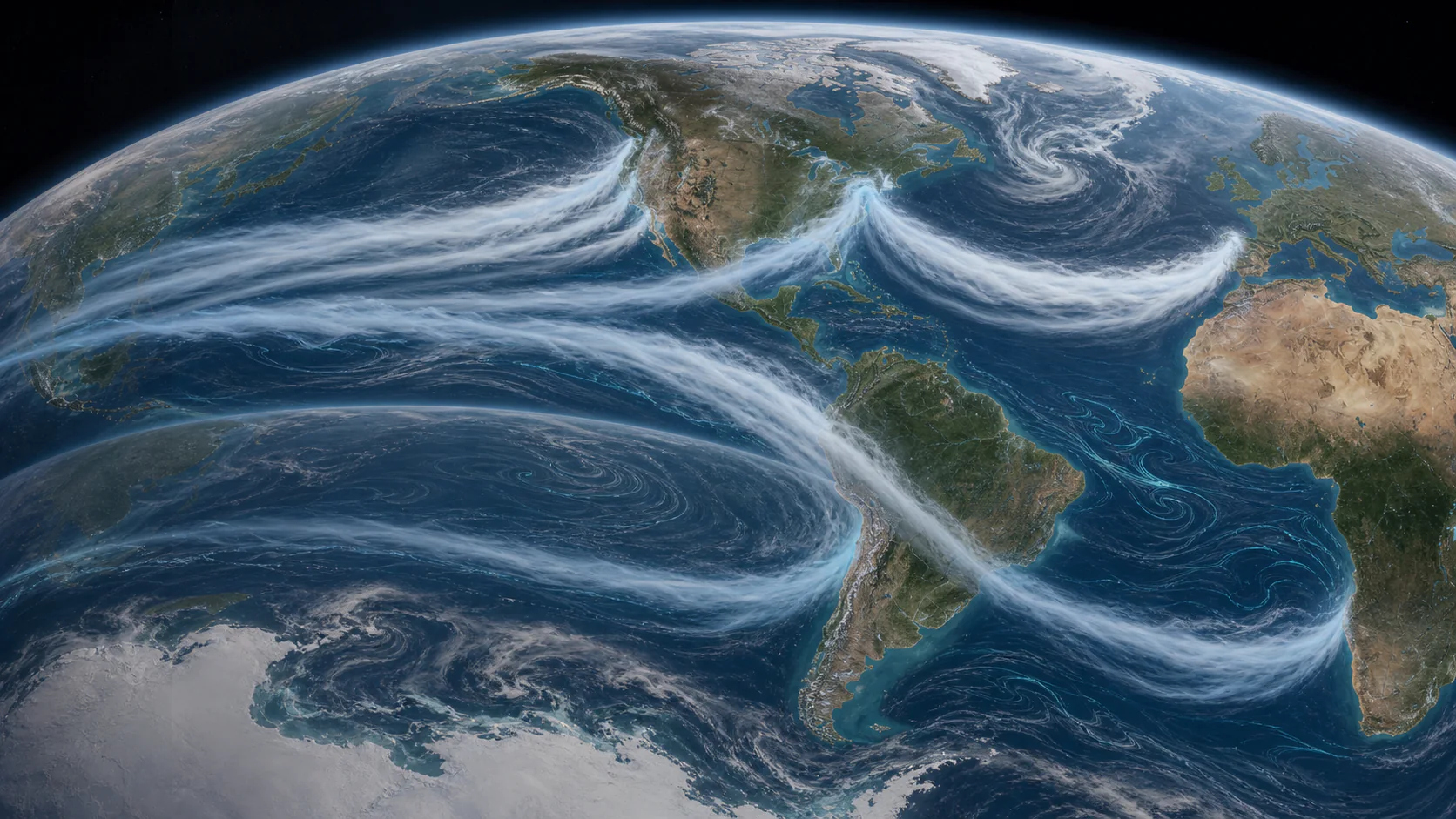
A scientific conceptual view of Earth shows long narrow water-vapor corridors reaching western continental coasts over the Pacific and Atlantic.

Modeled atmospheric-river risks persist after carbon removal

Large-ensemble climate-model experiments that raised and then lowered atmospheric carbon dioxide found that atmospheric-river frequency and intensity did not fully return to present-day states after concentrations declined. Persistent increases appeared along western North America, Europe, South America, East Asia, and Antarctica, linked in the model to slow recovery of the Atlantic overturning circulation and Southern Ocean temperatures.

Original reporting: npj Climate and Atmospheric Science

Read the ACC brief
Energy planners compare heating and cooling demand maps with a physical city model while a heat-hazed urban district is visible outside.

Warming exposes blind spots in building-energy planning

Researchers added CMIP6 heating and cooling degree days to a global energy-system model and found that fixed historical climates understated modeled 2100 cooling demand by up to 23 percent in a low-warming pathway and 79 percent in a high-warming pathway. The same fixed baseline overstated heating demand by up to 14 and 40 percent, respectively, changing projected electricity, fuel, carbon-dioxide, and refrigerant needs.

Original reporting: Nature Communications

Read the ACC brief
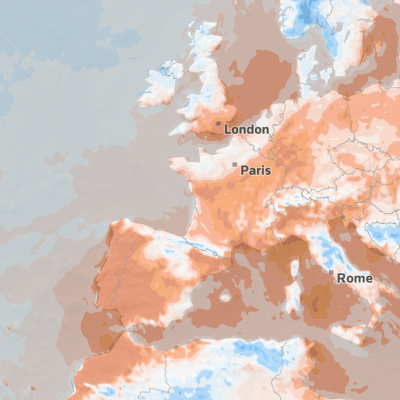
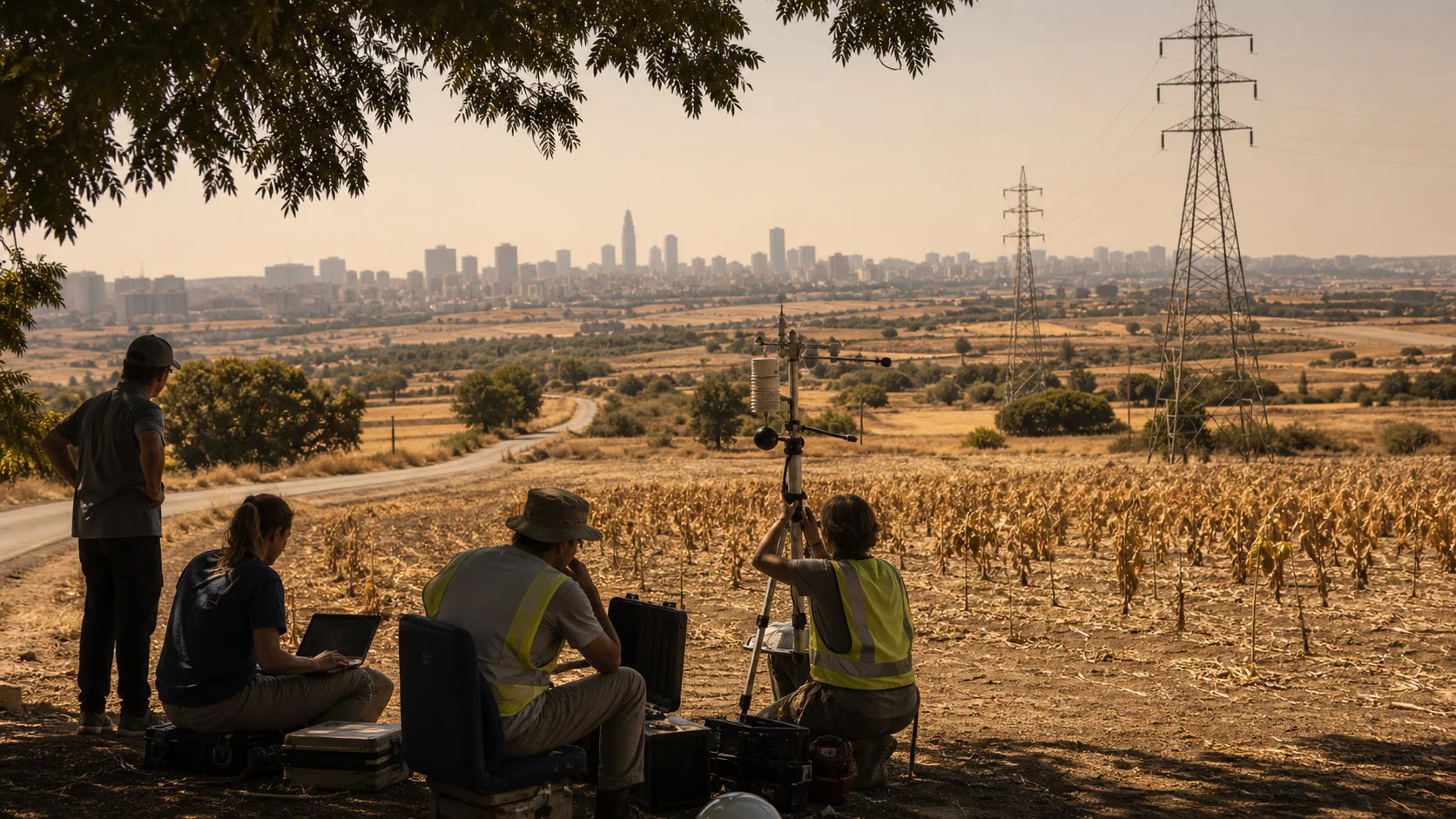
Climate-resilience researchers monitor heat conditions beside dry cropland, power lines, and a hazy European city during a prolonged modeled heat stress-test.

Model stress-tests expose Europe's risk from long, back-to-back heatwaves

A peer-reviewed study used thousands of ensemble-boosted CESM2 storylines to search for physically plausible European heat extremes under present-climate model conditions. The worst modeled events were much more intense and especially more persistent than the historical record, often following an earlier heatwave after soils had dried. These are conditional model storylines, not forecasts, probabilities, or observed events.

Original reporting: Communications Earth & Environment

Read the ACC brief
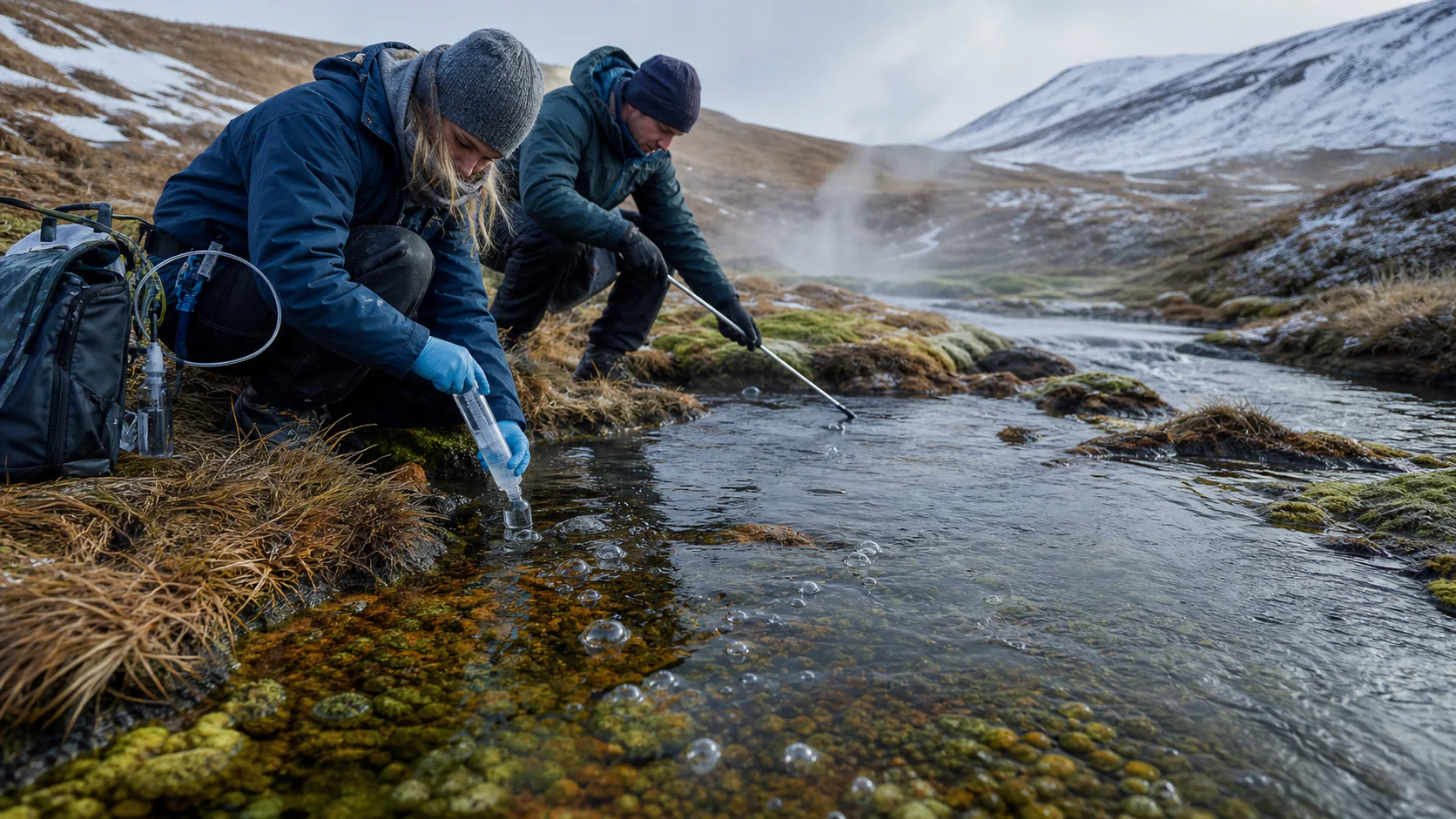
Freshwater researchers sample gas and streambed sediment in a cold high-latitude geothermally warmed stream where small natural bubbles rise through clear water.

Warming outpaces a key microbial check on freshwater methane

A peer-reviewed natural experiment across geothermally warmed streams in five northern regions found that methane production became more efficient as temperatures rose. Methane oxidation activity also increased, but its process-level efficiency did not; the streambed filter remained about 75 percent in the colder and warmer groups while emissions rose. The global implication is conditional because the study did not sample every freshwater system.

Original reporting: Nature Climate Change

Read the ACC brief
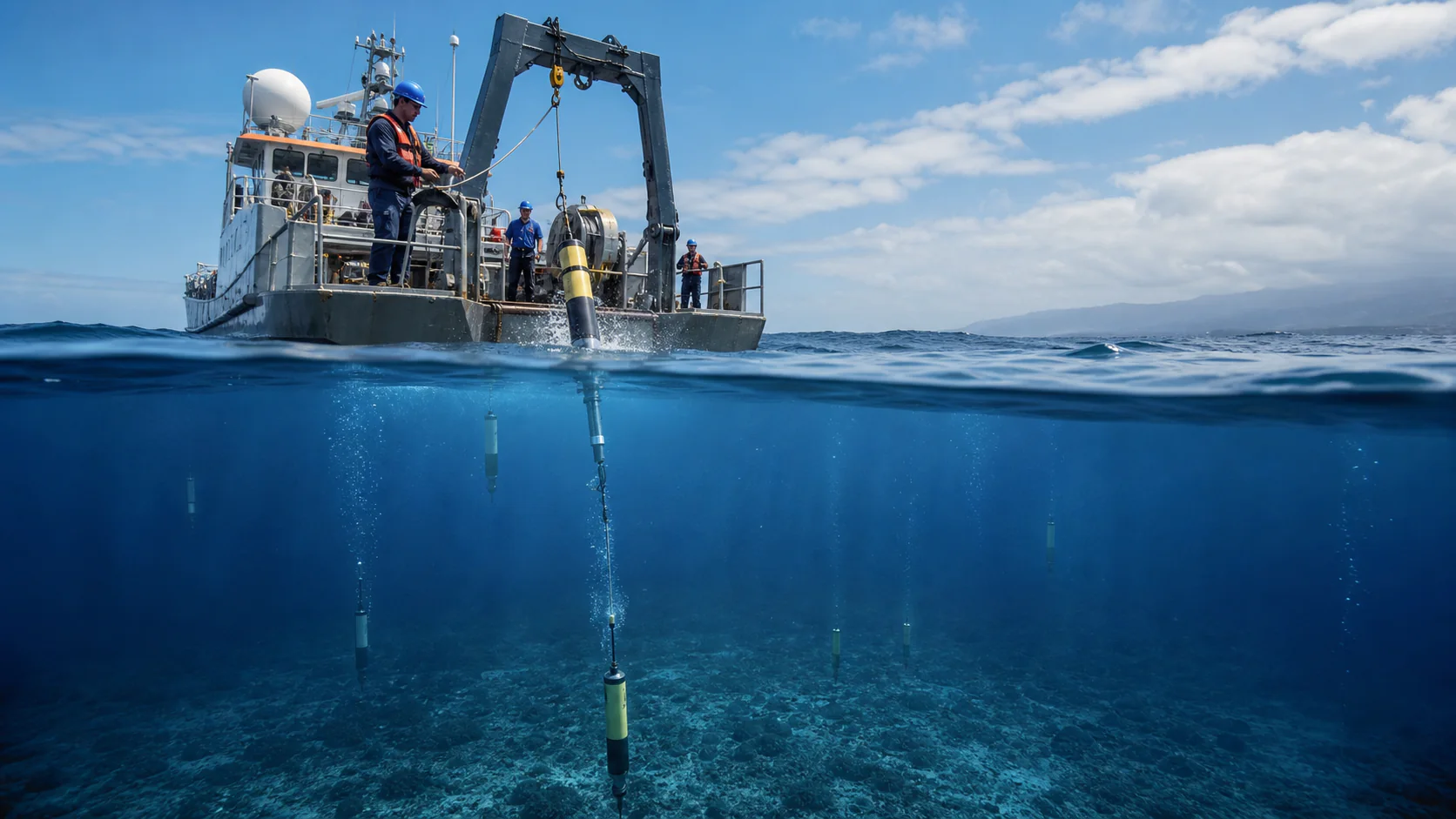
Ocean scientists deploy an autonomous profiling float from a research vessel as other instruments descend through the upper ocean.

Ocean-heat tracking weakens sharply when observations disappear

Researchers tested the resilience of global ocean-heat estimates by removing portions of the 2005-2023 temperature-profile record and recalculating heat content in the upper 2,000 meters. Randomly removing 20% of observations increased uncertainty in the annual heating rate by 33%; with 80% removed, the warming signal was statistically indistinguishable from noise. Removing observations associated with the United States increased the error by 163% because of their broad geographic coverage. These are simulated data-loss experiments, not evidence that the observing system has already suffered those cuts.

Original reporting: Nature Climate Change

Read the ACC brief

Keep exploring

See the full climate newsroom.

Search every ACC news brief by date, source, region, or topic.

Browse the complete archive